

Published: July 8, 2026
📅 Ontario’s Planting Window Shifts Six Weeks From South to North
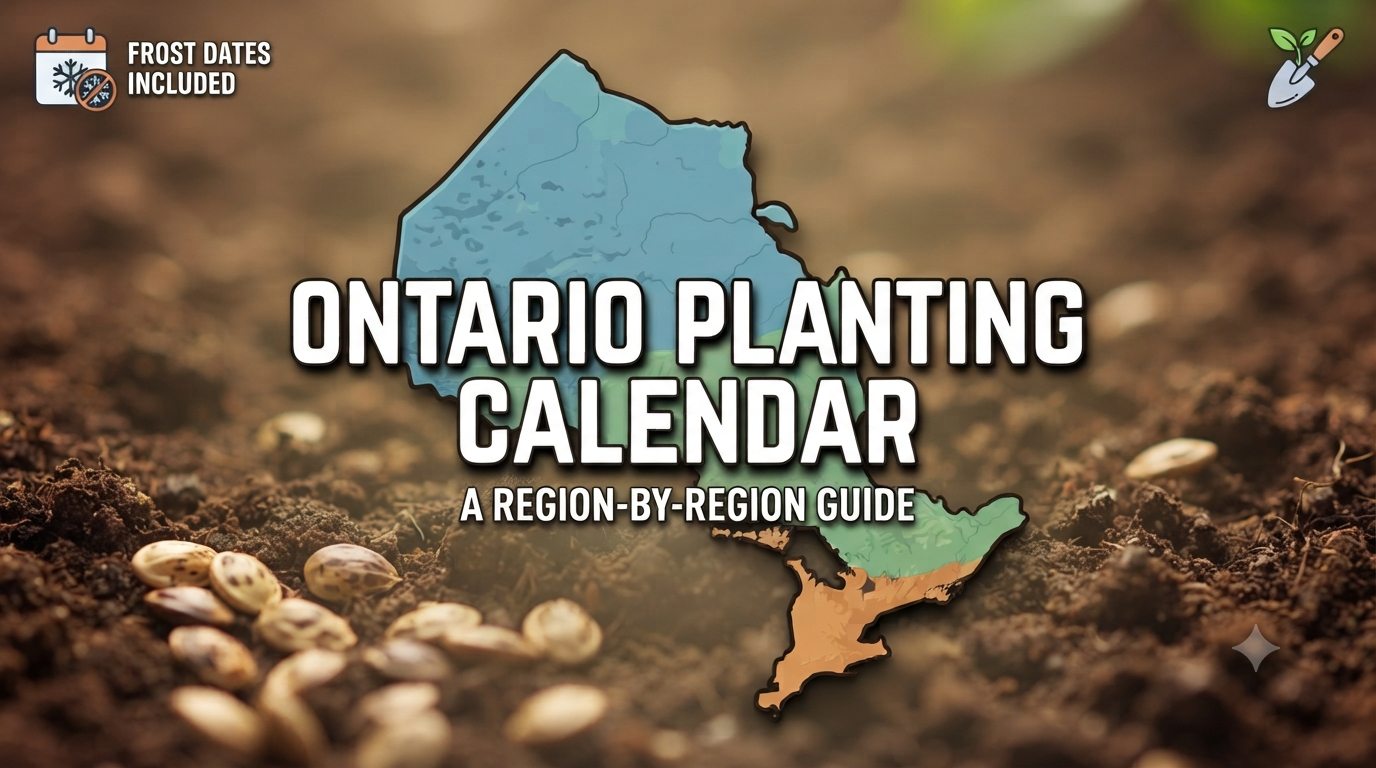
The right time to plant in Ontario depends entirely on where in the province you garden. Windsor gardeners can set out tomatoes in mid-May while growers around Sudbury are still weeks from their last frost — a swing of six weeks or more across a province that spans hardiness zones 2a through 7a. A single “Ontario planting date” doesn’t exist, which is why this calendar splits the province into three growing regions and gives real dates for each.
Whether you start your own seeds indoors or buy transplants from a garden centre, this calendar covers both paths — and covers vegetables, herbs, and flowers. Each regional section lists when to start seeds indoors, when to set plants out (grown from seed or store-bought), and when to sow seed straight into the ground. Find your region below, read across your crop’s row, and adjust for your own yard using the microclimate notes further down.
Ontario Frost Dates & Growing Regions
Your frost dates are the anchor every planting date hangs on. The table below groups Ontario’s cities into three regions by their frost-free window, using Environment Canada climate normals and the Government of Ontario’s climate-zone data. Last-frost and first-frost dates are averages at roughly a 50% probability — frost can still land after the spring date or before the fall one, so tender crops always want a few days’ margin.
| Region | Key Cities | Last Spring Frost | First Fall Frost | Frost-Free Days | Zones |
|---|---|---|---|---|---|
| Southern Ontario | Windsor, London, Hamilton, Toronto, Niagara | Late Apr – early May | Oct 8 – 20 | 150 – 190 | 6a – 7a |
| Eastern & Central Ontario | Kingston, Ottawa, Peterborough, Belleville | Early – mid May | Late Sep – early Oct | 130 – 165 | 5a – 6a |
| Northern Ontario | North Bay, Sudbury, Thunder Bay, Timmins | Mid May – early Jun | Mid – late Sep | 100 – 145 | 3b – 4b |
Read every table below in three columns. Start Seeds Indoors is for growing from seed under lights; Transplant Out is when to set plants into the garden, whether you raised them or bought them; Direct Sow is when to put seed straight into garden soil. A dash (—) means that method isn’t recommended for the crop. For the framework behind counting these dates back from your own frost date, see our complete planting calendar, and for indoor technique, our guide to starting seeds indoors.
Southern Ontario Planting Calendar
Southern Ontario has the province’s longest and most forgiving season, with the last spring frost from late April to early May and a first fall frost that often holds off to mid-to-late October. Windsor and Essex County run about two weeks ahead of the Toronto and London core; near the Great Lakes, trust the earlier end of every window. The dates below reflect the GTA-to-Niagara band.
When to Plant Vegetables in Southern Ontario
| Vegetable | Start Seeds Indoors | Transplant Out | Direct Sow |
|---|---|---|---|
| Tomatoes | Mid-Mar | May 18 – 24 | — |
| Peppers | Early Mar | May 25 – Jun 5 | — |
| Eggplant | Early Mar | May 25 – Jun 5 | — |
| Onions | Late Feb – early Mar | Apr 15 – 25 | — |
| Leeks | Late Feb – early Mar | Apr 20 – May 5 | — |
| Garlic | — | — | Fall — late Oct |
| Broccoli | Mid-Mar | Apr 20 – May 5 | — |
| Cauliflower | Mid-Mar | Apr 25 – May 10 | — |
| Cabbage | Mid-Mar | Apr 20 – May 5 | — |
| Brussels Sprouts | Mid-Mar | May 1 – 15 | — |
| Kale | Late Mar (opt.) | Apr 20 – May 5 | Apr 20 – May 5 |
| Swiss Chard | Early Apr (opt.) | Apr 25 – May 10 | Apr 25 – May 10 |
| Lettuce | Early Apr (opt.) | Apr 15 – 25 | Apr 15 – 25 |
| Spinach | — | — | Apr 1 – 20 |
| Peas | — | — | Apr 1 – 15 |
| Beans | — | — | May 20 – Jun 1 |
| Carrots | — | — | Apr 25 – May 10 |
| Beets | — | — | Apr 20 – May 10 |
| Radishes | — | — | Apr 15 – May 1 |
| Turnips | — | — | Apr 20 – May 10 |
| Parsnips | — | — | Apr 20 – May 5 |
| Potatoes | — | — | Apr 20 – May 5 |
| Cucumbers | Late Apr (opt.) | May 25 – Jun 5 | May 25 – Jun 5 |
| Zucchini & Summer Squash | Late Apr (opt.) | May 25 – Jun 5 | May 25 – Jun 5 |
| Winter Squash & Pumpkins | Late Apr (opt.) | May 25 – Jun 5 | May 25 – Jun 5 |
| Sweet Corn | — | — | May 15 – 25 |
| Melons & Watermelon | Late Apr | May 25 – Jun 5 | — |
When to Plant Herbs in Southern Ontario
| Herb | Start Seeds Indoors | Transplant Out | Direct Sow |
|---|---|---|---|
| Basil | Mid-late Mar | May 18 – 24 | Late May |
| Cilantro | — | — | Apr 15 – May 1 |
| Parsley | Late Feb – early Mar | Apr 25 – May 5 | Apr 20 – May 1 |
| Dill | — | — | Apr 25 – May 10 |
| Chives | Early Mar | Apr 25 – May 5 | Apr 20 – May 1 |
| Oregano | Mid-Mar | After May 6 | — |
| Thyme | Early Mar | After May 6 | — |
| Sage | Mid-Mar | After May 6 | — |
| Mint | Early Mar | After May 6 | — |
| Chamomile | Late Mar | After May 6 | Early May |
| Fennel | Early Apr | After May 6 | May 6 onward |
| Lavender | Late Feb (cold-strat.) | After May 6 | — |
| Rosemary | Early Mar | After May 6 | — |
| Lemon Balm | Early Mar | After May 6 | — |
When to Plant Flowers in Southern Ontario
| Flower | Start Seeds Indoors | Transplant Out | Direct Sow |
|---|---|---|---|
| Sunflowers | — | — | May 6 onward |
| Zinnias | Early Apr (opt.) | After May 6 | May 6 onward |
| Marigolds | Late Mar (opt.) | After May 6 | May 6 onward |
| Nasturtiums | — | — | May 6 onward |
| Calendula | Late Mar (opt.) | Apr 20 – May 1 | Apr 20 – May 1 |
| Pansies | Late Feb | Mid-late Apr | — |
| Poppies | — | — | Apr 1 – 20 or fall |
| Morning Glory | Early Apr (opt.) | After May 6 | May 6 onward |
| Echinacea | Late Feb (cold-strat.) | After May 6 | Fall |
| Milkweed | Late Feb (cold-strat.) | After May 6 | Fall |
| Cosmos | Early Apr (opt.) | After May 6 | May 6 onward |
| Snapdragons | Early Mar | Apr 20 – May 1 | — |
| Sweet Peas | — | — | Apr 1 – 20 |
| Cornflower (Bachelor’s Button) | — | — | Apr 10 – 25 |
The Great Lakes are Southern Ontario’s hidden advantage. Gardens near Lake Ontario, Lake Erie, and the Niagara shoreline get a buffered spring and a stretched-out fall, so a lakeside plot in Prince Edward County or the Niagara fruit belt often plants earlier and harvests later than an inland town at the same latitude. Because the season is long here, this is the one region where slow heat-lovers like peppers, eggplant, and melons reliably finish before frost — and where a spring crop can be followed by a full fall planting.
Eastern & Central Ontario Planting Calendar
Eastern and Central Ontario — the Ottawa Valley, the Kingston and Belleville lakeshore, the Kawarthas, and Peterborough — runs about a week behind the south, with the last spring frost landing early to mid May and the first fall frost arriving late September into early October. Winters here are colder (Zones 5a–6a) even where summers feel similar. Kingston and Prince Edward County, moderated by Lake Ontario, run a touch earlier than the inland Ottawa Valley.
When to Plant Vegetables in Eastern & Central Ontario
| Vegetable | Start Seeds Indoors | Transplant Out | Direct Sow |
|---|---|---|---|
| Tomatoes | Late Mar | May 24 – Jun 2 | — |
| Peppers | Mid-Mar | Jun 1 – 10 | — |
| Eggplant | Mid-Mar | Jun 1 – 10 | — |
| Onions | Late Feb – early Mar | Apr 25 – May 5 | — |
| Leeks | Early Mar | Apr 25 – May 10 | — |
| Garlic | — | — | Fall — mid-late Oct |
| Broccoli | Mid-late Mar | May 1 – 15 | — |
| Cauliflower | Mid-late Mar | May 5 – 15 | — |
| Cabbage | Mid-late Mar | May 1 – 15 | — |
| Brussels Sprouts | Mid-late Mar | May 10 – 20 | — |
| Kale | Late Mar (opt.) | May 1 – 15 | May 1 – 15 |
| Swiss Chard | Early Apr (opt.) | May 1 – 15 | May 1 – 15 |
| Lettuce | Early Apr (opt.) | Apr 25 – May 5 | Apr 25 – May 5 |
| Spinach | — | — | Apr 10 – May 1 |
| Peas | — | — | Apr 10 – 25 |
| Beans | — | — | May 25 – Jun 5 |
| Carrots | — | — | May 1 – 15 |
| Beets | — | — | Apr 25 – May 15 |
| Radishes | — | — | Apr 20 – May 5 |
| Turnips | — | — | Apr 25 – May 15 |
| Parsnips | — | — | Apr 25 – May 10 |
| Potatoes | — | — | Apr 25 – May 10 |
| Cucumbers | Early May (opt.) | Jun 1 – 10 | Jun 1 – 10 |
| Zucchini & Summer Squash | Early May (opt.) | Jun 1 – 10 | Jun 1 – 10 |
| Winter Squash & Pumpkins | Early May (opt.) | Jun 1 – 10 | Jun 1 – 10 |
| Sweet Corn | — | — | May 20 – Jun 1 |
| Melons & Watermelon | Early May | Jun 1 – 10 | — |
When to Plant Herbs in Eastern & Central Ontario
| Herb | Start Seeds Indoors | Transplant Out | Direct Sow |
|---|---|---|---|
| Basil | Late Mar | May 24 – Jun 1 | Late May |
| Cilantro | — | — | Apr 25 – May 10 |
| Parsley | Early Mar | May 1 – 10 | Apr 25 – May 5 |
| Dill | — | — | May 1 – 15 |
| Chives | Mid-Mar | May 1 – 10 | Apr 25 – May 5 |
| Oregano | Mid-late Mar | After May 11 | — |
| Thyme | Mid-Mar | After May 11 | — |
| Sage | Mid-late Mar | After May 11 | — |
| Mint | Mid-Mar | After May 11 | — |
| Chamomile | Early Apr | After May 11 | Mid-May |
| Fennel | Mid-Apr | After May 11 | May 11 onward |
| Lavender | Early Mar (cold-strat.) | After May 11 | — |
| Rosemary | Mid-Mar | After May 11 | — |
| Lemon Balm | Mid-Mar | After May 11 | — |
When to Plant Flowers in Eastern & Central Ontario
| Flower | Start Seeds Indoors | Transplant Out | Direct Sow |
|---|---|---|---|
| Sunflowers | — | — | May 11 onward |
| Zinnias | Mid-Apr (opt.) | After May 11 | May 11 onward |
| Marigolds | Early Apr (opt.) | After May 11 | May 11 onward |
| Nasturtiums | — | — | May 11 onward |
| Calendula | Early Apr (opt.) | Apr 25 – May 5 | Apr 25 – May 5 |
| Pansies | Early Mar | Late Apr | — |
| Poppies | — | — | Apr 10 – 25 or fall |
| Morning Glory | Mid-Apr (opt.) | After May 11 | May 11 onward |
| Echinacea | Early Mar (cold-strat.) | After May 11 | Fall |
| Milkweed | Early Mar (cold-strat.) | After May 11 | Fall |
| Cosmos | Mid-Apr (opt.) | After May 11 | May 11 onward |
| Snapdragons | Mid-Mar | Apr 25 – May 5 | — |
| Sweet Peas | — | — | Apr 10 – 25 |
| Cornflower (Bachelor’s Button) | — | — | Apr 20 – May 5 |
The Ottawa Valley’s defining feature is cold-air pooling: clear, still nights in spring and fall can drop valley-bottom gardens several degrees below the official reading, so keep row cover on hand into early June for tender transplants. Along the Kingston–Belleville lakeshore and through Prince Edward County, the lake buys extra frost-free days, and that milder pocket is where the region’s longer-season crops do best. With a first frost that can arrive by late September, time fall crops off your first frost date and start them in mid-to-late July rather than August.
Northern Ontario Planting Calendar
In Northern Ontario — North Bay, Sudbury, Thunder Bay, Timmins and beyond — the short season is the whole game. The last spring frost runs mid-May to early June (Sudbury averages around May 27–31), and the first fall frost can return by mid-September, leaving as few as 100 frost-free days. That makes two moves non-negotiable: start every heat-loving crop indoors, and choose short-season, early-maturing varieties so they finish before frost.
When to Plant Vegetables in Northern Ontario
| Vegetable | Start Seeds Indoors | Transplant Out | Direct Sow |
|---|---|---|---|
| Tomatoes | Early-mid Apr | Jun 3 – 12 | — |
| Peppers | Late Mar – early Apr | Jun 8 – 15 | — |
| Eggplant | Late Mar – early Apr | Jun 8 – 15 | — |
| Onions | Mid-Mar | May 10 – 20 | — |
| Leeks | Mid-Mar | May 15 – 30 | — |
| Garlic | — | — | Fall — early-mid Oct |
| Broccoli | Early Apr | May 15 – 30 | — |
| Cauliflower | Early Apr | May 20 – Jun 1 | — |
| Cabbage | Early Apr | May 15 – 30 | — |
| Brussels Sprouts | Early Apr | May 20 – Jun 1 | — |
| Kale | Early Apr (opt.) | May 15 – 30 | May 15 – 30 |
| Swiss Chard | Mid-Apr (opt.) | May 15 – 30 | May 15 – 30 |
| Lettuce | Mid-Apr (opt.) | May 10 – 20 | May 10 – 20 |
| Spinach | — | — | May 1 – 20 |
| Peas | — | — | May 1 – 15 |
| Beans | — | — | Jun 3 – 12 |
| Carrots | — | — | May 15 – 30 |
| Beets | — | — | May 10 – 25 |
| Radishes | — | — | May 5 – 20 |
| Turnips | — | — | May 15 – Jun 1 |
| Parsnips | — | — | May 10 – 25 |
| Potatoes | — | — | May 10 – 25 |
| Cucumbers | Mid-May (opt.) | Jun 8 – 15 | Jun 8 – 15 |
| Zucchini & Summer Squash | Mid-May (opt.) | Jun 8 – 15 | Jun 8 – 15 |
| Winter Squash & Pumpkins | Mid-May (opt.) | Jun 8 – 15 | — |
| Sweet Corn | — | — | Jun 1 – 10 |
| Melons & Watermelon | Mid-May | Jun 8 – 15 | — |
When to Plant Herbs in Northern Ontario
| Herb | Start Seeds Indoors | Transplant Out | Direct Sow |
|---|---|---|---|
| Basil | Mid-Apr | Jun 3 – 10 | — |
| Cilantro | — | — | May 10 – 25 |
| Parsley | Late Mar | May 15 – 25 | May 10 – 20 |
| Dill | — | — | May 15 – 30 |
| Chives | Early Apr | May 15 – 25 | May 10 – 20 |
| Oregano | Early Apr | After May 27 | — |
| Thyme | Late Mar – early Apr | After May 27 | — |
| Sage | Early Apr | After May 27 | — |
| Mint | Early Apr | After May 27 | — |
| Chamomile | Mid-Apr | After May 27 | Late May |
| Fennel | Early May | After May 27 | Late May onward |
| Lavender | Mid-Mar (cold-strat.) | After May 27 | — |
| Rosemary | Early Apr | After May 27 | — |
| Lemon Balm | Early Apr | After May 27 | — |
When to Plant Flowers in Northern Ontario
| Flower | Start Seeds Indoors | Transplant Out | Direct Sow |
|---|---|---|---|
| Sunflowers | — | — | Late May – early Jun |
| Zinnias | Late Apr (opt.) | After May 27 | Late May onward |
| Marigolds | Mid-Apr (opt.) | After May 27 | Late May onward |
| Nasturtiums | — | — | Late May onward |
| Calendula | Mid-Apr (opt.) | May 10 – 20 | May 10 – 20 |
| Pansies | Late Mar | Late Apr – early May | — |
| Poppies | — | — | May 1 – 15 or fall |
| Morning Glory | Early May (opt.) | After May 27 | Late May onward |
| Echinacea | Mid-Mar (cold-strat.) | After May 27 | Fall |
| Milkweed | Mid-Mar (cold-strat.) | After May 27 | Fall |
| Cosmos | Early May (opt.) | After May 27 | Late May onward |
| Snapdragons | Early Apr | May 10 – 20 | — |
| Sweet Peas | — | — | May 1 – 15 |
| Cornflower (Bachelor’s Button) | — | — | May 5 – 20 |
The northern advantage is the long summer day. Once the season finally opens in June, extended daylight drives fast, vigorous growth, and cool-season crops — peas, kale, cabbage, root vegetables — are outstanding here, often sweeter than the same crops grown in a hot southern summer. Cold-frame and row-cover season extension is standard equipment, not a luxury: a few degrees of protection at each end can add the two or three weeks that let a tomato ripen. Frost pockets and elevation matter even more up north, so track your own yard and lean on the later end of every window until you know your ground.
| Item | What to Look For | Essential For | Shop |
|---|---|---|---|
| Full-Spectrum Grow Light | 6500K LED, adjustable height, covers a full tray | Stocky seedlings without legginess in low-light Ontario winters | View on Amazon → |
| Seedling Heat Mat | Waterproof, warms soil 5–10°C above room temperature | Germinating peppers, tomatoes & eggplant on schedule | View on Amazon → |
| Cell Trays & Humidity Dome | Sturdy reusable inserts with a clear vented dome | Even watering and fast, humid germination | View on Amazon → |
| Seed-Starting Mix | Fine, sterile, peat- or coir-based, no added fertilizer | Disease-free rooting for tender young seedlings | View on Amazon → |
| Soil Thermometer | Fast-read probe showing both °C and °F | Confirming soil has hit sowing temperature before you plant | View on Amazon → |
Adjusting for Your Local Microclimate
Regional averages get you close, but your own yard can run two weeks warmer or colder than the nearest weather station. Three local features shift your effective planting dates more than anything else — find yours below and adjust accordingly.
🌊 Great Lakes & Shoreline
Where: Niagara, Windsor-Essex, Prince Edward County, the Kingston lakeshore, and southern Georgian Bay.
The effect: Large bodies of water release stored heat slowly, buffering spring and fall frosts and stretching the frost-free window by days to weeks.
Adjust: Trust the earlier end of your region’s window, and expect to harvest later into fall than inland neighbours at the same latitude.
❄️ Valleys, Low Spots & Frost Pockets
Where: Ottawa Valley bottoms, inland dips, the base of slopes, and open sites with no windbreak — common across Eastern and Northern Ontario.
The effect: Cold air flows downhill and pools, so these gardens see a later last frost and an earlier first frost than the town average — sometimes by two weeks.
Adjust: Push tender planting later, keep row cover ready on both ends, and site heat-lovers on higher, well-drained ground.
🏙️ Urban Heat & Raised Beds
Where: Toronto and Ottawa cores, city lots ringed by buildings and paving, and raised beds anywhere.
The effect: Masonry and pavement store daytime heat, and raised soil warms faster in spring, so these plots effectively run one to two weeks ahead of the regional average.
Adjust: You can direct sow and transplant on the early edge of your window — especially cool-season crops that shrug off a light frost.
Ontario Fall Planting Calendar
A second planting in mid-summer is what separates a good Ontario garden from a great one, and the timing is driven by your first fall frost rather than your spring one. Count back each crop’s days to maturity from that first frost, then add about two weeks because growth slows as daylight shortens. Because the first frost arrives weeks earlier in the north, the fall-sowing window closes sooner there — the table below gives the practical start dates by region.
Fall Vegetables by Region
| Region | Start Fall Brassicas & Roots | Sow Fall Greens | Plant Garlic |
|---|---|---|---|
| Southern Ontario | Early Aug | Mid-late Aug | Late Oct |
| Eastern & Central Ontario | Mid-late Jul | Late Jul – early Aug | Mid-late Oct |
| Northern Ontario | Early-mid Jul | Mid-Jul | Early-mid Oct |
Kale, spinach, lettuce, radishes, and Asian greens are the most reliable fall producers, and several — kale especially — turn sweeter after a light frost. Cilantro and dill are the two herbs worth a late-summer sowing: both bolt in summer heat but give a clean fall cutting when sown into cooling August soil. Alongside the fall crop, use succession sowing through the season — sow a short row of a fast crop like radishes, lettuce, arugula, or bush beans, then another every two to three weeks, so the harvest arrives steadily instead of all at once.
Fall-Sown Flower Seeds for Next Year
Flowers work differently in fall: you’re not sowing for autumn bloom — there isn’t enough season left — you’re sowing hardy annuals and perennials that need winter cold to germinate, so they sprout on their own first thing next spring. Sow these in late fall, just before the ground freezes, so the seed chills over winter but doesn’t sprout early. The timing barely varies by region — wait until hard frost is close.
| Flower | Fall-Sow Method | Blooms |
|---|---|---|
| Poppies | Surface-sow on bare soil; winter freeze-thaw breaks dormancy | Late spring – early summer |
| Calendula | Direct sow late fall; often self-sows once established | Late spring onward |
| Cornflower (Bachelor’s Button) | Direct sow just before freeze-up; very cold-tolerant | Early – midsummer |
| Larkspur | Direct sow late fall; needs cold to germinate at all | Early summer |
| Sweet Peas | Sow late fall in milder pockets, or start indoors in Feb | Early summer |
| Echinacea | Sow fall; cold-moist winter stratifies the seed | Following summer |
| Milkweed | Sow fall; winter cold satisfies its stratification need | Following summer |
Row covers and cold frames extend both ends of the calendar and effectively move a cold-region garden a zone warmer; for the hardiest cold-season choices, see our guide to the best winter vegetables, and once you’re growing open-pollinated varieties, you can save your own seed for next year.
| Item | What to Look For | Essential For | Shop |
|---|---|---|---|
| Floating Row Cover | Spun fabric in 0.5–1.5 oz weights for different frost levels | Buffering late-spring & early-fall frosts across a whole bed | View on Amazon → |
| Cold Frame | Insulated sides with a clear, hinged lid that vents | Hardening off and stretching both ends of the season | View on Amazon → |
| Cloches / Plant Domes | Individual clear covers with a vent to prevent overheating | Protecting single transplants on a frost night | View on Amazon → |
| Mini Hoop Tunnel Kit | Flexible hoops plus a cover; quick to install over a row | Covering a full bed fast in a cold snap | View on Amazon → |
| Wall-of-Water Starters | Water-filled teepees that store daytime heat overnight | Setting tomatoes out 2–3 weeks early in the north | View on Amazon → |


