

Last updated: July 13, 2026
🌶️ Before You Grow Okra
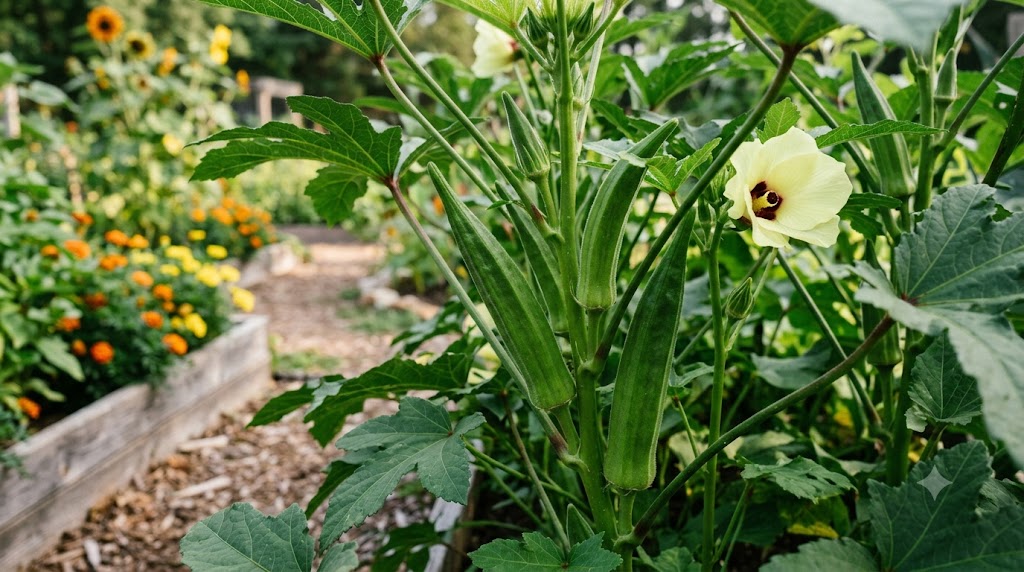
Okra comes into its own at exactly the moment the rest of the garden gives up. In the dead heat of July and August — when tomatoes drop their blossoms, lettuce bolts, and peppers sulk — okra flowers hard and pushes out a fresh pod every day or two. It is one of the most heat-loving, drought-tough vegetables you can grow, with hibiscus-cousin flowers that are beautiful in their own right. The belief that keeps most gardeners away is a myth worth dismantling: that okra is a Southern-only crop. It isn’t. With the right warm start, gardeners in Minnesota, Manitoba, and across the Canadian Prairies grow excellent okra — and this guide covers exactly how to grow okra from seed to harvest, right alongside everything the warm South needs to push it to full, towering potential.
The defining trait to plan around is heat. Most summer vegetables have a comfort ceiling: once daytime temperatures push past about 32°C (90°F), tomatoes stop setting fruit, beans drop their flowers, and leafy crops turn bitter and bolt. Okra does the opposite — it needs that heat, thriving through spells that shut everything else down and turning a punishing midsummer into its most productive stretch. In hot, dry, or humid regions where the July–August window is often wasted, okra is one of the few crops that rewards the season’s worst weather.
Okra Nutrition & What’s Edible on the Plant
Okra pods are rich in vitamin C, vitamin K, folate, and magnesium and low in calories, but their standout feature is soluble fibre — the same mucilage behind okra’s reputation for sliminess is a genuine dietary asset, studied for its role in slowing glucose absorption and supporting cholesterol levels. The plant is also more generous than most people realise: okra belongs to the mallow family (a cousin of hibiscus, hollyhock, and cotton), so the young leaves are edible cooked like any tender green, and the large cream-and-maroon flowers are edible too — mild, slightly mucilaginous, and striking in a salad.
Leaves: young, tender leaves cook down like spinach or chard; a traditional green across West Africa and the American South.
Flowers: the large hibiscus-like blooms are edible raw or battered and fried — mild and faintly okra-flavoured.
Seeds: mature dried seeds can be roasted and ground as a caffeine-free coffee substitute — an old Southern practice.
🌱 Okra Types & Varieties
Okra varieties differ along a few practical axes: plant height (from 60 cm dwarfs to 2 m giants), pod colour (green or deep red), days to maturity, and whether the plant is “spineless” for comfortable harvesting. For short-season gardeners the single most important trait is early maturity; for Southern growers with a long season, pod size and total yield matter more. The table below compares the varieties in our shop against widely grown reference types so you can see where each one fits.
| Okra Seed Variety | Height | Pods | Days to Maturity | Best For |
|---|---|---|---|---|
| Clemson Spineless | 1–1.5 m | Dark green, smooth, spineless | 55–65 days | The all-purpose garden standard — 1939 AAS winner |
| Burgundy | 1–1.5 m | Deep red (fades green cooked) | 49–60 days | Ornamental beds, tender pods, shorter seasons |
| Perkins Long Pod | 1.5–2.1 m | Bright green, ribbed, up to 20 cm | 55–60 days | Big-pod gumbo & canning in quantity |
| Emerald | 1.5–1.8 m | Round, smooth, stays tender when large | 55–60 days | Forgiving harvest window (1950s Campbell Soup type) |
| Cow Horn | 1.8–2.4 m | Very long, curved, tender even at size | 55–65 days | Huge pods; a long-season Southern heirloom |
| Star of David | 1.8–2.4 m | Fat, ribbed, star-shaped in cross-section | 60–75 days | Rich flavour; a traditional Israeli heirloom |
| Baby Bubba (dwarf) | 60–90 cm | Standard green, on a compact plant | 50–55 days | Containers, small beds & short seasons |
| Jing Orange | 1.5–1.8 m | Red-orange, slim, low-spine | 55–65 days | Heat & drought tolerance; colourful pods |
For most gardeners the choice comes down to season length and what you want to do with the harvest. If you have a long, warm summer and love gumbo or canning, the big producers shine — Perkins Long Pod and Cow Horn hand you length and volume, while Clemson Spineless remains the dependable all-rounder that suits nearly everyone. Its spineless pods and stems make daily harvesting comfortable, which is exactly what a productive okra plant demands.
If your season is short or you garden in containers, lean toward early, compact varieties: Burgundy matures quickly and doubles as an ornamental with its red pods, while true dwarfs like Baby Bubba fruit on a 60–90 cm plant that fits a large pot on a sunny balcony. Whichever you choose, all okra shares the same core needs — heat, sun, and a warm start — so variety is a matter of fit rather than difficulty.
🌱 How to Grow Okra from Seed
Okra germinates fastest at 27–32°C (80–90°F) and barely sprouts below 18°C (65°F), so warmth — not the calendar — governs when to sow okra seeds. This single fact explains most okra failures. Seed sown into cold spring soil the way you’d sow peas or lettuce simply sits, and while it sits, the swollen seed is vulnerable to the soil fungi that cause rot; warmth doesn’t just speed germination up, it shortens the window in which things go wrong. Okra also has a hard, water-resistant seed coat, so soaking the seeds in warm water for 12–24 hours (or lightly nicking the coat) speeds water uptake — but only soak when warmth follows immediately, because a pre-soaked seed pushed into cold, wet ground has lost its protective dryness and rots. In cool conditions, heat beats soaking every time.
18–21°C (65–70°F): Germinates slowly and unevenly over 2–3 weeks; workable but risky.
21–27°C (70–80°F): Reliable germination in 7–14 days.
27–32°C (80–90°F): The sweet spot — fast, even emergence in 4–7 days. Aim for this with a heat mat.
Above 35°C (95°F): Germination begins to drop off again; keep starting mix out of direct scorching heat.
Starting Okra Seeds Indoors
For everyone outside the deep South, okra is an indoor-start crop. Sow seed 4–6 weeks before your last frost — but no earlier, because okra hates being pot-bound and sulks if it outgrows its container before the soil is warm enough to receive it.
- Soak seeds in warm water for 12–24 hours (or nick the hard coat) — but only when a warm heat mat is ready to follow immediately.
- Fill deep, individual biodegradable pots you can plant whole, since okra grows a taproot and resents root disturbance.
- Sow two soaked seeds per pot about 1 cm (½ in) deep and firm the mix over them.
- Keep pots on a heat mat at 27–32°C (80–90°F) until they emerge in 4–7 days.
- Grow the seedlings on warm and under strong light, then thin to the single strongest plant per pot.
If you’re new to the indoor stage, our full guide to starting seeds indoors covers lighting, potting, and hardening off in detail.
Transplanting Okra Outdoors
The transplant is where most northern okra is won or lost, so don’t rush it — okra set into cold soil stalls for weeks and often never recovers. Transplant only once the soil has reached at least 18°C (65°F), ideally 21°C (70°F).
- Harden seedlings off gradually over about a week to adjust them to sun and wind.
- Pre-warm the bed with black plastic mulch for 1–2 weeks beforehand — this makes a real difference in cool climates.
- Wait until all frost risk has passed and nights stay reliably above 15°C (60°F).
- Transplant the whole biodegradable pot without disturbing the roots, spacing plants 30–45 cm (12–18 in) apart.
- Cover new transplants with floating row cover to trap heat and shield them until they take hold.
Direct Sowing Okra in Warm Climates
Southern and low-desert gardeners can skip the indoor start entirely and direct-sow once the soil is dependably 21°C (70°F), usually a few weeks after the last frost.
- Wait for genuinely warm soil — test it rather than trusting the calendar.
- Soak seeds for 12–24 hours to soften the coat and speed emergence.
- Sow seeds 1–2 cm (½–¾ in) deep, two or three per station, in full sun.
- Thin to the strongest seedling, leaving 30–45 cm (12–18 in) between plants.
A few pieces of gear turn a warm start from a gamble into a routine, especially in a cool climate where soil temperature is the whole game.
| Item | What to Look For | Essential For | Shop |
|---|---|---|---|
| Seedling Heat Mat | Holds 24–29°C (75–85°F); waterproof, thermostat-ready | Fast, even okra germination — the single biggest factor | View on Amazon → |
| Soil Thermometer | Instant-read probe, °C/°F, 12–18 cm stem | Knowing when soil truly hits 18°C to transplant | View on Amazon → |
| Deep Biodegradable Pots | 8–10 cm peat or coir pots that plant whole | Transplanting okra’s taproot without disturbance | View on Amazon → |
| Floating Row Cover | Lightweight frost cloth, 17–30 g/m² | Trapping heat early & shielding young transplants | View on Amazon → |
| Black Plastic Mulch | Heavy 1–1.5 mil, UV-stable sheeting | Pre-warming beds in cool-climate gardens | View on Amazon → |
🗺️ Growing Okra Across North America
Okra’s needs don’t change from place to place — heat, sun, warm soil — but the challenge you’re solving for does. A Prairie gardener is fighting a short, cool season; a Gulf Coast gardener is fighting humidity and pests; a desert gardener is fighting a drying seedbed. The three boxes below cover the climate reality most North American growers are actually working within, and the specific adjustment each one calls for.
The challenge: the season is short and spring soil stays cold for weeks, so okra sown on the usual “after frost” timetable sits in cool ground and rots before it can grow.
The adjustment: Start indoors 4–6 weeks early on a heat mat, pre-warm beds with black plastic, and transplant under row cover into 18°C+ soil. Choose early, compact varieties (Burgundy, Baby Bubba) and give okra the hottest microclimate you have — against a south-facing wall or fence. A modest but real crop is very achievable.
The challenge: warm, wet air feeds fungal disease and stink bugs build up fast over the long season, and tight spacing traps moisture that makes both worse.
The adjustment: Space generously (45–60 cm), water at the base in the morning so foliage dries, and keep good airflow between plants. Scout for stink bugs and corn earworm through the long season, and don’t overfeed — lush, crowded growth is exactly what disease wants.
The challenge: okra loves the heat, but a dry seedbed germinates unevenly and pods turn woody fast when plants run short of water at pod-set.
The adjustment: This is okra’s best climate — direct-sow into warm soil and choose drought-tolerant types like Jing Orange. Mulch heavily to hold seedbed moisture, water deeply but infrequently, and in the low desert sow a second crop in late summer for a fall harvest once the worst heat breaks.
Okra Planting Calendar by Zone
These tables translate the climate boxes into approximate dates. The first covers cooler climates where okra is an indoor-start crop; the second covers warm climates where it’s usually direct-sown. Dates shift with the year’s weather — always wait for real soil warmth (18°C/65°F) rather than a calendar square, and cross-check our planting calendar by zone for the rest of your garden.
| Zone / Region | Start Indoors | Transplant Out | Harvest | Key Adjustment |
|---|---|---|---|---|
| Zones 3–4 — AB, SK, MB (south), QC (north) · ND, MN, WI, MT | Mid–late Apr | Early–mid June (soil 18°C+) | Aug–first frost | Early varieties, black plastic + row cover; expect a modest but real crop |
| Zones 5–6 — ON (south), BC interior, NB, NS · NY, PA, OH, IA, CO Front Range | Late Apr–early May | Early–mid June | Late July–Sep | Pre-warm beds; plant in the warmest, most sheltered microclimate |
| Zone / Region | Start Indoors | Direct-Sow | Harvest | Key Adjustment |
|---|---|---|---|---|
| Zones 7–8 — coastal BC · VA, NC, TN, OR/WA coast, GA, SC, TX (north) | Optional Mar start for a jump | Late Apr–May (soil warm) | June–Oct | Long season — top plants for branching, ratoon tired plants for a second flush |
| Zones 9–11 — FL, Gulf, TX (south), CA (Central Valley & south), AZ/NV low desert | Not needed | Apr–June, and again in late summer | Late spring–frost (two crops possible) | Mulch to hold seedbed moisture in extreme heat; a fall crop dodges peak summer stress |
🌿 Caring for Okra Through the Season
Watering & Feeding Okra
Once okra is established in warm soil it’s genuinely low-maintenance, and the two most common mistakes are both about restraint. On water, okra is drought-tolerant but not drought-indifferent: it survives dry spells, yet consistent moisture during flowering and pod-set produces more pods and keeps them tender, so give it a deep soak every few days in hot weather rather than frequent shallow watering. On feeding, the classic error is too much nitrogen — a nitrogen-rich diet gives you a tall, lush, leafy plant with very few pods, the single most common answer to “why isn’t my okra producing?” Work compost into the bed at planting and aim for a slightly acidic pH of 5.8–6.8; then, if you feed at all, switch to a lower-nitrogen, phosphorus- and potassium-leaning fertilizer once flowering begins. Pale, stunted plants usually mean cold soil or poor drainage rather than a need for more feed.
Topping & Ratooning Okra for More Pods
Two techniques can meaningfully raise your harvest. Topping means pinching out the growing tip once a young plant is 45–60 cm (18–24 in) tall, which forces it to branch — and more branches mean more flowering points and more pods on a bushier, easier-to-reach plant, especially useful for the tall varieties. Ratooning is a long-season Southern trick: when a plant grows too tall to harvest comfortably or slows down in late summer, cut it back hard — by a third to a half — and it will push a fresh flush of growth and pods from the lower buds within a few weeks. Ratooning needs a long remaining season to pay off, so it’s mostly a Zone 7-and-warmer move; northern growers are better served by topping early and simply harvesting hard until frost.
✂️ Harvesting Okra at Peak Tenderness
Pick okra pods at 7–10 cm (3–4 in), every one to two days — a pod that’s perfect in the morning can be woody by the next afternoon. Pods grow astonishingly fast in heat, so the rule is to pick often and to pick even the pods you don’t need: overlooked pods that mature on the plant send a hormonal signal to stop producing, so leaving them on actually shuts your harvest down, while removing everything keeps the plant flowering. Wear gloves and long sleeves, since even “spineless” varieties have fine hairs that irritate some skin, and cut pods cleanly with scissors or shears rather than tearing them off.
The reliable field test is the snap test: bend the tip of a pod, and if it snaps off crisply it’s tender and ready; if it just bends without breaking, it has gone fibrous and is better left to mature for seed than forced onto the plate. Most varieties are at their best at 7–10 cm (3–4 in), though a few — Cow Horn and Emerald among them — stay tender at larger sizes. The box below shows what each stage looks like.
🐛 Okra Pests & Diseases: Identification & Organic Fixes
Okra is a fairly tough crop, and gardeners in cooler climates see very few problems — most of the serious pests and diseases build up over the long, warm, humid seasons of the South. The table below pairs the symptom you’ll actually notice with its likely cause and an organic fix. For a deeper rundown of organic controls across every crop, see our organic pest control guide.
| Problem | Symptoms | Likely Cause | Organic Fix |
|---|---|---|---|
| Curled, sticky new growth | Clusters of tiny green/black insects on buds and shoot tips; sooty mould below | Aphids | Blast off with water; treat undersides with insecticidal soap; invite ladybugs and lacewings with nearby flowers. |
| Shot-holes in young leaves | Tiny round holes across the foliage of small transplants | Flea beetles | Cover transplants with row cover until established; established okra shrugs off the damage. |
| Warty, dimpled, twisted pods | Pods develop bumps and bends; pale spots where insects fed | Stink bugs / leaf-footed bugs | Handpick in the cool of morning; keep weeds down; a sunflower trap crop nearby draws them off the okra. |
| Holes bored into pods | Entry holes and frass; caterpillars inside pods or buds | Corn earworm / borers | Pick and destroy affected pods; spray Bt on young larvae; harvest frequently to remove egg sites. |
| Flowers drop without setting pods | Buds and blooms fall off; little or no fruit forms during a hot spell | Heat stress above 32°C (90°F) or a cold snap below 13°C (55°F) | Usually self-corrects as temperatures moderate — keep soil evenly moist and don’t add nitrogen, which worsens blossom drop. |
| Leaves cupping or curling midday | Foliage folds or curls in the afternoon heat, then often relaxes by evening | Heat stress above 35°C (95°F) | Normally a harmless water-saving response — water deeply in the morning and mulch; only worry if leaves also yellow or wilt persistently. |
| Whole plant yellows & wilts | Lower leaves yellow, plant wilts in heat despite moist soil; brown streaks in cut stems | Fusarium / verticillium wilt | No cure once infected — remove plants, rotate okra on a 3–4 year cycle, and don’t replant okra in that spot. |
| Stunted plants, knobby roots | Poor growth in heat; roots covered in galls and swellings when dug | Root-knot nematodes | Rotate with marigolds or a resistant cover crop; add organic matter; avoid replanting susceptible crops in that bed. |
| Leaves yellow, no pests visible | General yellowing, slow growth, plant looks sullen early in the season | Cold soil / waterlogging | Almost always temperature, not nutrition — wait for real warmth, improve drainage, and resist the urge to add nitrogen. |
🌸 Companion Planting for Okra
Okra’s tall, upright habit and heat tolerance make it a useful garden neighbour — it can shelter shorter crops from harsh afternoon sun and stands out of the way of low sprawlers. Its best companions share its love of heat, and its most valuable trick is as a backdrop for a stink-bug trap crop. For the full cross-crop reference, see our vegetable companion planting chart.
| Companion Seeds | Relationship | Benefit / Mechanism |
|---|---|---|
| Peppers & eggplant | ✔ Excellent | Fellow heat-lovers on the same schedule; okra’s height gives them a little afternoon shade in extreme heat. |
| Southern peas (cowpeas) | ✔ Excellent | A traditional Southern pairing — the legume fixes nitrogen and covers the ground while okra climbs above it. |
| Sunflowers | ✔ Trap crop | Stink bugs and leaf-footed bugs strongly prefer sunflowers — plant a few nearby to pull pests off your okra pods. |
| Basil & aromatic herbs | ✔ Good | Low, fragrant growth fills the ground layer and may help confuse or deter some pests around the base. |
| Lettuce & leafy greens | ✔ Good | Early greens use the space while okra is small; later, okra’s canopy shades them from bolting in the heat. |
| Melons & sweet potato | ⚠ With care | Fine as a living mulch beneath tall okra, but give them room — aggressive vines can swamp young okra plants. |
| Vining squash on young okra | ✘ Avoid early | Rampant squash will smother small okra transplants; only interplant once okra is well established and tall. |
🍽️ How to Cook Okra Without the Slime
Okra’s reputation for sliminess is really a misunderstanding of a feature. That mucilage isn’t a flaw to tolerate — it’s a dial you control with your cooking method. Some techniques dissolve it into a silky thickener (exactly what you want in gumbo), while others drive it off almost entirely for a crisp, clean result. Once you know which method does what, “slimy okra” stops being a problem and becomes a choice.
The two forces that cut mucilage are dry high heat and acid. Roasting, grilling, and frying at high temperature evaporate and crisp the pods; a splash of vinegar, lemon, or tomato neutralizes the slipperiness chemically. Long, wet, low simmering does the opposite — it releases the mucilage into the liquid, which is precisely why sliced okra thickens a gumbo or stew so beautifully. Keeping pods whole and dry until they hit the pan, and not overcrowding, also keeps things crisp.
| Method | Slime Level | Best For |
|---|---|---|
| Roasted or grilled whole | Minimal | Crisp, blistered pods with concentrated flavour — the best convert for okra skeptics |
| Fried (cornmeal-battered) | None | Classic Southern fried okra — crunchy, universally loved |
| Pickled in vinegar | None (acid neutralizes) | Crisp, tangy snacking pods and cocktail garnishes |
| Quick stir-fry, high heat | Low | Tender-crisp okra with garlic, tomato, and spice — Indian and South Asian style |
| Simmered in gumbo / stew | High (by design) | Using okra as a natural thickener — the mucilage is the whole point here |
🫙 Saving Okra Seeds
Okra is one of the easiest crops to save seed from, and the process is simply an extension of the harvest you’re already doing. Choose a few of your healthiest, most productive plants and leave several of their best pods unpicked to mature fully — they’ll swell, turn brown and woody, dry on the plant, and eventually begin to split along the ribs. Cut them before they shatter and drop their seed, then finish drying them indoors for a week or two. Split the dry pods open (gloves help — mature pods can be prickly) and shake out the round, dark seeds, which store in a cool, dry jar and stay viable for two to four years. A quick damp-paper-towel germination test before sowing older seed saves disappointment.
Two things determine whether that saved seed comes true. First, variety type: open-pollinated and heirloom okra — including Clemson Spineless, Perkins, and Burgundy — grows true to type from saved seed, while F1 hybrids will not and are not worth saving. Second, cross-pollination: okra flowers are largely self-pollinating but are also visited by bees, so two varieties flowering close together can cross. If you’re saving from more than one variety and want pure seed, separate them by about 300 metres (1,000 ft), stagger their flowering, or bag a few blooms by hand before they open. Our full guide to saving seeds walks through isolation, drying, and storage for every crop.
🌍 A Short History of Okra
Few vegetables carry as much culture in a single pod as okra. Its journey runs from the highlands of Africa, across the Atlantic in the worst chapter of human history, and up into the modern gardens of the northern US and Canada — and its name travelled with it.


