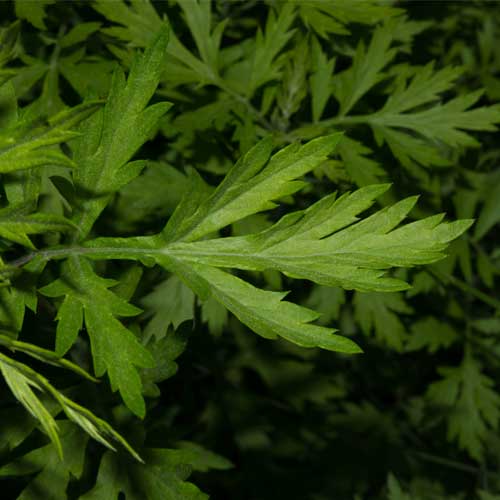
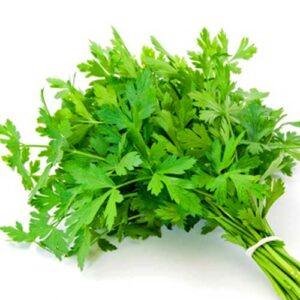
Type: Herb — Perennial, Culinary & Medicinal Botanical Name:Artemisia vulgaris Plant Type: Perennial — Open-Pollinated, Zones 4–10 Days to Sprout: 10–21 days Aroma: Camphor-forward, resinous, thujone-bearing Plant Size: 90–180 cm (3–6 ft) Habit: Vigorous, rhizome-spreading — contain in dedicated areas
As an Amazon Associate, I earn from qualifying purchases — at no extra cost to you.
Mugwort: The Artemisia Behind Mochi, Moxa & Dream Tea
Mugwort (Artemisia vulgaris) is one of the most widely used herbs in Asia — the green in Japanese yomogi mochi, the ssuk of Korean rice cakes and soups, and the source of moxa burned in traditional Chinese medicine for more than a millennium. It’s a bold, vigorous perennial reaching 90–180 cm (3–6 ft), with deeply divided dark-green leaves, silvery undersides, and a complex earthy-resinous fragrance when crushed.
This is a plant with range: a warming culinary bitter, a dream and sleep herb, a moxibustion staple, and one of the oldest documented mosquito deterrents for people. It spreads freely by rhizome and self-seeds, so grow it in a dedicated bed or a buried container. Young spring leaves are the mildest for the kitchen; mature summer leaves turn more bitter and suit medicinal and moxa use. Like its relative wormwood, mugwort should be avoided during pregnancy given its traditional use as a uterine stimulant.
🌍 Where Mugwort Grows Best
🇨🇦 Canada: Perennial in Zones 4–10 and hardy across nearly all of Canada. Spreads vigorously — contain in dedicated beds or buried pots. 🇺🇸 US: Zones 4–10; widely naturalized and common in disturbed ground nationwide. Best for: Dedicated medicinal herb gardens, Asian culinary herb beds, patio containers, and wild corners where spreading is welcome.
🌱 How to Grow Mugwort Seeds
Mugwort seeds are tiny and need light to sprout, so surface-sow and never cover them. A short cold-moist chill before sowing lifts the germination rate noticeably.
Cold-stratify the seeds in barely-damp sand in the fridge for 2–4 weeks (optional in mild regions, worthwhile everywhere).
Surface-sow onto moist seed-starting mix and press gently for contact — do not cover the seed.
Hold at 18–22°C (65–72°F) and keep the surface consistently moist; expect germination in 10–21 days.
Start indoors 6–8 weeks before last frost, or direct-sow outdoors once nights stay above 5°C (40°F).
Transplant to 45–60 cm (18–24 in) apart in full sun to partial shade — the plants fill the gaps fast.
Once established, mugwort is self-sufficient — drought-tolerant, largely pest-free, and vigorous enough to outcompete weeds. It thrives in poor, rocky, or fertile soil and asks for little. Contain it with buried pots or a rhizome barrier so it stays where you want it.
🌿 Harvesting & Drying Mugwort
Harvest mugwort leaves just before the flower buds open, when the aromatic oils peak — crush a leaf and a strong camphor scent means it’s ready. Cut stems above a leaf node with clean shears. For culinary use, pick young spring leaves; for tea, moxa, and drying, take mature summer growth.
Bundle stems no thicker than 2 cm (¾ in) and hang them upside down in a warm, airy, shaded spot — direct sun degrades the volatile oils. Drying takes 7–14 days; leaves are ready when they crumble cleanly. Store stripped leaves in sealed glass jars away from heat and light, where properly dried mugwort keeps its character for 12+ months.
🍵 Using Mugwort: Tea, Dreams, Moxa & the Kitchen
The mugwort seeds you plant grow into one of the most versatile herbs in the garden. In the kitchen, young leaves colour and flavour mochi and appear in Korean soups and pancakes as ssuk; the bitterness also cuts through fatty meats and game the way sage does. As a tea, a light evening cup — one teaspoon of dried herb per cup, steeped 5 minutes — is the traditional dream and sleep preparation, and dried leaves stuffed into a sachet make a classic dream pillow.
Dried mugwort is also the raw material for moxa, rolled into sticks or cones and smouldered near acupuncture points in moxibustion, and its steady, resinous smoke has long been burned as a smudge and as one of the oldest mosquito deterrents. Keep all internal and smoke uses well away from anyone pregnant, and patch-test on skin, as daisy-family allergies can cross-react.
🌱 Saving Mugwort Seeds
Mugwort sets seed prolifically. Let the small yellow-green flower clusters dry to brown and papery on the plant, then clip whole heads into a paper bag and shake the seed loose. Screen out debris and store in a sealed jar in a cool, dark place, where viability holds for 1–3 years.
Mugwort is open-pollinated but wind-pollinated, and it crosses freely with other Artemisia species nearby, including wormwood — so bag flower heads before they open if you want pure seed. To test a lot, place 10 seeds on a damp paper towel, seal in a bag, and check after 14 days; 7 or more sprouts means the seed is worth sowing.
🔎 Keep Exploring
🌿 More Herb Seeds
Browse the full range of culinary and medicinal herbs for Zones 3–9.
Mugwort is a multi-use perennial herb. In the kitchen it flavours and colours Japanese mochi and Korean ssuk dishes and seasons fatty meats. Medicinally it’s a digestive bitter and the classic dream and sleep herb taken as tea. Dried, it becomes moxa for moxibustion, a smudge for clearing a space, and a natural mosquito deterrent when burned. It’s also grown as an aromatic garden plant that repels pests from nearby beds.
What is mugwort used for in Asian cooking?
Young spring leaves are blended into rice flour to make mugwort mochi (kusa mochi) — the green colour and earthy-herbal flavour are the whole point. In Korea, mugwort (ssuk) goes into rice cakes, soups, and pancakes; in Japan, young leaves are also blanched for vegetable dishes and tempura. The flavour is strongly herbal and slightly bitter — an acquired taste central to East Asian spring cooking.
How do I grow mugwort from seed?
Surface-sow the seed on moist mix and don’t cover it — mugwort needs light to germinate. Hold it at 18–22°C (65–72°F) and keep the surface moist; seedlings appear in 10–21 days. Start indoors 6–8 weeks before last frost or direct-sow after frost, then space plants 45–60 cm (18–24 in) apart in full sun to partial shade.
Do mugwort seeds need cold stratification?
Not strictly, but it helps. Mixing the seed with barely-damp sand and refrigerating it for 2–4 weeks before sowing improves germination speed and rate, especially in cold regions. Winter-sowing outdoors chills the seed naturally so it sprouts as the ground warms.
How do I make mugwort tea, and is it safe?
Use one teaspoon of dried mugwort per cup, steep 5 minutes, and drink no more than 3–4 times a week — a light evening cup is the traditional dream and sleep preparation. Never drink mugwort tea during pregnancy, as it acts as a uterine stimulant. People with daisy-family allergies, liver conditions, or on medication should check with a healthcare provider, since thujone is cumulative at high doses.
Does mugwort help with dreams?
Mugwort is a traditional dream herb, used for centuries as a tea before bed or a dried-leaf dream pillow tucked into the pillowcase. The likely mechanism is thujone in its volatile oil, a GABA-receptor modulator that appears to heighten dream vividness and recall without fragmenting sleep. Effects vary widely between individuals; if dreams run too intense, use less.
What is moxibustion?
Moxibustion is a traditional Chinese medicine practice in which dried mugwort — processed into a soft material called moxa — is smouldered near or on acupuncture points to deliver gentle warmth. The dried leaves are ground and sieved, then rolled into sticks or cones and burned slowly. It’s used in TCM for conditions linked to cold or stagnation. Home-grown mugwort is the same raw material, though not clinical-grade moxa.
Does mugwort repel mosquitoes?
Yes — mugwort’s essential oil contains camphor, 1,8-cineole, and borneol, compounds shown in research to repel mosquitoes at measurable concentrations. Living plants give passive deterrence on hot days, crushed leaves rubbed on skin offer about 30–60 minutes of protection, and burning dried bundles gives the strongest effect. A 2022 study found certain mugwort populations rivalled DEET against Anopheles mosquitoes when the oil was burned.
Is mugwort invasive, and how do I contain it?
Mugwort spreads aggressively by rhizome and self-seeds, and is naturalized across much of North America. Grow it responsibly by containing the roots: a pot sunk with the rim 5 cm (2 in) above soil, a rhizome barrier buried 30–45 cm (12–18 in) deep, or a dedicated area bordered by mowed lawn or pavement. Deadhead before seed set to stop it spreading by seed as well.
Is mugwort the same as wormwood?
Related but distinct. Both are Artemisia species, but wormwood (A. absinthium) has intensely silver foliage, higher thujone, and the absinthe association, while mugwort (A. vulgaris) has green leaves, less thujone, and the broad culinary and moxa uses of East Asian tradition. Both should be avoided during pregnancy.
🌿 The Herb Behind Mochi, Moxa & Dreams
Heirloom mugwort seeds — perennial in Zones 4–10, for the kitchen, the tea pot, and the patio.
As an Amazon Associate, I earn from qualifying purchases — at no extra cost to you.