https://www.seed-bank.ca/wp-content/cache/breeze-minification/js/breeze_product-garden-sage-seeds-1-2122-breeze-google-gtag.js?ver=1787160826
https://www.seed-bank.ca/wp-content/cache/breeze-minification/js/breeze_product-garden-sage-seeds-1-2122-js-timeme-timeme.min.js?ver=1787160826
https://www.seed-bank.ca/wp-content/cache/breeze-minification/js/breeze_product-garden-sage-seeds-1-2122-inline_script_1.js?ver=1787160826
https://www.seed-bank.ca/wp-content/cache/breeze-minification/js/breeze_product-garden-sage-seeds-1-2122-js-js-front-end-breeze-prefetch-links.min.js?ver=1787160826
https://www.seed-bank.ca/wp-content/cache/breeze-minification/js/breeze_product-garden-sage-seeds-1-2122-js-jquery-jquery.min.js?ver=1787160826
https://www.seed-bank.ca/wp-content/cache/breeze-minification/js/breeze_product-garden-sage-seeds-1-2122-js-jquery-jquery-migrate.min.js?ver=1787160826
https://www.seed-bank.ca/wp-content/cache/breeze-minification/js/breeze_product-garden-sage-seeds-1-2122-js-jquery-blockui-jquery.blockUI.min.js?ver=1787160826
https://www.seed-bank.ca/wp-content/cache/breeze-minification/js/breeze_product-garden-sage-seeds-1-2122-inline_script_2.js?ver=1787160826
https://www.seed-bank.ca/wp-content/cache/breeze-minification/js/breeze_product-garden-sage-seeds-1-2122-js-frontend-add-to-cart.min.js?ver=1787160826
https://www.seed-bank.ca/wp-content/cache/breeze-minification/js/breeze_product-garden-sage-seeds-1-2122-js-zoom-jquery.zoom.min.js?ver=1787160826
https://www.seed-bank.ca/wp-content/cache/breeze-minification/js/breeze_product-garden-sage-seeds-1-2122-inline_script_3.js?ver=1787160826
https://www.seed-bank.ca/wp-content/cache/breeze-minification/js/breeze_product-garden-sage-seeds-1-2122-js-frontend-single-product.min.js?ver=1787160826
https://www.seed-bank.ca/wp-content/cache/breeze-minification/js/breeze_product-garden-sage-seeds-1-2122-js-js-cookie-js.cookie.min.js?ver=1787160826
https://www.seed-bank.ca/wp-content/cache/breeze-minification/js/breeze_product-garden-sage-seeds-1-2122-inline_script_4.js?ver=1787160826
https://www.seed-bank.ca/wp-content/cache/breeze-minification/js/breeze_product-garden-sage-seeds-1-2122-js-frontend-woocommerce.min.js?ver=1787160826
Skip to contentGarden Sage Seeds
Type: Herb — Perennial
Botanical Name: Salvia officinalis
Plant Type: Perennial — Open-Pollinated, Zones 5–8
Days to Germination: 10–21 days
Height: 45–60cm (18–24 inches), woody shrub
Sow: Start indoors 6–8 weeks before last frost
Light: Full Sun — excellent drainage essential
Uses: Culinary, medicinal, aromatic, pollinator plant, companion planting
As an Amazon Associate, I earn from qualifying purchases — at no extra cost to you.The Mediterranean Perennial at the Heart of Culinary Tradition
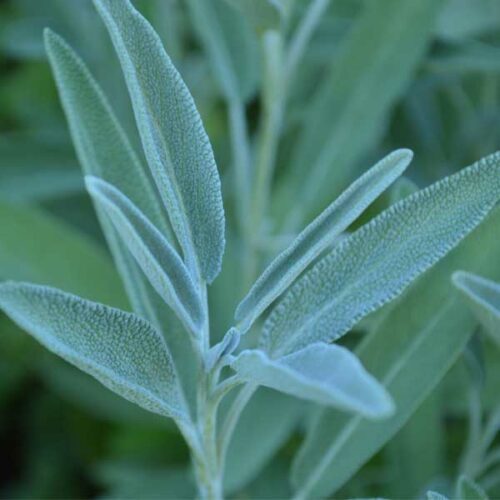
Garden Sage (Salvia officinalis) is one of the oldest and most revered culinary herbs in the European tradition — a compact, woody perennial that has been grown in kitchen gardens for over 2,000 years. The broad, velvety, grey-green leaves carry an intensely aromatic, slightly camphor-like fragrance that mellows into a warm, earthy, almost piney flavour when cooked. It’s the herb of Thanksgiving stuffing, saltimbocca, brown butter sauces, and classic pork and poultry seasoning — and it’s also one of the easiest Mediterranean herbs to grow successfully in Canadian gardens, performing as a reliable perennial in Zones 5–8 with the right drainage and sun.
The plants grow into dense, attractive shrubs 45–60cm (18–24 inches) tall with broad, textured leaves and spikes of purple-blue flowers in early summer that are intensely attractive to bees and hummingbirds. Sage improves with age — an established 3–4 year-old plant is dramatically more productive and woodier than a first-year seedling. It also dries exceptionally well, retaining full flavour for 12–18 months in a sealed jar.
🌍 Growing Zones & Climate Performance
🇨🇦 Canada: Perennial in Zones 5–8. Reliable in BC, southern Ontario (GTA, Niagara), and comparable climates. In Zone 4, mulch roots heavily after ground freezes and it may survive; treat as annual if not. Excellent drainage is more important than cold tolerance — sage in wet winter soil dies of rot before it dies of cold.
🇺🇸 US: Zones 5–8. Thrives across most of the continental US except the coldest prairie winters and the most humid Southeast summers.
Best for: Kitchen herb gardens, Mediterranean herb collections, companion planting with brassicas, pollinator gardens.
🌱 How to Grow Garden Sage from Seed
Sage is slow to establish from seed but long-lived once it is — a well-situated sage plant can thrive for 5–10 years. Start seeds indoors 6–8 weeks before last frost. Barely cover seeds (3mm / ⅛ inch) on moist seed-starting mix at 18–21°C (65–70°F); germination takes 10–21 days. Grow seedlings under bright light. Transplant outdoors after last frost, 45–60cm (18–24 inches) apart, in a sunny location with excellent drainage.
Garden Sage performs best in lean, alkaline, sharply drained soil — the same conditions as lavender and thyme. Rich, moist garden beds tend to produce soft, lush growth that’s more prone to disease and winter dieback. Avoid heavy fertilizing. Prune by cutting back by one-third after flowering — never cutting into old woody stems. See our full guide: How to Grow Sage from Seed.
📋 Growing Quick Reference
Start indoors
6–8 weeks before last frost
Germination
10–21 days at 18–21°C (65–70°F)
Spacing
45–60cm (18–24 inches)
Soil
Lean, alkaline, excellent drainage
Hardiness
Perennial Zones 5–8
Bloom time
Early summer — purple-blue spikes
My sage is getting woody and producing few leaves — what should I do?
Sage naturally becomes woody and less productive after 4–5 years. In early spring before growth begins, cut the plant back hard — down to 10–15cm (4–6 inches) from the base, leaving some green growth visible. This often forces vigorous new growth from the base and rejuvenates the plant for another 2–3 productive years. If the plant doesn’t respond with new growth within 4–6 weeks, it’s time to start new plants from seed or cuttings.
Can sage survive winter in Canada?
Yes, as a perennial in Zones 5–8 — which covers BC, southern Ontario, and similar climates. The key is excellent drainage: sage in wet winter soil rots at the crown regardless of temperature. Plant in raised beds or on a slope, avoid heavy clay, and do not mulch with materials that hold moisture against the stem. A gravel mulch that keeps the crown dry is better than straw.
Fresh vs. dried sage — when to use each?
Fresh sage has a brighter, more herbaceous quality — best in quick applications like fried sage leaves in brown butter, or torn into pasta. Dried sage is more intensely aromatic and better suited to long-cooked applications like stuffing, where it needs to infuse over time. For most culinary uses, dried sage is perfectly appropriate and often preferable for its concentrated flavour.
How do I dry sage for cooking?
Harvest stems in the morning just before flowering — essential oil content is highest at this point. Tie in small bundles and hang upside down in a warm, dry, well-ventilated space away from direct light for 2–3 weeks. Once leaves crumble easily, strip them from the stems and store in an airtight jar away from heat and light. Dried sage retains full flavour for 12–18 months.
Is sage good as a companion plant?
Yes — sage’s strong volatile oils deter cabbage moths, carrot flies, and flea beetles when planted near brassicas and carrots. It also attracts beneficial insects with its flowers. Plant near cabbages, broccoli, and Brussels sprouts for pest deterrence. Keep away from cucumbers, which reportedly don’t do well near sage. See our
Vegetable Companion Planting Chart for full details.
🌿 The Kitchen Garden Essential — 2,000 Years of Proven Performance
Garden Sage Seeds on Amazon — heirloom, open-pollinated, perennial Zones 5–8. Ships to Canada and the US.
As an Amazon Associate, I earn from qualifying purchases — at no extra cost to you.
Buy Garden Sage Seeds on Amazon →https://www.seed-bank.ca/wp-content/cache/breeze-minification/js/breeze_product-garden-sage-seeds-1-2122-inline_script_5.js?ver=1787160826
https://www.seed-bank.ca/wp-content/cache/breeze-minification/js/breeze_product-garden-sage-seeds-1-2122-js-dist-hooks.min.js?ver=1787160826
https://www.seed-bank.ca/wp-content/cache/breeze-minification/js/breeze_product-garden-sage-seeds-1-2122-js-dist-i18n.min.js?ver=1787160826
https://www.seed-bank.ca/wp-content/cache/breeze-minification/js/breeze_product-garden-sage-seeds-1-2122-inline_script_6.js?ver=1787160826
https://www.seed-bank.ca/wp-content/cache/breeze-minification/js/breeze_product-garden-sage-seeds-1-2122-js-dist-url.min.js?ver=1787160826
https://www.seed-bank.ca/wp-content/cache/breeze-minification/js/breeze_product-garden-sage-seeds-1-2122-js-dist-api-fetch.min.js?ver=1787160826
https://www.seed-bank.ca/wp-content/cache/breeze-minification/js/breeze_product-garden-sage-seeds-1-2122-inline_script_7.js?ver=1787160826
https://www.seed-bank.ca/wp-content/cache/breeze-minification/js/breeze_product-garden-sage-seeds-1-2122-burst-js-burst.min.js?ver=1787160826
https://www.seed-bank.ca/wp-content/cache/breeze-minification/js/breeze_product-garden-sage-seeds-1-2122-inline_script_8.js?ver=1787160826
https://www.seed-bank.ca/wp-content/cache/breeze-minification/js/breeze_product-garden-sage-seeds-1-2122-static-bundle-main.js?ver=1787160826
https://www.seed-bank.ca/wp-content/cache/breeze-minification/js/breeze_product-garden-sage-seeds-1-2122-js-sourcebuster-sourcebuster.min.js?ver=1787160826
https://www.seed-bank.ca/wp-content/cache/breeze-minification/js/breeze_product-garden-sage-seeds-1-2122-inline_script_9.js?ver=1787160826
https://www.seed-bank.ca/wp-content/cache/breeze-minification/js/breeze_product-garden-sage-seeds-1-2122-js-frontend-order-attribution.min.js?ver=1787160826
https://www.seed-bank.ca/wp-content/cache/breeze-minification/js/breeze_product-garden-sage-seeds-1-2122-inline_script_10.js?ver=1787160826
https://www.seed-bank.ca/wp-content/cache/breeze-minification/js/breeze_product-garden-sage-seeds-1-2122-javascript-dist-script.min.js?ver=1787160826
https://www.seed-bank.ca/wp-content/cache/breeze-minification/js/breeze_product-garden-sage-seeds-1-2122-inline_script_11.js?ver=1787160826