https://www.seed-bank.ca/wp-content/cache/breeze-minification/js/breeze_product-italian-parsley-seeds-1-2075-breeze-google-gtag.js?ver=1786525070
https://www.seed-bank.ca/wp-content/cache/breeze-minification/js/breeze_product-italian-parsley-seeds-1-2075-js-timeme-timeme.min.js?ver=1786525070
https://www.seed-bank.ca/wp-content/cache/breeze-minification/js/breeze_product-italian-parsley-seeds-1-2075-inline_script_1.js?ver=1786525070
https://www.seed-bank.ca/wp-content/cache/breeze-minification/js/breeze_product-italian-parsley-seeds-1-2075-js-js-front-end-breeze-prefetch-links.min.js?ver=1786525070
https://www.seed-bank.ca/wp-content/cache/breeze-minification/js/breeze_product-italian-parsley-seeds-1-2075-js-jquery-jquery.min.js?ver=1786525070
https://www.seed-bank.ca/wp-content/cache/breeze-minification/js/breeze_product-italian-parsley-seeds-1-2075-js-jquery-jquery-migrate.min.js?ver=1786525070
https://www.seed-bank.ca/wp-content/cache/breeze-minification/js/breeze_product-italian-parsley-seeds-1-2075-js-jquery-blockui-jquery.blockUI.min.js?ver=1786525070
https://www.seed-bank.ca/wp-content/cache/breeze-minification/js/breeze_product-italian-parsley-seeds-1-2075-inline_script_2.js?ver=1786525070
https://www.seed-bank.ca/wp-content/cache/breeze-minification/js/breeze_product-italian-parsley-seeds-1-2075-js-frontend-add-to-cart.min.js?ver=1786525070
https://www.seed-bank.ca/wp-content/cache/breeze-minification/js/breeze_product-italian-parsley-seeds-1-2075-js-zoom-jquery.zoom.min.js?ver=1786525070
https://www.seed-bank.ca/wp-content/cache/breeze-minification/js/breeze_product-italian-parsley-seeds-1-2075-inline_script_3.js?ver=1786525070
https://www.seed-bank.ca/wp-content/cache/breeze-minification/js/breeze_product-italian-parsley-seeds-1-2075-js-frontend-single-product.min.js?ver=1786525070
https://www.seed-bank.ca/wp-content/cache/breeze-minification/js/breeze_product-italian-parsley-seeds-1-2075-js-js-cookie-js.cookie.min.js?ver=1786525070
https://www.seed-bank.ca/wp-content/cache/breeze-minification/js/breeze_product-italian-parsley-seeds-1-2075-inline_script_4.js?ver=1786525070
https://www.seed-bank.ca/wp-content/cache/breeze-minification/js/breeze_product-italian-parsley-seeds-1-2075-js-frontend-woocommerce.min.js?ver=1786525070
Skip to contentItalian Parsley Seeds
Type: Herb — Biennial (grown as annual)
Botanical Name: Petroselinum crispum var. neapolitanum
Also Known As: Flat-Leaf Parsley
Plant Type: Biennial — Open-Pollinated
Days to Germination: 14–28 days (soak seeds 24 hrs before sowing)
Days to Harvest: 70–90 days
Sow: Start indoors 6–8 weeks before last frost; direct sow 2–4 weeks before frost
Light: Full Sun to Partial Shade
Uses: Culinary, chimichurri, gremolata, tabbouleh, persillade, all cooked dishes
As an Amazon Associate, I earn from qualifying purchases — at no extra cost to you.The Chef’s Parsley — Stronger, Cleaner, Better for Cooking
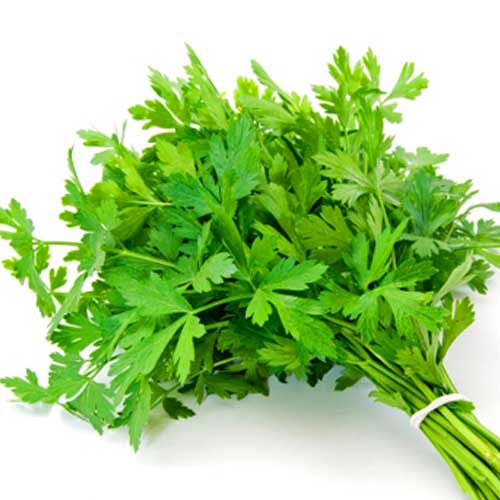
Italian Parsley (Petroselinum crispum var. neapolitanum), also called flat-leaf parsley, is the professional cook’s parsley — preferred over curly parsley in restaurant kitchens for its stronger, more complex flavour and flat leaves that chop cleanly without turning into a wet mush. The taste is more robust and herbal than Moss Curled Parsley, with an intensity that holds up during cooking rather than fading. It’s the parsley in gremolata, chimichurri, tabbouleh, and persillade — and the one that makes the difference in a dish rather than simply sitting on top of it as garnish.
The plant grows more vigorously than curly parsley, producing tall, upright stems with broad, flat, deeply lobed leaves in a rich deep green. A healthy Italian parsley plant is genuinely productive — one or two plants kept well-watered and regularly harvested will supply a full household with fresh parsley through the growing season. As a biennial it produces abundant leaf in its first year; in its second it flowers, sets seed, and dies. Most gardeners treat it as an annual and resow each spring.
🌍 Growing Zones & Climate Performance
🇨🇦 Canada: Biennial grown as annual across all zones. Sow spring through early summer. Tolerates light frost and continues producing into fall. Cold frames extend harvest through early winter in Zones 5–8.
🇺🇸 US: Annual/biennial. Fall sowing for winter/spring harvest in Zones 7+. Spring sowing in all zones.
Best for: Kitchen herb gardens, container growing, companion planting, culinary gardeners who cook seriously.
🌱 How to Grow Italian Parsley
Parsley seeds have natural germination inhibitors — soak in warm water for 24 hours before sowing to significantly speed germination. Sow 6mm (¼ inch) deep at 15–21°C (60–70°F); germination takes 14–28 days. Start indoors 6–8 weeks before last frost in biodegradable pots to minimize root disturbance — parsley has a taproot and dislikes transplanting. Alternatively, direct sow outdoors 2–4 weeks before last frost. Space plants 20–30cm (8–12 inches) apart in full sun to partial shade with consistently moist, fertile soil.
Harvest from the outside of the plant, cutting outer stems at the base — never strip the plant bare. Italian parsley benefits from consistent moisture; drought stress causes the leaves to develop a bitter, harsh flavour. Feed with a nitrogen-rich liquid fertilizer monthly to maintain productive, dark green leaf growth. See our companion planting guide: Vegetable Companion Planting Chart.
📋 Growing Quick Reference
Pre-sow tip
Soak seeds 24 hours in warm water
Germination
14–28 days at 15–21°C (60–70°F)
Start indoors
6–8 weeks before last frost
Days to harvest
70–90 days from sowing
Spacing
20–30cm (8–12 inches)
Lifecycle
Biennial — grown as annual for leaf
Italian vs. curly parsley — which is better?
For cooking, Italian flat-leaf parsley is almost universally preferred by serious cooks. The flavour is stronger, more complex, and holds up better in heat. Flat leaves chop cleanly and release flavour readily.
Curly parsley has a milder, cleaner taste, holds its shape in salads, and works well as a decorative garnish. Growing both gives you the best of both.
My parsley leaves are turning yellow — what’s wrong?
The most common causes are nitrogen deficiency (feed with a nitrogen-rich fertilizer), overwatering and root rot, or natural senescence of older outer leaves (normal — remove and new inner growth will replace them). Check drainage first — waterlogged soil causes root rot that yellows the whole plant from the bottom up. If drainage is good, feed monthly with a balanced liquid fertilizer.
Can I grow Italian parsley indoors over winter?
Yes, though production slows significantly in winter light. A south-facing window or grow light producing 6+ hours of bright light keeps a potted plant in leaf. Sow seeds in late summer for a fall transplant indoors. Water consistently but allow the top of the soil to dry slightly between waterings indoors — overwatering is the most common killer of indoor herbs.
What is chimichurri and how do I make it?
Chimichurri is the Argentine herb sauce that’s perhaps the best use of large quantities of fresh flat-leaf parsley. Roughly chop a large bunch of Italian parsley (about 2 cups packed), combine with 5–6 garlic cloves, 3 tbsp red wine vinegar, 1 tsp dried red chili flakes, and enough olive oil to bring it together into a chunky sauce. Season generously with salt. Use as a marinade, a sauce for grilled steak, or a dressing for roasted vegetables. Fresh Italian parsley is the essential ingredient — dried parsley doesn’t work.
🌿 The Parsley That Makes the Difference in Your Cooking
Italian Parsley Seeds on Amazon — heirloom flat-leaf, open-pollinated, highly productive. Ships to Canada and the US.
As an Amazon Associate, I earn from qualifying purchases — at no extra cost to you.
Buy Italian Parsley Seeds on Amazon →https://www.seed-bank.ca/wp-content/cache/breeze-minification/js/breeze_product-italian-parsley-seeds-1-2075-inline_script_5.js?ver=1786525070
https://www.seed-bank.ca/wp-content/cache/breeze-minification/js/breeze_product-italian-parsley-seeds-1-2075-js-dist-hooks.min.js?ver=1786525070
https://www.seed-bank.ca/wp-content/cache/breeze-minification/js/breeze_product-italian-parsley-seeds-1-2075-js-dist-i18n.min.js?ver=1786525070
https://www.seed-bank.ca/wp-content/cache/breeze-minification/js/breeze_product-italian-parsley-seeds-1-2075-inline_script_6.js?ver=1786525070
https://www.seed-bank.ca/wp-content/cache/breeze-minification/js/breeze_product-italian-parsley-seeds-1-2075-js-dist-url.min.js?ver=1786525070
https://www.seed-bank.ca/wp-content/cache/breeze-minification/js/breeze_product-italian-parsley-seeds-1-2075-js-dist-api-fetch.min.js?ver=1786525070
https://www.seed-bank.ca/wp-content/cache/breeze-minification/js/breeze_product-italian-parsley-seeds-1-2075-inline_script_7.js?ver=1786525070
https://www.seed-bank.ca/wp-content/cache/breeze-minification/js/breeze_product-italian-parsley-seeds-1-2075-burst-js-burst.min.js?ver=1786525070
https://www.seed-bank.ca/wp-content/cache/breeze-minification/js/breeze_product-italian-parsley-seeds-1-2075-inline_script_8.js?ver=1786525070
https://www.seed-bank.ca/wp-content/cache/breeze-minification/js/breeze_product-italian-parsley-seeds-1-2075-static-bundle-main.js?ver=1786525070
https://www.seed-bank.ca/wp-content/cache/breeze-minification/js/breeze_product-italian-parsley-seeds-1-2075-js-sourcebuster-sourcebuster.min.js?ver=1786525070
https://www.seed-bank.ca/wp-content/cache/breeze-minification/js/breeze_product-italian-parsley-seeds-1-2075-inline_script_9.js?ver=1786525070
https://www.seed-bank.ca/wp-content/cache/breeze-minification/js/breeze_product-italian-parsley-seeds-1-2075-js-frontend-order-attribution.min.js?ver=1786525070
https://www.seed-bank.ca/wp-content/cache/breeze-minification/js/breeze_product-italian-parsley-seeds-1-2075-inline_script_10.js?ver=1786525070
https://www.seed-bank.ca/wp-content/cache/breeze-minification/js/breeze_product-italian-parsley-seeds-1-2075-javascript-dist-script.min.js?ver=1786525070
https://www.seed-bank.ca/wp-content/cache/breeze-minification/js/breeze_product-italian-parsley-seeds-1-2075-inline_script_11.js?ver=1786525070
https://www.seed-bank.ca/wp-content/cache/breeze-minification/js/breeze_product-italian-parsley-seeds-1-2075-html-js-photoswipe-fix.js?ver=1786525070
https://www.seed-bank.ca/wp-content/cache/breeze-minification/js/breeze_product-italian-parsley-seeds-1-2075-inline_script_12.js?ver=1786525070