The Hardest-Working Annual in the Vegetable Garden
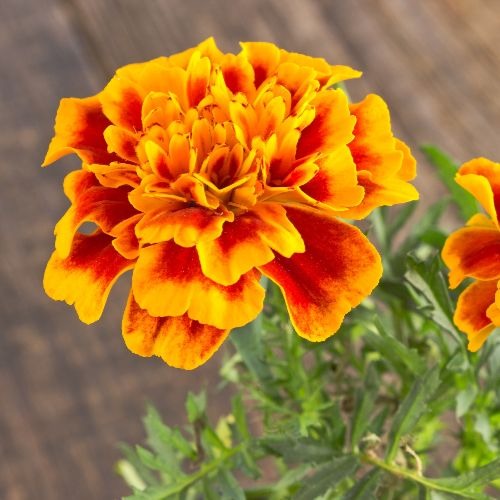
French Marigold (Tagetes patula) is the garden annual with the longest track record of actually doing what companion planting promises. Unlike many “pest-repelling” plants whose benefits are largely anecdotal, French Marigolds have genuine research support: the roots release alpha-terthienyl, a compound toxic to root-knot nematodes — microscopic soil parasites that cause significant damage to tomatoes, peppers, cucumbers, and carrots. A dense planting of French Marigolds interplanted with or preceding vegetables in the bed measurably reduces nematode populations in the soil. They also produce a scent that deters aphids and whiteflies from plants nearby. In a vegetable garden, they earn their space twice — as pest management and as one of the most prolific, cheerful bloomers available from June through first frost.
The flowers are outstanding in their own right. French Marigolds produce an astonishing number of blooms per plant — compact plants 20–35cm (8–14 inches) tall that flower continuously for 4–5 months without deadheading, though deadheading keeps the display even more prolific. The colour range of mixed varieties covers deep mahogany, bright orange, golden yellow, cream, and bicolour combinations. The flowers are also edible (a mild, slightly spicy herbal flavour) and are the traditional source of edible golden colour in various cuisines. As a pollinator plant, French Marigolds are magnets for bees, butterflies, and hoverflies throughout their long bloom season.
🌍 Growing Zones & Climate Performance
🇨🇦 Canada: Annual across all zones. Start indoors 4–6 weeks before last frost for the earliest blooms; direct sow after last frost for a later but still long season. Performs excellently across all provinces — one of the most reliable warm-season annuals in Canadian gardens. Heat-tolerant and drought-resistant once established. 🇺🇸 US: Annual across all zones. Thrives in all regions; particularly prolific in the South and Southwest where the long season maximizes bloom time. Best for: Vegetable garden companions, border edging, container planting, pollinator borders, cutting gardens.
🌱 How to Grow French Marigolds from Seed
French Marigolds are one of the easiest annuals to grow from seed. Sow indoors 4–6 weeks before last frost, 6mm (¼ inch) deep in moist seed-starting mix at 21–24°C (70–75°F). Germination takes 5–10 days — faster and more reliable than most annuals. Thin to the strongest seedling per cell. Grow on in bright light (leggy marigolds in low light become weak transplants). Alternatively, direct sow outdoors after last frost — marigolds establish quickly from seed and direct-sown plants are sometimes more compact and floriferous than transplants. Space 20–30cm (8–12 inches) apart.
Full sun is essential — marigolds in shade produce few flowers. Well-drained soil of any fertility level works; rich soil produces larger plants but can actually reduce flower number relative to plant size. Water regularly but allow the soil to dry somewhat between waterings — marigolds are prone to root rot in consistently waterlogged conditions. Deadheading spent blooms extends production; shear plants back by one-third in midsummer if they become crowded or leggy to refresh the planting. For companion planting benefits against nematodes, plant densely around the perimeter of tomato, pepper, or cucumber beds, or fill the entire bed with marigolds for a season before the intended vegetable crop — a process called “trap cropping.” See our complete guide to growing French Marigolds and companion planting for full detail.
🌼 Best Companion Planting Pairings
Tomatoes
Deters whiteflies and nematodes; plant around the perimeter
Peppers
Root nematode suppression; aphid deterrence
Cucumbers
Aphid and cucumber beetle deterrence
Roses
Aphid deterrence; planted at base of rose bushes
❓ French Marigold FAQ
Do French Marigolds really repel pests?
For nematodes, yes — this is one of the more solidly evidenced companion planting claims. The roots of Tagetes patula release alpha-terthienyl, which is toxic to root-knot nematodes (Meloidogyne species) that damage tomato and pepper roots. Studies show significant nematode reduction in beds planted densely with marigolds, especially if left in the ground through the season. For whiteflies and aphids, the evidence is more mixed — the scent may reduce colonization, but marigolds are not a guaranteed solution for serious infestations.
French vs. African Marigold — what’s the difference?
French Marigold (Tagetes patula) is compact, 20–35cm (8–14 inches) tall, with smaller single or double flowers and excellent nematode suppression. African Marigold (Tagetes erecta) is much larger — 60–90cm (24–36 inches) tall — with big, pompom-style flowers primarily in yellow and orange. African types are showier as ornamentals but have less companion planting evidence than French. For vegetable garden companion planting, French Marigold is the standard recommendation.
Can I save marigold seeds for next year?
Open-pollinated French Marigold varieties save seed true to type. Allow some flower heads to fully dry on the plant — the petals brown and the base of the flower swells into a dried seed head. Pull the whole dried head off, peel back the outer layers, and you’ll find the thin black seeds inside. Dry them further on a paper towel for a week, then store in a sealed envelope in a cool, dry location. Note: many commercial marigold varieties are hybrids and their seeds will produce variable results — look for “open-pollinated” on the seed packet.
Are French Marigold flowers edible?
Yes — the petals of Tagetes patula are edible with a slightly spicy, herbal, mildly bitter flavour. They’re used as a garnish in salads, as a natural food colourant, and in certain traditional dishes. In some cultures the dried petals are used as a saffron substitute for adding colour to rice and soups. Remove the green base of the flower head (bitter) and use only the petals. Marigolds are also used to produce a natural yellow-orange food dye approved for commercial use.
How do I keep French Marigolds blooming all season?
Deadhead spent blooms regularly — remove old flowers before they set seed. This redirects the plant’s energy from seed production into new flower formation. Even without deadheading, French Marigolds are more persistent bloomers than most annuals and will continue producing through summer into fall, but regular deadheading maintains a denser, more continuous display. In midsummer if plants become leggy, shear back by one-third; they’ll re-flush with new growth and flowers within 2–3 weeks.
🌼 The Annual That Earns Its Space Twice Over
French Marigold Seeds on Amazon — companion planting powerhouse, prolific blooms June to frost. Ships to Canada and the US.
As an Amazon Associate, I earn from qualifying purchases — at no extra cost to you.