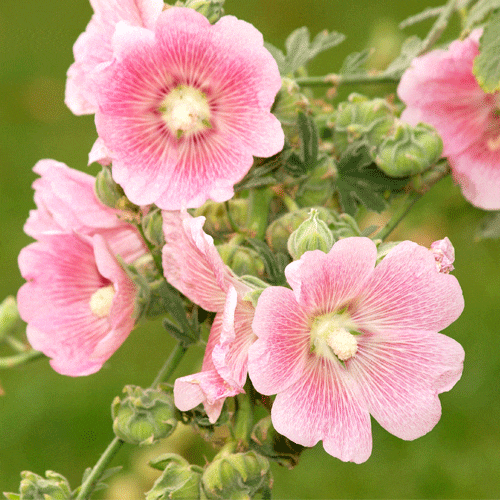
This mix delivers the tallest flower in the cottage garden — spires reaching 180–300 cm (6–10 ft) lined from midsummer into early fall with saucer-shaped blooms in pink, red, white, yellow, lavender, and near-black. Planted along a fence, a wall, or the back of a border, the towering stalks rise above everything around them and read from clear across the yard. The blend gives you the full old-farmhouse colour range from a single packet.
Alcea rosea is a short-lived perennial usually grown as a biennial: the first year builds a leafy rosette and a deep taproot, the second year throws up the flowering spike, and the plant then drops seed freely. Left to self-sow, a planting becomes a permanent rolling colony — old plants fade while volunteer seedlings take their place, so the patch behaves like a perennial even though each plant is short-lived. The open flowers feed bees and hummingbirds through late summer, and the petals are edible.
🌍 Where Hollyhocks Grow Best
🇨🇦 Canada: Hardy in Zones 2–9. Hollyhocks are among the few tall flowers that thrive on the Prairies and across northern Ontario; self-seeding carries the colony through hard winters, and even where the parent dies back, fall-germinated seedlings overwinter as small rosettes and bloom the next summer. 🇺🇸 US: Reliable in Zones 2–9 nationwide. Vigorous through the North and Mountain West; shorter-lived in the hot, humid Southeast but self-sows freely enough to persist. Best for: Back-of-border and fence-line planting, cottage and farmhouse gardens, pollinator plantings, and cut-flower rows.
🌱 Hollyhock Sowing at a Glance
Start seeds indoors: 6–8 weeks before last frost for first-year bloom Direct-sow seeds: Spring through midsummer for the natural year-2 cycle Sow depth: 6 mm (¼ in), barely covered Germination: 10–14 days at 18–22°C (65–72°F) Spacing: 45–60 cm (18–24 in) apart Light: Full sun
🌱 How to Grow Hollyhock Seeds
Hollyhock seeds germinate in 10–14 days at 18–22°C (65–72°F) and need only a bare dusting of soil. For blooms the first summer, start them early indoors; for the traditional foliage-then-flower rhythm, sow them straight into the garden.
Start seeds indoors 6–8 weeks before your last frost, sowing one seed per deep cell or pot to protect the taproot.
Cover seeds just 6 mm (¼ in) deep — they germinate best with light, so barely bury them and keep the mix evenly moist.
Hold the tray at 18–22°C (65–72°F); sprouts appear in 10–14 days. Grow on under bright light to keep seedlings sturdy.
Harden off for 7 days, then transplant after your last frost, spacing plants 45–60 cm (18–24 in) apart in full sun.
To direct-sow, scatter seed on prepared soil in spring or early summer and press it in without burying it deeply. Choose the site with care: hollyhocks sink a deep taproot and resent being moved once settled, so plant them where they can stay. Give them full sun and free-draining soil — shade makes weak, floppy stalks, and soggy ground invites crown rot. In exposed spots the flower-heavy spikes catch summer wind, so stake tall plants or grow them against a fence for support.
🌸 Hollyhocks in the Garden & Border
Hollyhocks belong at the back of the border and along fences and walls, where their height is a feature rather than a problem and shorter plants hide their sometimes-tattered lower leaves. Planted in a drift of mixed colours they recreate the classic English-cottage and prairie-farmhouse look better than any other single plant. The tall spires also make dramatic cut flowers — cut when the lowest buds open and strip the foliage.
The wide, open blooms are a magnet for bumblebees, honeybees, and hummingbirds, and they pour out nectar in mid-to-late summer when many spring flowers have finished. The petals are edible too — mild and faintly sweet with a slightly mucilaginous texture — pretty scattered over a salad, floated in a punch bowl, or frozen into decorative ice cubes.
🍂 Managing Hollyhock Rust
Hollyhock rust shows as orange-brown pustules on leaf undersides with yellow spots on top, and the single best defence is stripping infected leaves the moment you see them. The fungus disfigures foliage but rarely kills the plant, and a few habits keep it in check.
Remove affected leaves promptly and bin them rather than composting, clear away the lower leaves to open up airflow, and space plants generously so they dry quickly. Water at the base in the morning so foliage never stays wet overnight, since the spores need moisture to take hold. Where rust runs heavy, a copper- or sulfur-based fungicide applied early — before infection builds — is far more effective than spraying a plant already covered in pustules. At the end of the season, cut spent stalks to the ground and clear all debris so overwintering spores don’t reinfect next year’s growth.
🫙 Saving Hollyhock Seeds
Let the seed pods dry to papery brown on the stalk, then collect the flat, stacked seeds before they scatter. Each spent flower leaves behind a ring-shaped pod packed with disc-like seeds; pick them once they turn tan and crisp, and finish drying them indoors for a week before storing somewhere cool and dark.
These hollyhock seeds are open-pollinated, so saved seed grows into plants much like their parents — though because this is a colour mix and bees move pollen freely between plants, the exact blend will shift a little each generation. That reshuffling is part of the charm of a self-sown patch. Stored cool and dry, hollyhock seed stays viable for 2–3 years; test an old batch by sprouting ten seeds on a damp paper towel before committing a whole bed to them.
Some will, with an early start. Hollyhocks started indoors 6–8 weeks before last frost and set out early often flower their first summer, especially in warm regions. Direct-sown plants usually follow the classic pattern — leaves in year one, flowers in year two. Once a patch is established and self-seeding, first- and second-year plants overlap, so something blooms every year.
How tall do hollyhocks get?
Mixed hollyhocks reach 180–300 cm (6–10 ft) in full sun with decent soil. The flower spike accounts for most of that height, rising well above the leafy base, which is why they suit the back of a border or a spot against a fence or wall.
Are hollyhocks annual, biennial, or perennial?
Hollyhocks are technically short-lived perennials, but most gardeners grow them as biennials: foliage the first year, flowers the second, then decline. Because they self-seed so freely, a planting appears to return year after year — it’s really a rolling succession of new plants rather than the same crowns regrowing.
My hollyhock leaves have orange spots — what is it?
That’s hollyhock rust, the plant’s most common disease — orange-brown pustules on the leaf undersides with yellow blotches above. Remove affected leaves immediately and don’t compost them, water at the base in the morning, improve airflow, and apply a copper- or sulfur-based fungicide early in the season. Clearing all foliage in fall breaks the cycle for next year.
Do hollyhocks come back every year?
In effect, yes — through self-seeding rather than regrowth. Leave a few spent spikes to drop seed and volunteer seedlings appear nearby, overwinter as rosettes, and bloom the following summer. Deadhead everything before the pods ripen and the colony won’t renew itself, so leave some seed if you want the patch to persist.
Do hollyhocks survive cold winters?
Yes — hollyhocks are hardy to Zone 2 and rank among the toughest tall flowers for cold gardens across Canada and the northern US. Established colonies persist through hard winters by self-seeding, and fall-germinated seedlings overwinter as small rosettes to bloom the next year.
Are hollyhock flowers edible?
Yes. The flowers, young leaves, and immature seed pods are all edible. Petals are mild and slightly sweet with a faintly mucilaginous texture, used mostly for looks — floated in drinks, scattered over salads, or frozen into ice cubes. Young leaves can be eaten raw or cooked like other greens.
How far apart should hollyhocks be spaced?
Space hollyhocks 45–60 cm (18–24 in) apart. Generous spacing keeps air moving between the big leaves, which is one of the simplest ways to slow hollyhock rust, and gives each deep-rooted plant room to establish.
Are hollyhocks deer resistant?
Hollyhocks are only moderately deer resistant. Deer tend to leave the coarse, hairy foliage alone but will browse tender young shoots and flower buds when other food is scarce. In high-pressure areas, protect young plants until they’re established and taller than easy reach.
Are hollyhocks good for bees and hummingbirds?
Excellent — especially single-flowered forms, where the open cup gives bees and hummingbirds an easy landing and clear access to nectar and pollen. They flower in mid-to-late summer, filling the gap after spring blooms fade, which makes them one of the more valuable pollinator plants in a cottage border.
🌸 Plant Once, Enjoy for Years
Towering 6–10 ft spikes in a full mix of cottage-garden colours — hardy to Zone 2, self-seeding, and loved by bees and hummingbirds. Ships to Canada and the US.
As an Amazon Associate, I earn from qualifying purchases — at no extra cost to you.