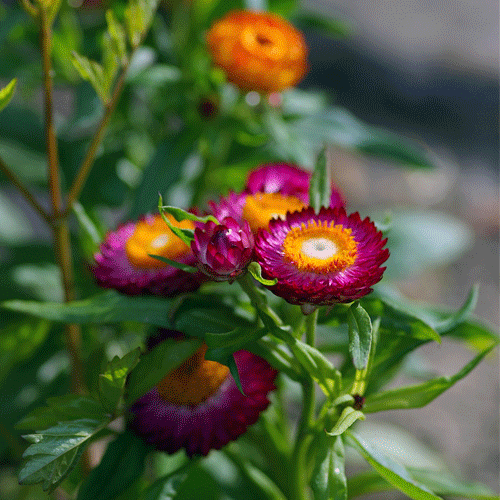
Strawflowers (Helichrysum bracteatum ‘Monstrosum’) are the premier everlasting flower for dried arrangements — their papery, straw-textured petals are naturally dry from the moment they open, which is why they hold their colour and form so perfectly when cut and air-dried. A fresh strawflower is already essentially a dried flower with better colour. Available in a stunning range of colours including crimson, rose, salmon, yellow, orange, and white, they provide continuous colour throughout the summer garden and a long-lasting material for autumn and winter arrangements.
The plants are vigorous, branching annuals reaching 60–90cm (24–36 inches) tall, with a prolific and continuous flowering habit. Unlike many cutting garden flowers that bloom in a single flush, strawflowers keep producing new buds from midsummer through frost as long as you keep cutting. This cut-and-come-again characteristic — combined with the dried flower preservation value — makes them one of the most rewarding annuals for gardeners interested in extending the beauty of their garden into the colder months.
🌍 Growing Zones & Climate Performance
🇨🇦 Canada: Annual across all zones — start indoors 6–8 weeks before last frost for the longest bloom season. Direct sow after last frost works, but earlier starts produce plants that flower from July rather than August, giving a much longer cutting window before fall. Performs well across all Canadian provinces in full sun. 🇺🇸 US: Annual in all zones. Particularly prolific in warm, dry climates — strawflowers love heat and hate wet conditions. Best for: Cut flower gardens, dried flower arrangements, cottage gardens, pollinator borders.
🌱 How to Grow Strawflowers from Seed
Strawflowers need light to germinate — do not cover seeds with soil. Surface sow on a prepared, moist seedbed and press seeds gently into contact with the soil without burying them. For indoor starting, sow on the surface of moist seed-starting mix 6–8 weeks before last frost. Maintain 20–22°C (68–72°F) and expect germination in 7–14 days. Seedlings are small at first; handle carefully at thinning and transplanting. Transplant after last frost, spacing 30cm (12 inches) apart in rows 45cm apart.
Strawflowers thrive in full sun and well-drained soil — they’re native to Australia and evolved in dry, sunny conditions. They’re quite drought-tolerant once established and actually perform better in lean, drier soils than in richly amended beds, which tend to push leafy growth at the expense of flowers. Water at the base to keep foliage dry. No fertilizer needed beyond a basic garden soil — too much nitrogen reduces flowering significantly.
For dried arrangements, cut stems when the flowers are about halfway open — papery and showing colour but not fully expanded. The flowers continue opening slightly as they dry. Tie stems in loose bundles and hang upside down in a warm, dark, dry, well-ventilated space for 2–3 weeks. The darkness preserves colour. Dried properly, strawflowers retain their vivid colours for years.
🌸 Pollinator Value and Garden Companions
Strawflowers’ long bloom season from midsummer through frost makes them a valuable late-season nectar source for bees and butterflies as other summer flowers finish. The flowers are particularly attractive to bumblebees. In the garden, they pair beautifully with other everlasting and cottage garden flowers: Candytuft as a low border edging, Hollyhocks for tall back-of-border drama, and Red Poppies for early-season colour before strawflowers hit their stride.
❓ Strawflower FAQ
How do I dry strawflowers so they keep their colour?
Cut stems when flowers are halfway open — still cupped and papery but showing their full colour. Strip lower leaves. Tie in small loose bundles (5–8 stems) and hang upside down in a warm, dry, dark location with good air circulation. Darkness is the key to colour preservation — light fades the pigments even in dried flowers. After 2–3 weeks they’ll be fully dry and the stems brittle. Store away from direct light and humidity for the longest colour life.
How long do strawflowers bloom?
From midsummer until frost — typically 8–12 weeks of continuous production in most Canadian and northern US gardens. The key to maintaining this long bloom period is regular cutting. Flowers left on the plant to mature and set seed signal the plant to slow production. Cut frequently, even if you don’t need every stem for arrangements, to keep the plant in continuous flowering mode.
My strawflower seedlings are very small and slow — is something wrong?
No — strawflower seedlings are genuinely tiny and slow-growing compared to most garden annuals. This is normal. The plants get much larger once they’ve developed a proper root system and begin growing in earnest. Be patient, don’t overwater, and ensure they’re getting good light. Once established outdoors in full sun, growth accelerates significantly.
Do strawflowers self-seed?
Yes — if some flowers are left to mature and set seed in place, strawflowers often volunteer the following year in mild climates. In colder Canadian climates, self-seeding is less consistent. Collect seeds from dried flower heads in fall and re-sow the following spring to be certain of a new season’s planting.
🌺 Summer Blooms That Last All Winter
Mixed Colour Strawflower Seeds on Amazon — everlasting cut and dried flower in crimson, rose, yellow, white, and salmon. Ships to Canada and the US.
As an Amazon Associate, I earn from qualifying purchases — at no extra cost to you.