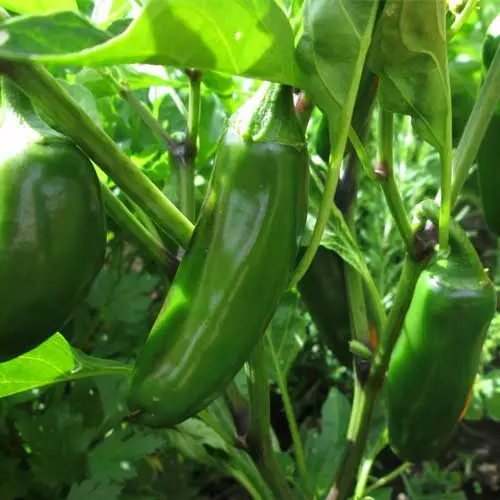
Jalapeño Pepper Seeds

Type: Hot Pepper Seed
Botanical Name: Capsicum annuum ‘Jalapeño’
Plant Type: Annual — Open-Pollinated, Heirloom
Days to Maturity: 70–85 days (green); 90–100 days (red)
Heat Level: Medium — 2,500–8,000 Scoville units
Fruit Size: 5–9 cm (2–3.5 in)
Habit: Compact bush, 60–75 cm (24–30 in) tall

As an Amazon Associate, I earn from qualifying purchases — at no extra cost to you.

What Are Jalapeño Peppers?

Jalapeño is the pepper that taught a generation of home cooks that growing your own heat was worth it — compact, reliable, and moderately hot at 2,500–8,000 Scoville heat units, versatile enough to go from fresh salsa to pickled rings to bacon-wrapped poppers without a recipe change. The dark green fruits turn red at full maturity, gaining a sweeter, deeper flavour, and both stages earn their place in the kitchen.

Unlike hot peppers that run finicky or extreme, jalapeño hits the everyday sweet spot: hot enough to satisfy, mild enough to cook with daily without gloves and ventilation. It’s also among the most productive peppers for the space — a single healthy plant sets 25–40 fruits a season on a compact 60–75 cm (24–30 in) bush, so it earns its keep even in small gardens and containers. This is an open-pollinated heirloom, so seed saved from ripe fruit grows true to type.

🌍 Where Jalapeño Peppers Grow Best
🇨🇦 Canada: Zones 5–9 — start indoors 8–10 weeks before last frost. Jalapeño matures earlier than most hot peppers, so Southern Ontario, the BC coast, and southern Quebec crop reliably outdoors; in Zones 3–5 a cold frame or polytunnel and the warmest microclimate carry it.
🇺🇸 US: Zones 5–11 — best in the long, hot summers of the Southwest, Southeast, and California, and achievable across the Midwest and Northeast with a strong indoor start.
Best for: Warm-summer gardens, sheltered containers, and anyone who wants a manageable everyday heat they can cook with.

Growing Jalapeño Peppers from Seed

Start jalapeño indoors 8–10 weeks before your last frost — peppers are slower from seed than tomatoes and reward the head start. Sow 6 mm (¼ in) deep in a warm seed-starting mix and hold the soil at 27–32°C (80–90°F); germination is temperature-sensitive and drops sharply below 21°C (70°F), so a seedling heat mat pays off in a cool home. Expect sprouts in 7–14 days, and give seedlings 14–16 hours of bright light a day so they grow compact and stocky rather than leggy.

Harden jalapeño off over 10–14 days, then transplant after all frost has passed and nights hold above 10°C (50°F), spacing plants 45–60 cm (18–24 in) apart in full sun. Work compost in at planting and start a balanced fertilizer once flowering begins, then ease off nitrogen so the plant sets fruit rather than leaves. Like tomatoes, peppers benefit from calcium — bone meal or crushed eggshells at planting helps prevent blossom end rot — and steady moisture through fruiting keeps fruit setting.

Harvesting & Preserving Jalapeño Peppers

Jalapeños are picked green at 70–85 days from transplant, firm and dark green — the classic salsa-and-poppers stage. Left on the plant another 2–3 weeks they turn red, growing sweeter, deeper, and often marginally hotter; fully red fruit is traditional for chipotle. Pick regularly, because fruit left on the plant signals it to slow production — once a plant is cropping, check every 3–4 days and take anything at full size and colour. Corky brown lines (“corking”) on the skin are normal and often mark a hotter, well-ripened pepper.

To preserve a glut, quick-pickle sliced rings in equal parts vinegar and water with salt and a pinch of sugar — ready in 24 hours, good for 2–3 months refrigerated. Red jalapeños smoke-and-dry into chipotle, and a dehydrator plus a bag of red fruit keeps you in chipotle powder all winter. Before the first frost in northern gardens, pull remaining fruit and let red ones finish ripening on the counter.

Cooking with Jalapeño Peppers

Fresh jalapeños are the backbone of North American hot-sauce culture — sliced into rings for nachos, diced into pico de gallo, stuffed with cream cheese and wrapped in bacon, or pickled for tacos and grain bowls. Removing the seeds and white inner ribs, where the capsaicin concentrates, tones the heat down when you want it milder.

Roasting turns jalapeño smoky and slightly sweet, outstanding in guacamole and cream-based sauces, while smoked-and-dried red fruit becomes chipotle — one of the most versatile ingredients in Mexican cooking. Cooking with dairy also softens the burn, since casein binds capsaicin.

Saving Jalapeño Pepper Seeds

Jalapeño is open-pollinated, so seed from ripe red fruit grows true to type — unlike hybrid (F1) peppers, whose saved seed gives unpredictable offspring. Let at least one fruit ripen fully red, since red jalapeños carry mature seed; slice it open, scrape the seeds out with a spoon (wear gloves and keep them away from your face), and dry them completely at room temperature for 1–2 weeks before storing in a paper envelope somewhere cool, dark, and dry. Pepper seed stays viable 3–5 years, and a ten-seed germination test confirms an older batch.

Bees work pepper flowers freely, so cross-pollination is more likely than with tomatoes. Growing jalapeño near habanero, cayenne, or bell peppers risks crossed seed. Isolate by at least 100 m for reliable purity, or bag individual flowers for hand-pollination; in a home garden where only next year’s purity matters, a few metres of separation usually gives acceptable results.

🌶️
Browse All Pepper Seeds
Compare jalapeño with cayenne, habanero, Thai chili, and sweet bell varieties side by side.
Shop Pepper Seeds →
📘
How to Grow Peppers (Full Guide)
Step-by-step seed starting, transplanting, care, and harvest timing for every pepper type.
Read the Pepper Guide →

Jalapeño Pepper FAQ

❓ Jalapeño Pepper FAQ
How hot are jalapeños?
Jalapeños range from 2,500–8,000 Scoville heat units — genuinely hot but very manageable, which makes them one of the most family-friendly hot peppers. The heat is predictable and fades quickly, and removing the seeds and white inner ribs (where capsaicin concentrates) tones it down further.
Jalapeño vs. cayenne and habanero — how do they compare?
Jalapeño (2,500–8,000 SHU) is the mild everyday option with bright, vegetal heat. Cayenne (30,000–50,000 SHU) is sharper and dry, built for powder and hot sauce, while habanero (100,000–350,000 SHU) is fruity and intense. Gardeners who cook across heat levels often grow all three.
Can I grow jalapeños in a short northern season?
Yes — jalapeños are among the best hot peppers for short seasons because they mature earlier than most. Start 8–10 weeks indoors before last frost. In Zones 5–7 (Southern Ontario, BC coast, US Midwest and Northeast) they crop reliably outdoors in full sun; in colder zones, a polytunnel or cold frame and the warmest microclimate make the difference.
Why are my jalapeños not hot?
Heat depends heavily on growing conditions. Mild stress during fruiting — slightly less water, warm temperatures — raises capsaicin, while ample water, rich feeding, and cool summers produce milder fruit. For hotter jalapeños, ease back watering a little during fruiting and avoid over-feeding nitrogen.
What are the little brown lines on my jalapeños?
Those corky brown lines — “corking” or russeting — are completely normal and often a sign of a well-ripened, hot jalapeño. Heavy corking usually means the pepper saw some stress during development, which correlates with higher capsaicin and deeper flavour. They’re safe to eat, and many experienced growers prefer heavily corked fruit.
Can I grow jalapeños in a container?
Jalapeños are excellent container plants, staying compact at 60–75 cm (24–30 in) — a 10–15 litre (3–4 gallon) pot is plenty. Give them a south-facing balcony or patio, water regularly since pots dry fast in summer heat, and feed every two weeks once flowering begins. Containers also let you move the plant indoors before frost to stretch the season.
Should I harvest jalapeños green or red?
Both are useful. Green jalapeños have sharper, more vegetal heat — the classic choice for salsa, poppers, and pickling. Red jalapeños are sweeter, deeper, and often marginally hotter, and are traditional for chipotle (smoked and dried). Most growers pick mostly green but let a few ripen red for drying or smoking.
How do I make jalapeños less hot?
Remove the seeds and white inner ribs (the placenta), where most of the capsaicin sits. Soaking sliced jalapeños in cold water for 20–30 minutes reduces heat further, and cooking with dairy — cheese, cream, sour cream — binds capsaicin and lowers the perceived burn. Roasting first mellows and sweetens the flesh for the mildest result.
Are jalapeños safe during pregnancy?
Jalapeños are generally considered safe in moderate amounts during pregnancy — they’re a food, not a supplement. Some people find spicy food worsens the heartburn that’s already common in pregnancy. As with any dietary question during pregnancy, check with your healthcare provider for guidance specific to you.
How do I pickle jalapeños at home?
Quick pickling is the easiest preserve. Slice jalapeños into rings and pack a clean jar; boil equal parts white vinegar and water with a teaspoon of salt and a pinch of sugar, pour over the peppers, cool, seal, and refrigerate. They’re ready in 24 hours and keep 2–3 months in the fridge. For shelf-stable jars, use a tested canning recipe and proper method.
Grow the Pepper That Does It All
Open-pollinated jalapeño — moderate heat, heavy yields, perfect for salsa, poppers, and pickling.
As an Amazon Associate, I earn from qualifying purchases — at no extra cost to you.
🇨🇦🇺🇸 Buy Jalapeño Pepper Seeds on Amazon →
Seed Quanity

50 seeds, 260 seeds, 600 seeds, 100 grams