What Are California Wonder Peppers?
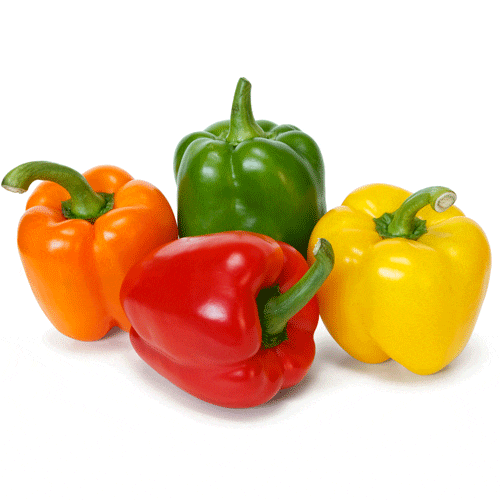
California Wonder is the bell pepper that defined the category — large, blocky, four-lobed, and thick-walled, ripening from green to deep red with sweet, crisp flesh. Introduced in the 1920s, it became the benchmark every other bell pepper is measured against, and it still earns that reputation in the garden: fruits reach 10–12 cm (4–5 in), with walls noticeably thicker than most modern hybrids — more flavour, better raw crunch, and superior results roasting and stuffing.
Every California Wonder fruit starts green and sweetens as it colours up. Green bells are crisp and slightly grassy; red bells are sweeter, more complex, and carry nearly three times the vitamin C. Growing your own lets you pick at whichever stage the meal calls for. This is an open-pollinated heirloom, so seed saved from ripe fruit grows true to type year after year.
🇺🇸 US: Zones 5–11 — thrives in the long, warm seasons of the Southeast, Southwest, and California, and succeeds across the Northeast and Midwest with an early indoor start and season extension.
Best for: Family vegetable gardens, stuffing and roasting, and anyone who wants a thick-walled sweet bell without a greenhouse.
Growing California Wonder Peppers from Seed
Start California Wonder indoors 8–10 weeks before your last expected frost. Sow 6 mm (¼ in) deep in a warm seed-starting mix and hold the soil at 27–32°C (80–90°F) for reliable germination — below 21°C (70°F) germination rates fall sharply and can stretch to 3–4 weeks. A seedling heat mat makes the difference in a cool northern home. Expect sprouts in 10–21 days at optimal temperature, and give seedlings 14–16 hours of bright light so they grow stocky rather than leggy.
Harden California Wonder off over 10–14 days, then transplant after all frost has passed and nights hold above 10°C (50°F), spacing plants 45–60 cm (18–24 in) apart in full sun. Peppers are moderate feeders: start with a balanced fertilizer at transplant, then switch to a lower-nitrogen, higher-phosphorus formula once flowering begins, since excess nitrogen drives leaves at the expense of fruit. Keep moisture steady through fruiting to prevent blossom end rot.
Harvesting & Preserving California Wonder Peppers
California Wonder is ready to pick green about 75 days from transplant, once fruits reach full size with glossy, firm skin. For red, leave them on the plant another 2–3 weeks until fully coloured — sweeter, heavier, and higher in vitamin C. Cut fruit with clean scissors or pruners rather than pulling, since the thick, brittle stems snap branches easily. In short-season gardens, get full-size green fruit in before frost; a picked green pepper holds well but won’t ripen to red indoors.
To preserve a glut, dice or slice and freeze on a tray before bagging — frozen peppers keep up to 12 months and drop straight into soups, stir-fries, and sauces, no blanching needed. Roasting is the other route: char, peel, and store the silky flesh in olive oil in the fridge for up to two weeks, or freeze roasted strips for winter. Before the first hard frost, pull whole plants and hang them indoors so fruit already showing colour can finish ripening over 1–2 weeks.
Cooking with California Wonder Peppers
California Wonder’s thick walls and mild sweetness make it the definitive stuffing pepper — fill with rice, ground meat, cheese, or a grain mix and bake until tender, and the sturdy walls hold their shape instead of collapsing. Raw, it’s ideal for dips and crudités, or sliced into strips for stir-fries and fajitas where the thick flesh stays crisp under heat.
Roasting transforms it: charred over a flame or under the broiler, the skin blisters and peels to reveal silky, sweet flesh that shines in sandwiches, pasta, and antipasto. Roast a batch, peel, and keep it in olive oil for one of the most versatile preserved vegetables a home kitchen can hold.
Saving California Wonder Pepper Seeds
California Wonder is open-pollinated, so seed from ripe red fruit grows true to type — unlike hybrid (F1) bells, whose saved seed gives unpredictable offspring. Let one or two peppers colour fully red before saving, since red bells carry mature seed and green ones do not. Scrape the seeds out, rinse, and dry them completely at room temperature for 1–2 weeks, then store in a paper envelope somewhere cool, dark, and dry. Pepper seed stays viable for 3–5 years when stored well; a quick germination test on ten seeds confirms an older batch before you commit a whole tray.
Bees work pepper flowers freely, so cross-pollination between varieties is real. Growing California Wonder near jalapeños, cayenne, or habaneros risks crossed seed. Isolate by at least 100 m for reliable purity, or cover flowering plants with row cover to exclude insects; in a home garden where only next year’s purity matters, 3–5 m between varieties usually gives acceptable results.