What Are Habanero Peppers?
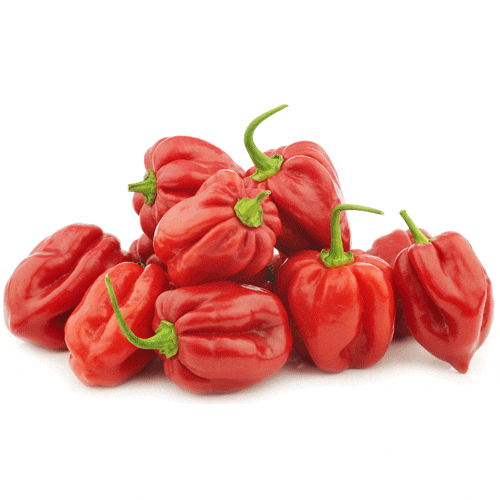
Habanero is the pepper that separates casual heat from serious heat — 100,000–350,000 Scoville heat units, roughly 20–50× hotter than a jalapeño. What sets it apart from simply being “very hot” is its flavour: a distinct fruity, almost floral sweetness that arrives before the burn and rides through it. That flavour-and-heat combination is why habanero anchors countless artisanal hot sauces and why experienced heat-seekers rate it among the most rewarding peppers to cook with.
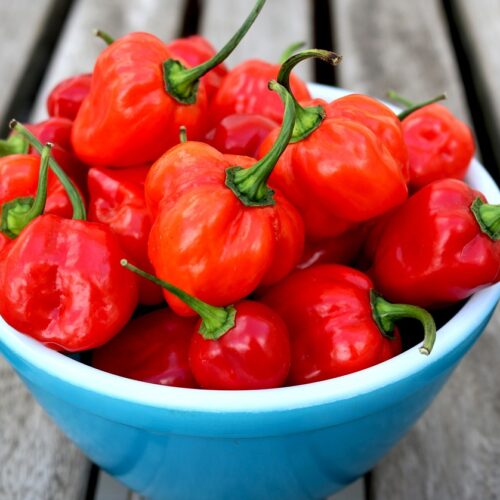
The lantern-shaped fruits ripen to a vivid orange (some strains finish red, yellow, or chocolate), and the plants are genuinely ornamental — compact and bushy at 60–90 cm (24–36 in), carrying fruit at several stages of ripeness at once. That compact size suits container growing, which lets northern gardeners chase the warmest microclimate and move plants indoors before frost. This is an open-pollinated heirloom, so seed saved from ripe fruit grows true to type.
🇺🇸 US: Zones 6–12 — thrives in the hot, long seasons of the Southwest, Southeast, Texas, and California, and is achievable in the Midwest and Northeast in warm summers with protection.
Best for: Heat-seekers, hot-sauce makers, and experienced growers chasing maximum capsaicin with genuinely fruity flavour.
Growing Habanero Peppers from Seed
Habanero has one of the longest timelines of the common peppers and needs a 10–12 week indoor start. Sow 6 mm (¼ in) deep in a warm seed-starting mix and hold the soil at 27–32°C (80–90°F) consistently — germination below 24°C (75°F) is notoriously slow and erratic, so a seedling heat mat is essentially required. Sprouting can take 2–3 weeks even under ideal conditions; don’t give up early, and give seedlings 14–16 hours of bright light a day.
Harden habanero off slowly over two weeks, then transplant after all frost risk passes and nights hold above 12°C (54°F), into the warmest, most sheltered spot you have — a south-facing wall that radiates heat is ideal. Space plants 45–60 cm (18–24 in) apart in well-drained, fertile soil, keep moisture consistent through fruiting without waterlogging, and feed a balanced fertilizer at transplant, easing off nitrogen once flowers appear. Calcium at planting (bone meal or crushed eggshells) helps prevent blossom end rot.
Harvesting & Preserving Habanero Peppers
Habaneros are harvested at full mature colour — most commonly deep orange, though some strains finish red, yellow, or chocolate-brown. Green, immature fruit works but lacks the fruity complexity that makes habanero special, so wait for the colour change, then cut the stem cleanly rather than pulling. Always wear gloves: the capsaicin is potent enough to burn skin, and eye contact is very unpleasant, so wash hands and surfaces before touching your face.
Fresh fruit keeps 2–3 weeks in the refrigerator, or preserve the harvest by drying, freezing whole, or blending straight into hot sauce. Habaneros dry well in a dehydrator at 55°C (130°F), and frozen whole they hold for months and go straight into cooked sauces. Before the first frost in northern gardens, pull remaining fruit and let coloured peppers finish ripening indoors.
Cooking with Habanero Peppers
Habanero’s fruity heat makes it the natural base for Caribbean-style hot sauces — blended with mango, pineapple, or papaya, the pepper’s tropical notes mirror the fruit beautifully, and a simple habanero-mango sauce (habaneros, mango, vinegar, garlic, salt) is one of the most rewarding preserves a pepper grower can make. It also shines in marinades for chicken and pork, where its natural sugars and acids penetrate the meat and caramelize on the grill.
A tiny amount goes a very long way — a single finely minced pepper is enough heat for a large pot of chili, and its aroma alone carries. For anyone building heat tolerance, starting with habanero sauces rather than fresh fruit gives far more control over the dose, and dairy, sugar, or acid in the dish all soften the burn.
Saving Habanero Pepper Seeds
Habanero is open-pollinated, so seed from fully ripe fruit grows true to type — unlike hybrid (F1) peppers, whose saved seed gives unpredictable offspring. Let fruit reach full mature colour, then, wearing gloves, slice it open and scrape the seeds onto a plate; dry them at room temperature for 1–2 weeks until brittle before storing in a paper envelope somewhere cool, dark, and dry. Habanero seed stays viable 3–5 years, and a ten-seed germination test confirms an older batch.
Cross-pollination with other Capsicum chinense varieties like Scotch Bonnet is very likely in close quarters, since they’re the same species; crossing with jalapeño or cayenne (C. annuum) is possible but less common. Isolate by 100+ m for pure seed, or bag flowers for hand-pollination; in a home garden, 3–5 m of separation gives reasonable results for personal use.