French Thyme — The Sweet, Narrow-Leaf Thyme of French Cooking
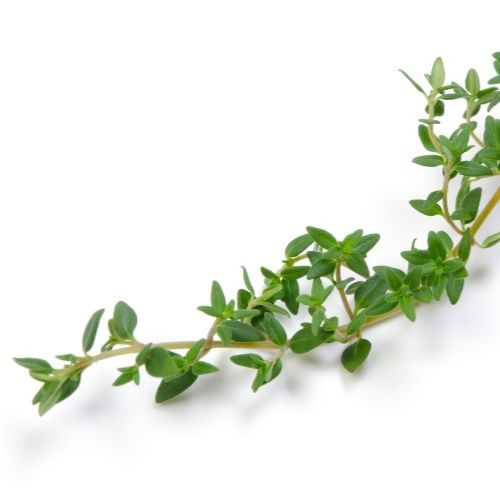
French thyme (Thymus vulgaris ‘French’) is the selection French cooks reach for: narrow gray-green leaves, a sweeter and milder taste than English thyme, and less of the camphor edge that can turn assertive in delicate dishes. That restraint is exactly why it defines classical French flavouring — court-bouillon, beurre blanc, roasted fish, egg dishes, and vinaigrettes where thyme should whisper rather than shout. Gardeners often know it by its other name, Summer Thyme.
The plant grows in tidy, upright mounds 15–30 cm (6–12 in) tall with slim, soft gray-green foliage and a browner stem than English thyme, blooming pale lavender in late spring to draw bees. One trade-off comes with the refinement: French thyme is less cold-hardy than English, earning the Summer Thyme nickname — dependably perennial through Zone 5 but often grown as an annual farther north. Like every thyme, it wants lean, gritty, sharply drained soil and full sun, thriving in the dry, rocky spots where fussier herbs fail.
🌍 Where French Thyme Grows Best
🇨🇦 Canada: Perennial in Zones 5–9 across southern BC, southern Ontario, Quebec, and the Maritimes. In Zones 3–4 (the Prairies and northern regions), grow it as a warm-season annual or overwinter a pot indoors. Sharp winter drainage matters more than raw cold.
🇺🇸 US: Perennial in Zones 5–9 through the South, mid-Atlantic, and West. In the Upper Midwest, Northern Plains, and Mountain West, treat it as an annual or bring containers inside before hard frost. Full sun and gritty soil everywhere.
Best for: French-inspired cooking, culinary herb gardens, containers, rock gardens, and companion planting near brassicas.
📋 Growing Quick Reference
Start seeds indoors
8–10 weeks before last frost
Germination
14–28 days at 18–21°C (65–70°F)
Sow seeds
Surface, barely cover 1–2 mm (needs light)
Spacing
20–30 cm (8–12 in)
Soil
Lean, gritty, sharply drained — no heavy clay
Hardiness
Perennial Zones 5–9; annual farther north
🌱 How to Grow French Thyme Seeds
French thyme seeds germinate slowly and unevenly, so sow generously and stay patient. Start seeds indoors 8–10 weeks before your last frost, pressing them onto the surface of a moist seed-starting mix and covering with no more than 1–2 mm of fine soil — thyme needs light to germinate. Keep the tray at 18–21°C (65–70°F) and expect sprouts over 14–28 days. A two- to three-week cold-stratification in the fridge before sowing evens out germination on slow batches.
Transplant after the last frost once nights stay mild, spacing plants 20–30 cm (8–12 in) apart in full sun with excellent drainage — a slope, raised bed, or gravelly bed suits French thyme far better than moist, rich ground. Skip heavy feeding; lean soil produces the sweeter, more aromatic leaves this variety is grown for. Shear each plant back by one-third after flowering, always staying above the woody base, to keep it compact and productive.
✂️ Harvesting & Drying French Thyme
French thyme dries better than almost any other culinary thyme, holding its flavour where rounder-leaved types fade — one reason it’s a pantry staple in French kitchens. Cut sprigs once the plant is established and 15 cm (6 in) tall, and time your main harvest for just before the flowers open, when the aromatic oils peak. Harvest in the morning after the dew dries.
To dry, bundle stems and hang them upside down in a warm, airy, dark place for 1–2 weeks, then strip the leaves by running your fingers down each stem. Stored in an airtight jar away from light and heat, dried French thyme keeps its flavour for 12–18 months. In colder zones where the plant is grown as an annual, a late-season drying harvest banks a full winter’s supply before frost ends the season.
🍲 Cooking with French Thyme
French thyme shines in refined, delicate cooking where its sweeter, gentler flavour is the whole point. It’s the traditional thyme for court-bouillon, beurre blanc, roasted and poached fish, omelettes and other egg dishes, vinaigrettes, and the classic bouquet garni tied with bay and parsley. Because it’s milder than English thyme, use a slightly heavier hand to reach the same depth.
French thyme also carries everyday cooking beautifully — roasted chicken, lamb, root vegetables, mushrooms, and pan sauces. Strip the tiny leaves from the woody stems before chopping, or drop a whole sprig into a braise and remove it later. Its excellent dried flavour means the winter jar performs nearly as well as fresh in long-cooked dishes.
🌰 Saving French Thyme Seeds
French thyme seeds are straightforward to save because the plant is open-pollinated and comes reasonably true from seed. Let a few flower heads mature and dry on the plant, clip them into a paper bag, and rub gently to free the dust-fine seed; screen off the chaff and store the clean seed cool and dark.
Because French thyme is open-pollinated rather than hybrid, saved seed grows into plants much like the parent — though thyme is variable from seed and species cross readily, so isolate it from English, lemon, or creeping thyme by about 150 m (500 ft), or bag a few heads, for the purest strain. Thyme seed stays viable roughly 3 years; test a pinch on a damp paper towel each spring and sow more thickly if germination has dropped.
📘 Full Growing Guide
Timing, companion plants, pruning, and problem-solving for a thriving thyme patch, season by season.
How to grow thyme → Is French Thyme hardy enough to survive winter?
French thyme is dependably perennial through Zone 5 but less cold-hardy than English thyme, which is why it’s nicknamed Summer Thyme. In Zones 3–4 it’s usually grown as an annual or overwintered as a potted plant brought indoors before hard frost. Where it does overwinter, sharp drainage is the deciding factor — wet winter soil kills thyme through crown rot far faster than cold does.
Why is French Thyme called “Summer Thyme”?
French thyme earns the name Summer Thyme because it’s less cold-tolerant than English or German thyme and often can’t overwinter in northern gardens. Gardeners in cooler zones grow it as a summer annual, sowing fresh each spring or keeping a pot they can shelter indoors. In its comfort range of Zone 5 and warmer, it returns reliably year after year.
What does French Thyme taste like?
French thyme is sweeter and milder than English thyme, with less of the sharp camphor note — warm and aromatic but softer on the palate. That gentleness is why it’s the classic choice for delicate French dishes where thyme is used with restraint. Its slim gray-green leaves also set it apart visually from the broader, greener leaf of English thyme.
What dishes is French Thyme best in?
French thyme is made for refined French cooking: court-bouillon, beurre blanc, roasted and poached fish, omelettes, vinaigrettes, and bouquet garni. Its milder flavour won’t overpower delicate sauces or seafood. It also handles everyday duty in roast chicken, lamb, root vegetables, and pan sauces — just use a touch more than you would English thyme to match the intensity.
Does French Thyme dry well for storage?
French thyme dries better than most thymes, keeping its flavour where rounder-leaved types lose theirs. Harvest just before the flowers open, bundle and hang the stems in a warm, dark, airy spot for 1–2 weeks, then strip and jar the leaves. Stored away from light and heat, dried French thyme stays flavourful for 12–18 months — ideal for banking a winter supply from annual plants.
How do I grow French Thyme from seed?
French thyme is slow from seed, so start it indoors 8–10 weeks before your last frost. Surface-sow onto moist seed-starting mix, barely cover (it needs light), and hold at 18–21°C (65–70°F); germination takes 14–28 days and is often uneven, so sow extra. A short cold-stratification in the fridge before sowing helps. Transplant into full sun and gritty, fast-draining soil after frost.
Can I grow French Thyme in a container or indoors over winter?
French thyme is well suited to containers, which is the simplest way to keep it alive through a cold winter — grow it in a gritty, free-draining potting mix and bring the pot indoors to a bright, sunny window before hard frost. Let the surface dry between waterings, since thyme hates staying wet. A windowsill plant supplies fresh sprigs right through the off-season.
Does French Thyme attract bees and pollinators?
French thyme is a strong pollinator draw when allowed to bloom, its pale lavender flowers pulling in honeybees and bumblebees through late spring and early summer. Letting a few plants flower rather than shearing them all keeps pollinators working the garden — and thyme nectar makes prized honey where hives are nearby.
Is French Thyme a good companion plant?
French thyme is a useful companion, especially near brassicas — its scent helps deter the cabbage white butterfly whose caterpillars damage cabbage, kale, and broccoli. It also pairs well with strawberries, tomatoes, and eggplant, and its flowers pull pollinators and beneficial insects into the bed. Its low, spreading habit lets it edge paths and borders neatly.
What is the difference between French Thyme and English Thyme?
Both are
Thymus vulgaris, but different selections. French thyme has narrow gray-green leaves, a sweeter, milder taste, and less winter hardiness — the classic thyme of French cooking.
English thyme seeds grow a broader-leafed, hardier plant with a bolder, more robust flavour. They’re interchangeable in most recipes; the choice is delicate versus assertive, and Summer Thyme versus a reliable perennial.
🌿 The Sweet, Refined Thyme of French Cooking
Heirloom French thyme seeds — narrow-leaf Summer Thyme for fish, eggs, vinaigrettes, and every dish where thyme should whisper.
As an Amazon Associate, I earn from qualifying purchases — at no extra cost to you.
Buy French Thyme Seeds on Amazon →