

Last updated: June 19, 2026
Perennials are the backbone of any low-effort garden. Plant them once, and they return year after year — some for decades — filling borders, attracting pollinators, and looking beautiful with nothing more than the occasional trim. But “low-maintenance” means very different things depending on where you garden. A plant that thrives with zero care in the Pacific Northwest might struggle and die its first winter in a Minnesota yard, or cook itself to death in a Phoenix summer. The flower seeds on this list were chosen because they genuinely earn the low-maintenance label across a wide range of climates — not just one.
These 10 perennials cover everything from blazing full sun to deep shade, from Zone 2 winters to Zone 9 heat. Several have double-duty value as medicinal herbs, wildlife attractors, or cut flowers. And crucially, most can be started from seed — giving you a much cheaper and more satisfying path to a full garden than buying transplants every spring.
🌸 Shop Perennial Flower Seeds
Heirloom and open-pollinated varieties — grow the exact plants on this list from seed.
What Actually Makes a Perennial Low-Maintenance?
The term gets thrown around loosely, but genuine low-maintenance perennials share a specific set of traits. They establish quickly from seed or transplant, tolerate a range of soil conditions without amendment, rarely need dividing in the first several years, and resist the most common pests and diseases in their target zones. They either self-deadhead or bloom reliably without it. And critically — they’re adapted to survive your local winters without protection.
What they’re not: plants that need staking, weekly watering, annual lifting and storage (like dahlias or gladiolus), or that go dormant in a way that leaves a gap in your garden for half the season. The 10 on this list meet the standard honestly. A few come with one honest caveat — noted where it matters — because no plant is maintenance-free in every single climate.
The 10 Best Low-Maintenance Perennial Flowers
The comparison table below gives you a fast overview. The detailed profiles follow for each plant, with climate-specific notes and seed-starting guidance.
🌿 At-a-Glance Comparison
| Flower | Zones | Sun | Bloom Time | Key Strength | Easy from Seed? |
|---|---|---|---|---|---|
| Echinacea (Coneflower) | 3–9 | Full sun / part shade | June–Sept | Drought-tolerant, medicinal, pollinators | ✅ Yes (cold stratify) |
| Daylily | 3–9 | Full sun / part shade | June–Aug | Adaptable to any soil, vigorous spreader | ⚠️ Slow (2–3 yrs to bloom) |
| Black-Eyed Susan | 3–9 | Full sun | July–Oct | Drought-tolerant, self-seeds freely | ✅ Very easy |
| Lavender | 5–9 | Full sun | June–Aug | Fragrant, drought-tolerant, deer-resistant | ⚠️ Slow germinator |
| Yarrow | 3–9 | Full sun | June–Sept | Thrives in poor soil, spreads readily | ✅ Yes |
| Sedum (Stonecrop) | 3–9 | Full sun | Aug–Oct | Extreme drought tolerance, deer-resistant | ⚠️ Slow, division easier |
| Shasta Daisy | 4–9 | Full sun | June–Sept | Long bloom season, great cut flower | ✅ Yes (blooms yr 1–2) |
| Coral Bells (Heuchera) | 4–9 | Part shade / full sun | May–July | Foliage interest all season, shade-tolerant | ✅ Yes (tiny seeds) |
| Peony | 3–8 | Full sun / light shade | May–June | Decades of blooms, fragrant, cold-hardy | ❌ 3–5 yrs to bloom |
| Hosta | 3–9 | Part to full shade | July–Sept | Best shade performer, slug-resistant varieties | ⚠️ Variable, very slow |
1. Echinacea (Coneflower) — The Workhorse
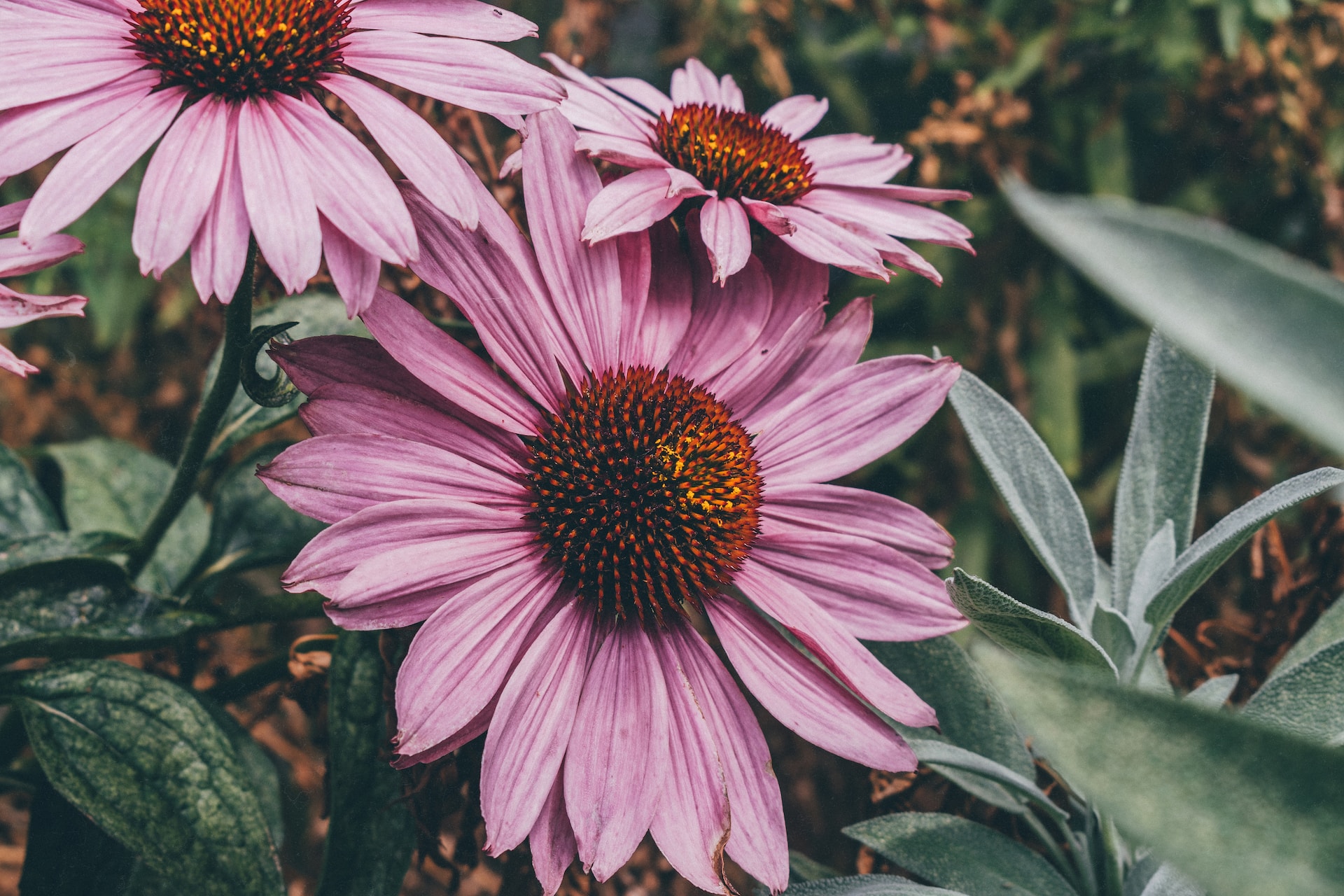
Echinacea seeds — also known as purple coneflower — are among the easiest perennials to establish from seed, and the plant rewards that investment for 10 or more years. Echinacea blooms from June through September, handles clay and sandy soils equally well, and tolerates drought once established. The daisy-like flowers in shades of pink, purple, white, and gold attract bees, butterflies, and goldfinches — birds eat the seed heads through autumn and winter, giving you wildlife value even after blooms fade.
Echinacea also carries real medicinal credentials. The roots and flowers are widely used in herbal preparations for immune support, making this genuinely one of the most dual-purpose plants in the perennial garden. It self-seeds modestly without becoming aggressive, filling gaps in the border each year. For low-effort gardeners, the only task is cutting plants back in late fall or leaving them standing for winter bird feeding — both are correct choices.
For a complete growing guide, see How to Grow Echinacea from Seed.
2. Daylily (Hemerocallis) — The Unkillable Spreader
Daylilies are about as close to indestructible as garden plants get. They tolerate drought, wet soils, clay, sand, part shade, and neglect with a resilience that borders on miraculous. Once established, a clump expands steadily year after year, eventually providing enough divisions to fill an entire border for free. The trumpet-shaped flowers in orange, yellow, red, purple, and multicoloured bicolors bloom in waves from early to late summer depending on variety — choose early, mid, and late-season types to keep colour going for two full months.
One honest note: daylilies grown from seed take two to three years to bloom and produce variable results compared to the parent plant. Most gardeners start daylilies from divisions. That said, the division process is one of the easiest in gardening — dig a clump in spring or fall, pull it apart with your hands or a fork, and replant. The real low-maintenance play here is planting once and dividing for free every few years rather than buying new plants.
3. Black-Eyed Susan (Rudbeckia) — The Self-Seeder
Black-Eyed Susans bloom from mid-summer well into fall, filling that late-season gap that many perennials leave behind. The golden yellow petals with dark brown centres are cheerful and unmistakable, and they attract native bees, butterflies, and finches in numbers that make them one of the most pollinator-valuable plants you can put in a border. They’re drought-tolerant once established, handle poor soil well, and — critically — self-seed readily, meaning a single plant becomes a colony over two or three seasons without any help from you.
Rudbeckia fulgida ‘Goldsturm’ is the most reliably perennial variety across zones 3–9. Some species, like R. hirta (the common Black-Eyed Susan), behave as short-lived perennials or biennials — they bloom heavily in year two, set seed, and the parent plant often dies, but the seedlings fill the gap so quickly you won’t notice. Understanding this distinction saves frustration: if your plant looks dead after two big bloom years, it’s not a failure, it’s the plant’s life cycle working as intended.
4. Lavender (Lavandula) — The Fragrant Drought-Buster
Lavender earns its low-maintenance reputation in the right conditions: full sun, excellent drainage, and alkaline to neutral soil. In those conditions it asks for almost nothing — a light shear after bloom, no fertilizer, and occasional deep watering during the first season. After establishment, it handles drought better than nearly any other flowering perennial, making it the ideal choice for hot, dry gardens in Zones 5–9.
Both English lavender and French lavender are worth growing from seed, though germination is slow (3–4 weeks) and benefits from a cold stratification period. English lavender (Lavandula angustifolia) is the hardier choice for colder zones and is the source of the classic culinary and medicinal fragrance. French lavender (Lavandula dentata) is showier and blooms longer but tops out around Zone 7–8. One common mistake — especially in Zones 5 and 6 — is mulching lavender crowns for winter protection. This traps moisture around the crown and causes rot. Lavender prefers to overwinter exposed with good airflow; the cold is rarely the problem, the wet is.
For more detail, see our complete lavender growing guide.
5. Yarrow (Achillea millefolium) — The Poor-Soil Champion
If you have a sunny spot with thin, rocky, or sandy soil that defeats everything else, plant yarrow. It actively dislikes rich, fertile soil — too much organic matter causes floppy stems and rank growth that needs staking, defeating the whole low-maintenance premise. Yarrow in lean, well-drained soil stays compact, stands upright without support, and blooms prolifically in white, yellow, pink, and red from early summer through fall. It’s one of the best candidates for dry slopes, gravel gardens, and hellstrip plantings.
Yarrow is also one of the most ecologically valuable plants on this list. The flat-topped flower clusters are landing pads for predatory wasps and parasitic insects that prey on garden pests — plant it near vegetables and it functions as a biological pest control system. It spreads by underground rhizomes and self-seeds, so give it space to expand or divide it every few years. Short-lived in very humid climates (Pacific Northwest, Gulf Coast) where powdery mildew can set in — spacing plants widely for airflow fixes this in most cases.
6. Sedum (Stonecrop) — Extreme Drought Tolerance
Late-blooming sedum fills the September–October gap when most other perennials are winding down, and does so with essentially zero care. The tall border sedums (Hylotelephium, formerly Sedum, including the classic ‘Autumn Joy’) form attractive succulent rosettes all summer before producing broad, flat flower heads that open pink and age to copper-red through fall. Butterflies and native bees depend heavily on these late-season flowers when few other nectar sources remain.
Sedum’s two standout traits are drought tolerance that approaches cactus-level and strong deer resistance — both especially valuable in rural and suburban areas across the Upper Midwest, Northeast, and Ontario where deer pressure is intense. It thrives in gravel, poor soil, and full-sun spots that bake in summer. The one failure mode to know: sedum in rich, shaded, or wet soil grows too fast, flops open at the centre, and needs staking. Plant it lean and sunny and it never needs any support.
7. Shasta Daisy — Long Season, Great Cut Flower
Shasta Daisies deliver the longest bloom window on this list — a well-managed clump can produce white flowers with golden centres from June through September, especially if you deadhead the first flush. The plant is technically a short-lived perennial in some climates, behaving more like a biennial in Zones 4–5, but it self-seeds so readily that you’ll have continuous new plants filling any gaps. In Zones 6–9 it persists reliably for many years.
Shasta Daisies are one of the easiest perennials to start from seed, often blooming in their first or second year if started indoors 6–8 weeks before last frost. They prefer full sun and well-drained soil, tolerate modest drought once established, and make excellent cut flowers — harvesting stems extends bloom time rather than reducing it. Divide every 2–3 years in early spring to keep the centre from dying out, a task that takes about ten minutes and produces free plants to spread around the garden.
8. Coral Bells (Heuchera) — Best Foliage Perennial
Coral Bells are grown primarily for their striking foliage — available in colours ranging from lime green to deep burgundy to near-black — which provides all-season interest even when they’re not in bloom. The delicate, wiry stems of small bell-shaped flowers that appear in late spring are a bonus, attracting hummingbirds and native bees. Heuchera is among the few perennials in this guide that genuinely tolerates part shade to full shade, making it ideal for north-facing borders, woodland edges, and spots under deciduous trees.
Growing Coral Bells from seed produces variable foliage colours compared to named cultivars (which are propagated vegetatively), but the seed-grown plants are perfectly garden-worthy and often produce surprising colour mixes. Sow seeds on the surface of a moist seed-starting mix — they need light to germinate — and don’t cover them. Coral Bells is relatively short-lived (3–5 years) in heavier clay soils, but division in early spring extends plant life and gives you plenty of new starts. In warm climates (Zones 7–9), they appreciate afternoon shade to prevent leaf scorch.
9. Peony (Paeonia) — The Long-Term Investment
Peonies are not a plant for impatient gardeners — established from bare root or divisions, they may take 2–3 years to bloom well; grown from seed, expect 3–5 years. But the payoff is extraordinary: a single peony planting can live and bloom reliably for 50 to 100 years, outlasting the house it was planted beside. The large, fragrant flowers in pink, red, white, and soft yellow are among the most spectacular in any perennial border, blooming in late May to June with a scent that’s hard to match.
Beyond the patience required at planting, peonies are genuinely low-maintenance. They need good drainage, full sun (at least 6 hours), and to be planted with the eyes (buds) no more than 2–5 cm (1–2 in) below the soil surface — plant too deep and they will not bloom, a mistake that’s more common than it should be. They don’t need dividing for decades. Botrytis (gray mould) can be a problem in wet springs — cutting stems to the ground in fall and removing them from the garden prevents it almost entirely. Zones 3–8; they actually require cold winters to set buds properly, which means they’re not suited to Zones 9–10.
10. Hosta — The Shade Garden Solution
Hostas solve a problem that most other perennials can’t: they thrive in deep shade. Under trees, on north-facing slopes, in the shadow of fences and structures where little else grows, hostas provide lush, textural foliage in sizes from teacup-small to dinner-plate-enormous. Leaves come in green, blue-green, gold, and variegated combinations, providing multi-season interest even when the lavender or white summer flowers aren’t present.
A note on seed-growing: most hostas sold commercially are sterile hybrids or named cultivars propagated by division, not seed. Seed-grown hostas are possible — they germinate readily with bottom heat — but will produce variable plants quite different from the parent. If you want a specific named variety, buy a division. That said, seed-grown hostas are perfectly beautiful garden plants, and starting them from seed is a slow but rewarding process for patient gardeners. One genuine maintenance task: slugs. Large-leafed hostas are slug magnets in wet climates. Planting near stonecrop sedum or using iron phosphate bait reduces damage significantly without chemicals. Deer also favour hostas heavily — in high-deer-pressure areas, choose the thick-leaved blue varieties (like ‘Halcyon’) which are browsed less frequently.
Growing Perennials from Seed: What the Nursery Doesn’t Tell You
Starting perennials from seed is dramatically cheaper than buying transplants — a $5 seed packet can produce 50–100 plants that would cost $8–15 each at a nursery. The catch is time: most perennials don’t bloom in their first year, and some take two to three seasons to reach full size. But once established, they’re yours for decades, and you’ll have divisions to share rather than plants to buy.
🌱 Seed-Starting Guide for Perennials on This List
| Plant | Start Indoors | Special Requirement | Days to Germination | First Bloom |
|---|---|---|---|---|
| Echinacea | 8–10 wks before last frost | Cold stratify 4–8 wks (or winter sow) | 10–21 days | Year 2 |
| Black-Eyed Susan | 6–8 wks before last frost | None — very easy | 7–14 days | Year 1–2 |
| Lavender | 10–12 wks before last frost | Surface sow, needs light; 21°C (70°F) | 14–28 days | Year 2 |
| Yarrow | 6–8 wks before last frost | Surface sow, needs light | 7–14 days | Year 1–2 |
| Shasta Daisy | 6–8 wks before last frost | None — easy | 10–21 days | Year 1–2 |
| Coral Bells | 8–10 wks before last frost | Surface sow, needs light; tiny seeds | 14–21 days | Year 2 |
| Peony | Not recommended | Double dormancy; plant divisions instead | Variable — months | Year 3–5 |
| Hosta | 8–10 wks before last frost | Results vary; named cultivars from division | 14–21 days | Year 2–3 |
The best technique for cold-hardy perennials like echinacea and yarrow is winter sowing — fill milk jugs or deli containers with potting mix, sow seeds in December or January, leave them outside, and let freeze-thaw cycles do the stratification work naturally. Seeds germinate in spring exactly when they’re ready, producing tough, already-hardened seedlings that outperform anything started indoors.
🌼 Find Perennial Flower Seeds
Browse heirloom echinacea, lavender, shasta daisy, yarrow, and more — all open-pollinated varieties you can save seeds from year after year.
Climate Realities: What “Low-Maintenance” Actually Means in Your Region
Every plant on this list is described as low-maintenance in standard growing references — but those references were usually written for a temperate mid-Atlantic or Pacific Northwest climate. Here’s what actually changes depending on where you garden.
🥶 Cold/Short-Season Climates
Canada Zones 2–5 | US Upper Midwest, Northern Plains, Mountain West (high elevation)
Your biggest perennial asset is cold-hardiness, and most of this list delivers — echinacea, yarrow, black-eyed susan, daylilies, sedum, and hostas all survive Zone 3–4 winters without protection. Peonies actually need cold to bloom properly and are among the best perennials for short-season climates.
The adjustment: lavender is marginal in Zone 5 and unreliable in Zone 4 — mulch the crown lightly with gravel (not bark, which holds moisture) and choose English lavender over French. Shasta daisy behaves as a biennial in Zone 4–5 and needs self-seeding space to perpetuate. Plant in early May after last frost; don’t rush. Winter sowing is the single best seed-starting technique for cold-climate gardeners — it uses natural freeze-thaw stratification and produces seedlings timed exactly to your spring.
💧 Humid/High-Pest Climates
Southeast US, Gulf Coast, Mid-Atlantic, Southern Ontario, Pacific Northwest
Humidity is the enemy of several plants on this list. Lavender in particular struggles — crown rot from wet winters kills more lavender in Zone 7 humid climates than cold ever does. Plant on raised beds or slopes, use gravel mulch, and avoid watering once established. Yarrow gets powdery mildew in humid settings; wide spacing (45–60 cm / 18–24 in) dramatically reduces this.
Echinacea and black-eyed susan are at their best in humid climates — they’re native to the Eastern prairies and handle humid summers well. Hostas in the Southeast need afternoon shade from intense heat even if technically in their zone range. Shasta daisy thrives in the Pacific Northwest and Mid-Atlantic. Coral bells is excellent in Part-shade Pacific Northwest gardens where it stays cool and moist. Watch for botrytis on peonies in wet springs — fall cleanup is the fix.
☀️ Arid/Heat-Stress Climates
Southwest US, Southern Plains, Texas, Low Desert (AZ, NV, Southern CA), BC Interior
Drought tolerance is the primary filter here. Your top picks from this list: sedum, yarrow, black-eyed susan, and echinacea — all handle dry conditions well once established. Lavender is outstanding in dry Mediterranean climates and the BC interior.
What to avoid or modify: hostas need regular irrigation in hot-dry climates and will burn without afternoon shade. Peonies don’t perform well in Zones 9–10 because they need cold winters to set buds — if you’re in the low desert, skip peonies. Shasta daisy benefits from afternoon shade in temperatures above 35°C (95°F). Daylilies tolerate heat but need supplemental water in their first year in dry climates — after establishment, they manage well. In extreme heat, water newly planted perennials deeply twice a week for the first full season, then taper off in year two.
Companion Planting with Perennials
Perennials aren’t just ornamental — the right combinations create ecological systems that reduce pests, attract pollinators, and keep the garden healthier with less intervention from you. The companion relationships below are based on documented ecological interactions, not garden folklore.
🤝 Perennial Companion Planting Guide
| Perennial | Good Companions | Benefit | Avoid Pairing With |
|---|---|---|---|
| Echinacea | Black-eyed susan, yarrow, ornamental grasses | Extended bloom succession; native bee habitat | Invasive grasses that crowd out |
| Lavender | Yarrow, sedum, rosemary, sage | All share dry/alkaline preference; repel aphids and whitefly | Hostas, astilbe (moisture-lovers) |
| Yarrow | Vegetables, roses, black-eyed susan | Attracts predatory wasps; biological pest control near edibles | Rich soil lovers — yarrow thrives in poor soil |
| Sedum | Ornamental grasses, yarrow, echinacea | Late-season nectar source; deer-resistant anchor | Hostas, astilbe, moisture-loving perennials |
| Black-Eyed Susan | Echinacea, ornamental grasses, joe-pye weed | Native meadow habitat; continuous mid-to-late bloom | Heavy shade plants |
| Peony | Salvia, iris, daylilies (bloom succession) | Structural anchor; ants are beneficial — they help open buds | Fennel (allelopathic to many plants) |
| Hosta | Astilbe, ferns, coral bells, bleeding heart | Shade garden tapestry; combined foliage textures all season | Sun-lovers like lavender, sedum, yarrow |
| Coral Bells | Hostas, ferns, astilbe | Foliage colour contrast; hummingbird magnet | Drought-lovers; coral bells needs consistent moisture |
For deeper companion planting strategy with herbs and edibles, see our Herb Companion Planting Chart and guide to building a pollinator garden.
Troubleshooting Common Perennial Problems
🔧 Problem Solver
| Problem | Likely Cause | Fix |
|---|---|---|
| Plant bloomed heavily year 1–2, now minimal flowers | Overcrowded crown; needs dividing | Divide in early spring — dig, split, replant with 30 cm (12 in) spacing |
| Lavender dying back at crown | Crown rot from wet soil or bark mulch | Improve drainage; switch to gravel mulch; never water established plants |
| Peony not blooming | Planted too deep (eyes more than 5 cm / 2 in below soil) | Dig and replant shallower in early fall; allow 2–3 years to recover |
| Yarrow or sedum flopping over | Too-rich soil or insufficient sun | Move to a poorer, sunnier spot; avoid fertilizing these plants |
| Echinacea not returning in spring | Crown rot from wet, heavy clay over winter | Improve drainage; add coarse grit to planting hole; avoid mulching crown |
| Hosta leaves shredded or missing | Slugs (wet climates) or deer (rural/suburban) | Iron phosphate slug bait for slugs; thick-leaved blue varieties deter deer |
| Shasta daisy dying out in centre | Natural short-lived perennial behaviour | Divide every 2–3 years in spring, replanting outer sections |
| Gray mould on peony stems in spring | Botrytis blight from wet, cool conditions | Cut all stems to ground in fall; remove from garden (don’t compost) |
| Coral bells leaves scorched at edges | Too much direct sun in hot climates | Move to afternoon shade; mulch roots to keep soil cool |
| Powdery mildew on yarrow or black-eyed susan | High humidity + poor air circulation | Increase spacing to 45–60 cm (18–24 in); avoid overhead watering |
🌸 Ready to Plant? Shop Perennial Flower Seeds
Start the plants on this list from seed — open-pollinated varieties you can save and replant for years.
Frequently Asked Questions
Related Guides
🌸 How to Grow Echinacea from Seed
Complete coneflower growing guide — seed starting, transplanting, medicinal harvest, and variety selection.
Read the Echinacea Guide →🪻 How to Grow Lavender
Zone-by-zone lavender guide covering English vs. French varieties, drainage, pruning, and overwintering.
Read the Lavender Guide →🐝 Building a Pollinator Garden
Which flowers attract which pollinators — native bees, butterflies, hummingbirds, and more.
Read the Pollinator Guide →🌿 Herb Companion Planting Chart
What grows well together — and what doesn’t. Includes lavender, yarrow, and other garden companions.
Read the Companion Chart →

