Savoy Cabbage — The Tender, Crinkle-Leaf Cabbage Chefs Reach For
🌍 Where It Grows Best
🇨🇦 Canada: Zones 3–9 — exceptionally cold-hardy, an ideal late-fall crop for the Prairies, Ontario, Quebec & the Maritimes. 🇺🇸 US: Zones 3–10 — fall & overwinter crop in the North; winter crop across the South & West Coast. Best for: Stuffed cabbage rolls, braising, soups & fresh eating (it sweetens after frost).
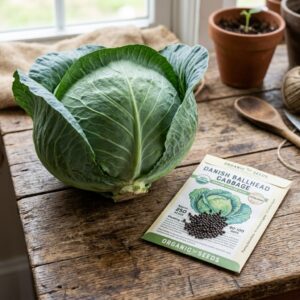
Savoy is the gourmet’s cabbage. Instead of the smooth, tight leaves of common green cabbage, Savoy (Brassica oleracea var. sabauda) forms beautifully crinkled, deeply textured blue-green leaves on a looser, more open head of 3–4 pounds. The pay-off is in the kitchen: the leaves are more tender and milder than smooth cabbage, with a sweet, almost buttery flavour and a pliable texture that makes them the first choice for stuffed cabbage rolls, braising, and folding into soups. The crinkles also hold dressings and sauces in a way flat leaves never will.
Named for the historic Savoy region in the alpine borderlands of France and Italy, this is an old European type that earns its place in cold-climate gardens for one standout reason: it is one of the most frost-tolerant cabbages you can grow. Savoy doesn’t just survive autumn frosts — it improves with them, converting starches to sugars so the leaves sweeten noticeably as temperatures drop. At around 80–90 days it’s a natural fall crop, and in many regions you can leave it standing in the garden well past the first frosts for harvest-as-you-need fresh eating.
🌱 Sowing & Growing Savoy Cabbage
Savoy is most rewarding as a fall crop. Start seeds indoors 6–8 weeks before transplanting, sowing ¼ inch (6 mm) deep at 18–24°C (65–75°F); seedlings emerge in 5–10 days. Count back the 80–90 days to maturity (plus a head-fill buffer) from your first hard frost to set your transplant date — in much of the North that’s a midsummer transplant. Space plants 45–60 cm (18–24 in) apart in rows 60–75 cm (24–30 in) apart; the open, frilly heads benefit from good airflow to keep the crinkled leaves dry and disease-free. Our complete guide to growing cabbage from seed covers seed starting and timing in detail.
Grow Savoy in fertile, well-drained soil with a pH near 7.0 to suppress clubroot, feed with compost and a balanced fertilizer, and keep moisture even. Because the textured leaves offer plenty of hiding spots for cabbage worms, prevention matters: a floating row cover at transplant blocks the moths entirely, and the aromatic companions in our vegetable companion planting chart help disrupt the rest.
🍃 Savoy vs. Smooth Green Cabbage
🍃 Savoy Cabbage
Leaves: Crinkled, tender, blue-green Head: Looser, more open Flavour: Mild, sweet, almost buttery Frost: Exceptionally hardy — sweetens Best use: Cabbage rolls, braising, soups, fresh
Savoy wants steady moisture — about 4 cm (1.5 in) of water per week — and benefits from mulch to keep that moisture even and the soil cool. Water at the base rather than overhead where you can; the crinkled leaves hold water and can invite fungal issues if they stay wet, so airflow and base watering matter more here than with smooth cabbage. Feed a balanced fertilizer at transplant and side-dress with compost mid-season; avoid heavy late nitrogen, which loosens the head.
✂️ Harvesting & Using
Harvest Savoy when heads feel full and reasonably firm — they stay looser than smooth cabbage, so don’t wait for a rock-hard head. Cut at the base with a sharp knife. Its great advantage is that it holds beautifully in the garden through frost: in many regions you can leave plants standing and cut as needed into late autumn, the flavour sweetening with each cold night. In the kitchen, the tender leaves are unbeatable for stuffed cabbage rolls and gentle braises, and they wilt quickly into soups. For long root-cellar keeping or sauerkraut, choose a dense type like Danish Ballhead instead.
🌱 Saving Seeds from Savoy Cabbage
If your Savoy is an open-pollinated variety, saved seed grows true to type. Like all cabbage it’s biennial — overwinter a plant and let it flower the following spring to set seed. It cross-pollinates by insects with other flowering Brassica oleracea (broccoli, kale, cauliflower, kohlrabi), so isolate by distance for pure seed. Our complete seed-saving guide explains the biennial cycle.
❓ Savoy Cabbage FAQ
What makes Savoy cabbage different from regular cabbage?
Savoy has crinkled, textured leaves and a looser head. The leaves are more tender, milder and sweeter than smooth green cabbage, which makes them ideal for cabbage rolls, braising and soups rather than long storage.
How long does Savoy take to grow?
About 80–90 days from transplant — a mid-to-late season cabbage that’s a natural fit for a fall crop. Add 6–8 weeks if starting from seed indoors.
Is Savoy cabbage frost-hardy?
Exceptionally so — it’s among the most cold-tolerant cabbages and actually sweetens after frost. In many areas you can leave it in the garden past the first hard frosts and harvest fresh as needed.
Is Savoy good for sauerkraut or storage?
It’s best enjoyed fresh. Its looser, higher-moisture heads don’t store or ferment as cleanly as dense types — for kraut and the root cellar, choose Danish Ballhead or Copenhagen Market.
What’s the best way to cook Savoy cabbage?
The tender, pliable leaves are perfect for stuffed cabbage rolls, gentle braising, sautéing, and adding to soups and stews late so they keep some bite. They also make a more delicate slaw than smooth cabbage.
How far apart should I space Savoy plants?
Give it 45–60 cm (18–24 in) between plants in rows 60–75 cm (24–30 in) apart — the open heads benefit from good airflow. Spacing and timing detail is in our cabbage guide.
Why are the leaves crinkled?
The crinkling (savoying) is a natural genetic trait of this cabbage group. Beyond looks, the texture makes leaves more tender and pliable for wrapping and braising, and it traps sauces and dressings nicely — part of why Savoy is the chef’s-choice cabbage.
Can I save seed from Savoy cabbage?
Yes, if it’s an open-pollinated variety. Like all cabbage it’s biennial and cross-pollinates with other Brassica oleracea, so isolate it when flowering. See our seed-saving guide.
🥬 Grow the Cabbage Chefs Reach For
Tender, sweet, crinkle-leaved heads that sweeten with frost — perfect for rolls, braising & soups.
As an Amazon Associate, I earn from qualifying purchases — at no extra cost to you.