Chinese Cabbage — Tender, Mild & Essential for Asian Home Cooking
🌍 Where It Grows Best
🇨🇦 Canada: Zones 3–9 as a spring & fall crop. It bolts in summer heat and long days, so grow it in spring (sow early) and fall — a late-summer sowing for fall harvest is the most rewarding across the Prairies, Ontario, Quebec & the Maritimes.
🇺🇸 US: Spring & fall crop in Zones 3–9; fall & winter crop in Zones 9–11 (South, Gulf Coast, Southwest, coastal California).
Best for: Kimchi, stir-fries, noodle soups, hot pot, dumplings, braising, fresh salads, and pickling.
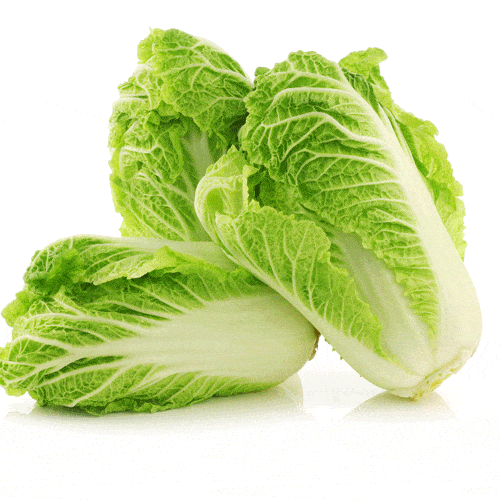
Chinese cabbage (Napa cabbage) forms tall, elongated heads with pale green to white crinkled inner leaves surrounded by broader, more textured outer leaves. The flavour is significantly milder and more delicate than Western head cabbage — slightly sweet, tender, and almost juicy at the inner core. It wilts beautifully in stir-fries and soups, holds its crunch in fresh salads and slaws, and ferments exquisitely into kimchi, which is arguably its most important culinary application. If you make kimchi, growing your own Napa cabbage is the obvious next step.
Chinese cabbage is one of the most rewarding fall crops a home gardener can grow. Sown in mid-to-late summer and maturing in early autumn, it develops in cooling temperatures that keep it sweet, tender, and crisp — and frost actually improves the flavour of mature heads. A late-season harvest of full, tight Chinese cabbage heads alongside the first cold nights of autumn is one of the genuine pleasures of a kitchen garden, whether you’re in the northern US or Canada.
Sowing and Growing Chinese Cabbage
Chinese cabbage bolts readily when exposed to long days and warm temperatures — which means spring planting is tricky. For spring, direct sow as early as possible (4–6 weeks before last frost), choosing the fastest-maturing variety to get ahead of summer heat. For the best results, focus on the fall crop: direct sow or transplant in mid-to-late summer, giving heads 65–80 days to form before hard frost. Seeds germinate readily at 10–20°C (50–68°F), and the fall timing lets plants mature as days shorten and temperatures cool — exactly the conditions Chinese cabbage thrives in. Our complete guide to growing cabbage from seed covers regional timing in detail.
Thin or transplant to 30–45 cm (12–18 in) apart. Chinese cabbage grows upright and can be planted slightly more densely than Western head cabbage. Consistent moisture is critical — dry spells trigger bolting or result in loose, poorly filled heads. A floating row cover over fall plantings extends the harvest season, blocks flea beetles and cabbage moths, and provides frost protection once hard freezes arrive.
🥬 Chinese Cabbage vs. Bok Choy — What’s the Difference?
🥬 Chinese Cabbage (Napa)
Form: Elongated, tight head
Leaves: Crinkled, pale green/white
Flavour: Mild, sweet, juicy
Days to maturity: 65–80 days
Best use: Kimchi, soups, braising, slaws
Form: Loose rosette, no head
Leaves: Dark green, white stems
Flavour: Mild, slightly more minerally
Days to maturity: 45–60 days
Best use: Stir-fries, soups, steamed
Soil, Care, and Watering
Chinese cabbage prefers fertile, well-draining soil with consistent moisture and a pH of 6.0–7.0. It’s a fast-growing, leafy crop that benefits from a nitrogen-forward fertilizer at planting. Keep soil evenly moist throughout the growing period — inconsistent moisture causes tipburn (brown leaf edges) and bolting. Mulch around plants to retain moisture and regulate soil temperature. Row cover deters cabbage worms and other brassica pests while the plants are establishing, especially for fall plantings when adult butterflies are still active.
Harvesting
Harvest Chinese cabbage when heads feel firm and solid — typically 65–80 days from direct sowing. Cut at the base. The outer leaves are tougher and more flavourful; the pale inner core is sweet, tender, and almost raw-salad quality. Heads store in the refrigerator for 2–3 weeks. For longer storage, wrap tightly in newspaper and store at near 0°C (32°F) in a cold room — Chinese cabbage keeps for 1–2 months under these conditions, extending the harvest window well past first frost.
Saving Seeds from Chinese Cabbage
Chinese cabbage is a biennial — overwinter roots in cold storage and replant in spring to flower and set seed. It cross-pollinates freely with other Brassica rapa varieties (turnips, bok choy, field mustard) via insect pollination — isolate from all other rapa species by 300+ metres for pure seed. Harvest seed pods when yellowing and dry indoors before threshing. Viability holds 3–5 years. See our complete seed-saving guide for the full biennial process.
What is Napa cabbage and how is it different from regular cabbage?
Napa cabbage (Chinese cabbage, pe-tsai) is Brassica rapa subspecies pekinensis — a different species from Western head cabbage (Brassica oleracea). It forms tall, elongated heads with pale crinkled leaves, a mild sweet flavour, and a much more tender texture than green or red cabbage. It wilts more quickly in heat and is best enjoyed raw or lightly cooked. The delicate flavour and tender texture make it the preferred cabbage in East Asian cuisines.
Can I grow Chinese cabbage in summer?
Summer growing is challenging — Chinese cabbage bolts readily in long days and warm temperatures. Even in cooler summers, days are long enough to trigger bolting by midsummer. The most reliable strategy is planting in very early spring to get ahead of long days, or — far better — sowing in mid-to-late summer for a fall crop that matures in shortening days and cool temperatures. Fall Chinese cabbage is consistently the best quality of the year.
Is Chinese cabbage good for kimchi?
Napa cabbage is the primary vegetable in traditional Korean kimchi — it’s the ingredient the dish is built around. Its mild, sweet flavour ferments beautifully with gochugaru, garlic, ginger, and fish sauce. The crinkled leaves hold the paste well and the thick midribs provide a satisfying crunch even after fermentation. Growing your own gives you full control over freshness and timing, and fall harvests produce the crispest, most flavourful cabbage for this purpose.
When should I sow Chinese cabbage for a fall harvest?
Sow about 65–80 days before your first hard fall frost — in most northern gardens that means mid-to-late July. In milder regions like coastal British Columbia or the Pacific Northwest, a wider window is possible. In short-season Prairie zones, sow in early July to ensure enough time before September frosts. Our
cabbage growing guide includes a regional planting calendar.
Is Chinese cabbage healthy?
Chinese cabbage is low in calories and a very good source of vitamin C, vitamin K, folate, and potassium. It also contains glucosinolates — the sulfur compounds common to all brassicas associated with anti-inflammatory and potential anti-cancer properties. Fermented into kimchi, it also becomes a source of beneficial probiotics and additional B vitamins produced during fermentation.
What pests affect Chinese cabbage?
Flea beetles create numerous small holes in seedling leaves and can devastate young plants quickly — row cover from germination prevents them. Cabbage worms and loopers chew large holes in older leaves and can penetrate heads; handpick eggs and caterpillars, and row cover prevents adults from laying eggs. Slugs target seedlings in cool, moist fall conditions — diatomaceous earth around plant bases helps. Consistent row cover use from seeding through establishment significantly reduces all pest pressure.
How do I use Chinese cabbage in stir-fries?
Separate the midribs (stems) from the leafy portions — they cook at different rates. Slice midribs into 2–3 cm pieces and add to the wok first, stir-frying over high heat for 2–3 minutes until just starting to soften. Add the leafy portions and stir-fry for another 1–2 minutes until wilted. Season with garlic, ginger, soy sauce, and sesame oil. The midribs stay slightly crunchy while the leaves wilt completely — a textural contrast that makes Chinese cabbage stir-fry satisfying.
How long does Chinese cabbage last after harvest?
Whole heads keep 2–3 weeks in the refrigerator. For longer storage, wrap heads individually in newspaper and store at near 0°C (32°F) in a cold room — they keep for 1–2 months. Once cut, use within 3–5 days. Alternatively, make kimchi from your harvest — properly fermented kimchi keeps refrigerated for months and the flavour only improves with time.
Why is my Chinese cabbage bolting without forming a head?
Bolting without head formation is a response to warm temperatures, long day length, or transplant stress. Chinese cabbage is highly day-length sensitive and begins bolting when days exceed 14 hours under warm conditions. The fix is timing: for spring, sow as early as possible and use bolt-resistant varieties; for the best results, focus on fall production where shortening days and cool temperatures prevent bolting entirely. Consistent moisture also reduces bolting pressure — stressed plants bolt faster than well-watered ones.
🥬 Kimchi, Stir-Fries & More — Grown in Your Own Garden
Find Chinese (Napa) cabbage seeds on Amazon — OneLink routes you to the right store in Canada or the US.
As an Amazon Associate, I earn from qualifying purchases — at no extra cost to you.
Buy Chinese Cabbage Seeds on Amazon →