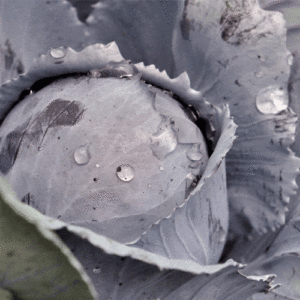
Danish Ballhead Cabbage — The Heirloom Built to Last All Winter
🌍 Where It Grows Best
🇨🇦 Canada: Zones 2–9 — a cool-season crop coast to coast, and superb across the Prairies, Ontario, Quebec & the Maritimes for fall storage. 🇺🇸 US: Zones 3–9 — spring crop in the North & Mountain West; fall & winter crop across the South & Pacific Coast. Best for: Long-term root-cellar storage, sauerkraut, and winter soups & braises.
Danish Ballhead is the cabbage gardeners grow when they want to still be eating their own cabbage in February. Bred in Denmark and carried into North American gardens in the late 1800s, it produces tight, perfectly round blue-green heads of 4–7 pounds on a compact frame. What sets it apart from quick fresh-eating types is density: the heads are heavy for their size, low in moisture, and built to last four to six months in a cool root cellar without softening. That same density makes it one of the best sauerkraut cabbages available — dense, low-water heads ferment clean and crisp instead of going mushy.
This is a long-season variety at 100–110 days from transplant, so a single, well-timed planting is the whole game. Heads that mature into cooling autumn temperatures get denser and sweeter — Danish Ballhead actually rewards a late finish, converting starches to sugars after the first light frosts. If your goal is a full root cellar and a winter’s worth of kraut from one bed, this is the variety to build it around.
🌱 Sowing & Growing Danish Ballhead
Because it needs a long run to size up, most growers raise Danish Ballhead as a fall storage crop. Start seeds indoors 6–8 weeks before transplanting, sowing ¼ inch (6 mm) deep at 18–24°C (65–75°F); seedlings emerge in 5–10 days. Transplant out when plants are 10–15 cm (4–6 in) tall, spacing them a generous 45–60 cm (18–24 in) apart in rows 60–90 cm (24–36 in) apart — large storage heads need room and airflow to develop fully. In short-season zones, count back the full 100–110 days (plus a couple of weeks of head-fill buffer) from your first hard frost to set your transplant date; in much of the North that lands in late June or early July. Our complete guide to growing cabbage from seed has region-by-region timing.
Danish Ballhead is a heavy feeder. Work plenty of compost into the bed before planting and keep the soil pH near 7.0 — liming acidic soil is your single best defence against clubroot, the soil-borne disease that deforms brassica roots. To keep cabbage moths off the developing heads, interplant the aromatic herbs and flowers in our vegetable companion planting chart, and rotate brassicas on a three-year cycle.
🫙 Why Danish Ballhead Keeps So Well
🫙 Root-Cellar Storage
Dense, low-moisture heads keep 4–6 months whole at 0–4°C (32–40°F) in a cellar or fridge.
🥬 Clean Sauerkraut
Low water content ferments crisp and tangy instead of soft — a classic kraut cabbage.
❄️ Frost-Sweetened
Light autumn frosts convert starches to sugars, so a late finish actually improves flavour.
🌿 Soil, Care & Watering
Give Danish Ballhead fertile, well-drained soil and steady moisture — roughly 4 cm (1.5 in) of water per week. Even watering is critical for storage cabbage: a dry spell followed by heavy uptake is the main cause of head-splitting, and a split head won’t store. A 5–8 cm (2–3 in) mulch layer buffers soil moisture and temperature and dramatically reduces splitting risk. Feed a balanced fertilizer at transplant, then side-dress with compost about four weeks in; ease off nitrogen once heads begin to firm, as excess nitrogen produces loose heads that don’t keep.
✂️ Harvesting & Storing
Harvest when heads feel rock-solid all the way through — Danish Ballhead should feel notably heavy for its size. Cut at the base with a sharp knife, leaving a few wrapper leaves to protect the head. For storage, harvest on a dry day, don’t wash the heads (surface moisture speeds decay), and trim the stem short. Wrap loosely or store in perforated bags in a cold, humid spot near 0°C (32°F): a root cellar, cold basement corner, or unheated-but-frost-free garage all work. Checked occasionally and stored well, whole heads hold four to six months.
🌱 Saving Seeds from Danish Ballhead
Danish Ballhead is an open-pollinated heirloom, so seed saved from it grows true to type. Cabbage is biennial — it flowers and sets seed in its second year — so overwinter a plant (in the ground in Zone 7+, or dug and stored in barely damp sand near freezing in colder zones) and replant in spring. It cross-pollinates by insects with any other flowering Brassica oleracea (broccoli, kale, cauliflower, kohlrabi, Brussels sprouts), so isolate by distance for pure seed. Our complete seed-saving guide walks through the biennial process.
❓ Danish Ballhead Cabbage FAQ
How long does Danish Ballhead take to grow?
About 100–110 days from transplant. Add 6–8 weeks of indoor growing if you start from seed, so figure roughly five months seed-to-harvest. Days-to-maturity is counted from transplant, not sowing.
Why is Danish Ballhead good for storage?
Its heads are dense and low in moisture, which lets whole uncut heads keep 4–6 months at 0–4°C (32–40°F) in a root cellar or fridge. The same low water content makes for crisp, clean sauerkraut.
When should I plant it for a fall storage crop?
Count back 100–110 days (plus a couple of weeks of head-fill buffer) from your first hard frost and transplant then. In much of the North that means a late-June or early-July transplant. See the timing detail in our cabbage growing guide.
Is Danish Ballhead an heirloom I can save seed from?
Yes — it’s open-pollinated, so seed saved from it grows true to type. Cabbage is biennial and cross-pollinates with other Brassica oleracea, so isolate it from flowering broccoli, kale and cauliflower. Our seed-saving guide walks through the biennial process.
How do I stop the heads from splitting?
Keep soil moisture even and harvest promptly once heads feel firm. Splitting is usually triggered by a dry spell followed by heavy water uptake. Mulch helps buffer moisture swings, and if rain is forecast on a mature head, twisting the plant slightly to break some roots slows uptake.
Does it tolerate frost?
Very well. Established plants shrug off light freezes down to about -6°C (21°F), and a touch of frost sweetens the heads. That’s why Ballhead shines as a fall crop across cold regions.
How is it different from a fresh-eating cabbage like Wakefield?
Danish Ballhead is a long-season, dense storage type bred to keep for months, while Early Jersey Wakefield is a fast, tender, higher-moisture cabbage best eaten fresh soon after harvest. Many gardeners grow both in a split-season plan — early heads for the table, Ballhead for the cellar.
What grows well next to it?
Aromatic herbs (dill, thyme, sage), onions and marigolds all help deter cabbage pests. Avoid planting other brassicas in the same bed in the same year. Full pairings are in our companion planting chart.
🥬 Stock the Root Cellar This Winter
Dense, long-keeping heirloom heads — perfect for storage and sauerkraut across North America.
As an Amazon Associate, I earn from qualifying purchases — at no extra cost to you.