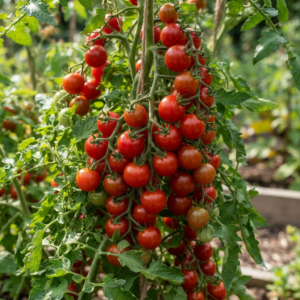
Pineapple Tomato Seeds | Bicolor Beefsteak Heirloom

Type: Tomato — Bicolor Beefsteak Heirloom
Botanical Name: Solanum lycopersicum ‘Pineapple’
Plant Type: Annual — Open-Pollinated
Days to Maturity: 80–90 days from transplant
Flavour: Sweet, fruity, tropical — low acid
Fruit Size: 450–900 g (1–2 lb), gold marbled red
Habit: Indeterminate — needs sturdy support

As an Amazon Associate, I earn from qualifying purchases — at no extra cost to you.

Pineapple Tomato — The Bicolor Beefsteak That Looks Like a Sunset

Pineapple (Solanum lycopersicum ‘Pineapple’) is one of the largest and most beautiful bicolor tomatoes you can grow. Cut one open and the golden-yellow flesh is marbled with streaks of red and orange that radiate from the centre like a starburst — the reason for the name is the look, not the flavour. And the flavour is its own reward: mild, sweet, and distinctly fruity with very low acidity, on huge beefsteak fruit that routinely runs 450–900 g (1–2 lb) and can push past it on the strongest plants.

This is an indeterminate heirloom with a regular-leaf, high-yielding vine that keeps setting fruit until frost. At roughly 85 days from transplant it ripens in the mid-to-late season, so it needs a warm run to finish — but it has a quiet reputation for holding up when the weather turns hostile, setting and ripening fruit through hot, dry spells that stall fussier beefsteaks. Give it real support, steady moisture, and full sun, and a couple of vines deliver show-stopping slices all season.

🌍 Where Pineapple Tomatoes Grow Best
🇨🇦 Canada: Grown as an annual in every zone. Best in Zones 5–8 with a long warm summer — start seeds indoors mid-February to early March. In Zones 3–4 this late beefsteak needs black plastic mulch, a south-facing wall, and a season-extending cover to finish before frost.
🇺🇸 US: Annual in all zones. A long, hot summer suits it perfectly — the South, lower Midwest, and mid-Atlantic ripen its big fruit with ease, and its heat tolerance makes it a strong pick where other beefsteaks struggle in a dry, scorching July.
Best for: fresh slicing, colourful salads and platters, sandwiches, and low-acid flavour.
📋 Pineapple Tomato Quick Reference
Start seeds indoors
6–8 weeks before last frost
Germination
5–10 days at 21–27°C (70–80°F)
Days to maturity
80–90 days from transplant
Fruit size
450–900 g (1–2 lb), gold marbled red
Plant habit
Indeterminate — sturdy support essential
Spacing
75–90 cm (30–36 in)
Light
Full sun — 8+ hours
Soil pH
6.0–6.8

🌱 How to Grow Pineapple Tomato Seeds

Start Pineapple tomato seeds indoors 6–8 weeks before your last frost date, sown 6 mm (¼ in) deep and held at 21–27°C (70–80°F), where they germinate in 5–10 days. Give seedlings strong light straight away so they stay stocky, pot up at the first true leaves, harden off over 7–10 days, and transplant only after the last frost with nights above 10°C (50°F). Because Pineapple is a late-maturing beefsteak, that early indoor start matters more than for a quick tomato.

Bury transplants deep, up to the top leaves, so the buried stem roots out to feed the heavy fruit. Space plants 75–90 cm (30–36 in) apart in full sun to give the large frame room, and set a heavy cage, deep stake, or Florida-weave line at planting time — 1–2 lb fruit will snap unsupported branches. Prune to one or two main stems to channel energy into fewer, larger, better-coloured fruit and to open the canopy for airflow. Water deeply and evenly, mulch heavily, and work a calcium source such as bone meal or crushed eggshells into the hole; big bicolor tomatoes are prone to cracking and blossom end rot when moisture swings. About four weeks before your first frost, pinch out the growing tips so the vine ripens the fruit it has set.

🍅 Harvesting & Preserving Pineapple Tomatoes

Pick Pineapple when the skin has turned a warm gold with a red blush and the fruit gives slightly to gentle pressure — bicolor tomatoes hide their ripeness, so go by feel and the shift from green-gold to full gold rather than waiting for a deep red that never comes. Because the fruit is large, check plants every 2–3 days at peak season, and in a heat wave above 32°C (90°F) pick at first full blush and finish ripening indoors. Never refrigerate a ripe tomato; below about 12°C (55°F) the delicate fruity flavour flattens and the texture goes mealy.

Pineapple is a fresh-eating tomato first — its beauty and flavour are wasted in a long-cooked sauce, which mutes the gold colour to a dull orange. For a glut, it freezes fine cored and whole for later cooking, and the meaty flesh dehydrates into strikingly coloured dried tomatoes. A golden salsa or a chilled soup keeps the colour and the fruity taste on show far better than a simmered sauce.

🍽️ Cooking with Pineapple Tomatoes

Pineapple shines raw. Thick slices show off the marbled gold-and-red interior and the sweet, low-acid, almost tropical flavour, making it a centrepiece for a caprese, a heirloom platter, or a simple plate with flaky salt and good olive oil. Paired with a red or purple heirloom, its glowing colour brings real contrast to the table.

In the kitchen its low acidity and fruity sweetness lend themselves to fresh and gentle preparations: golden gazpacho, bright uncooked salsas, and quick pan sauces where you want mildness rather than tang. It is a poor choice for a thick, long-reduced marinara — the flavour and colour both fade — so keep it for dishes that celebrate a raw or barely-cooked tomato.

🫙 Saving Pineapple Tomato Seeds

Pineapple tomato seeds are worth saving because the variety is open-pollinated and grows true to type, and one huge fruit yields plenty of seed. Use the fermentation method: scoop the seeds and gel into a jar, add a splash of water, and leave at room temperature for 2–3 days until a film forms on top. That fermentation dissolves the germination-inhibiting gel coat and knocks back seed-borne disease. Pour off the floaters and pulp, rinse the heavy seeds that sank, and dry them on a plate or screen for 1–2 weeks until they snap rather than bend. Stored cool and dark, they stay viable for 4–5 years.

Two habits keep the line true. Save only from open-pollinated Pineapple, never a hybrid, so the bicolor marbling reproduces. And because large-flowered beefsteaks cross a little more readily than small tomatoes when varieties bloom side by side, space different types 3–4.5 m (10–15 ft) apart or bag a few flower trusses with fine cloth if purity matters. Before storing a batch, sprout ten seeds on a damp paper towel — if seven or more germinate, the lot is good to keep.

🍅 Browse More Tomato Seeds
Compare Pineapple against other beefsteaks, slicers, and bicolor varieties in the full heirloom tomato seed collection.
🌱 Full Growing Guide
New to beefsteaks? Read how to grow tomatoes from seed to harvest for zone-by-zone timing and care.
❓ Pineapple Tomato FAQ
What does a Pineapple tomato taste like?
Pineapple tomatoes taste mild, sweet, and fruity with very low acidity — a gentle, almost tropical flavour rather than the bright tang of a red tomato. That sweetness makes them a favourite for anyone who finds acidic tomatoes harsh, and it is why they are prized for fresh eating and colourful salads more than for cooking.
Why is it called a Pineapple tomato?
The name comes from the look, not a pineapple flavour. Slice one open and the golden-yellow flesh is streaked and marbled with red and orange radiating from the centre, echoing the colours of pineapple flesh. The taste is its own thing — sweet and fruity, but tomato through and through.
Are Pineapple tomatoes determinate or indeterminate?
Pineapple is indeterminate — the vine grows and sets fruit continuously until frost rather than ripening one flush like a determinate bush type. It needs tall, sturdy support and ongoing pruning of the side shoots, but rewards you with big bicolor slicing tomatoes over a long window instead of all at once.
How big do Pineapple tomatoes get?
Pineapple is a true beefsteak, with fruit routinely reaching 450–900 g (1–2 lb) in good conditions and the strongest plants producing even larger tomatoes. In average conditions expect a solid 350–600 g (0.8–1.3 lb) — still big enough that one slice covers a sandwich and a single fruit anchors a salad platter.
How long do Pineapple tomatoes take to grow from seed?
Pineapple matures about 80–90 days from transplant, not from seeding, making it one of the later beefsteaks. Add the 6–8 weeks of indoor growing before transplant and the seed-to-first-ripe-fruit span is around four months. That late timing makes an early indoor start essential in cooler regions so the fruit finishes before frost.
Do Pineapple tomatoes handle heat well?
Pineapple has a reputation for holding up better than many beefsteaks in hot, dry weather, often setting and ripening fruit through spells that stall fussier varieties like Brandywine or Cherokee Purple. In extreme heat above 35°C (95°F), light afternoon shade cloth still helps protect the big fruit shoulders from sunscald, and steady watering keeps the large fruit from cracking.
Why do my Pineapple tomatoes crack or get blossom end rot?
Both problems trace back to uneven watering. Cracking comes from a sudden surge of water into ripening fruit after a dry spell, and blossom end rot — the sunken brown base — is a calcium-delivery failure when moisture swings; large bicolor tomatoes like Pineapple are prone to both. Keep watering deep and consistent, mulch heavily to buffer the soil, work in a calcium source at planting, and pick promptly as fruit colours up so ripe tomatoes don’t sit through a storm.
What’s the best support for Pineapple tomatoes?
Use heavy-duty support — a welded-wire cage, a 2.4 m (8 ft) stake driven deep and tied every 20–30 cm (8–12 in), or a Florida-weave line between T-posts. Flimsy cone cages collapse under 1–2 lb fruit. Set the support at transplant time to avoid root damage later, and tie loosely with soft cloth so the thickening stem isn’t girdled as the fruit load builds.
Can I grow Pineapple tomatoes in a short, cool season?
It is a challenge — at 80–90 days Pineapple is a late beefsteak — but doable with a strong head start. In Canadian Zones 3–4 and the northern US, start seeds indoors 8 weeks early, warm the soil with black plastic mulch, plant against a south-facing wall or in a raised bed, and use row cover early on. Prune to one stem and top the plant in late summer to push ripening before frost. The tomato growing guide breaks timing down by zone.
Can I save seeds from Pineapple tomatoes?
Yes — Pineapple is open-pollinated, so saved seed grows true to type and keeps its bicolor marbling. Ferment the seeds and gel in a jar of water for 2–3 days, rinse the seeds that sink, and dry them for 1–2 weeks before storing cool and dark for 4–5 years. The seed-saving guide walks through the fermentation step in detail.
🍅 A 1–2 lb Sunset on a Plate
Grow the show-stopping bicolor beefsteak — huge gold fruit marbled with red, sweet and fruity with low acidity, and tough enough to keep setting in the heat.
As an Amazon Associate, I earn from qualifying purchases — at no extra cost to you.

Buy Pineapple Tomato Seeds on Amazon →