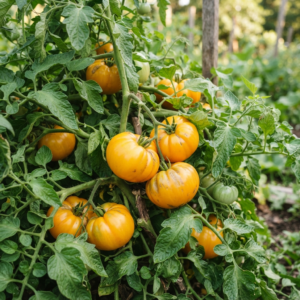
Great White Tomato Seeds | Low-Acid White Heirloom

Type: Tomato — White Heirloom Beefsteak
Botanical Name: Solanum lycopersicum ‘Great White’
Plant Type: Annual — Open-Pollinated, Heirloom
Days to Maturity: 80–90 days from transplant
Flavour: Mild, sweet, complex, very low acid
Fruit Size: 225–450g (8–16 oz), some larger
Habit: Indeterminate — heavy staking required

As an Amazon Associate, I earn from qualifying purchases — at no extra cost to you.

Great White Tomatoes — A Low-Acid Ivory Beefsteak

Great White is a large ivory-white beefsteak heirloom with a mild, sweet, genuinely complex flavour and almost none of the acid bite of a red tomato. The fruit ripens to a creamy pale yellow-white, often with a faint peachy blush where the sun hits it, and the flesh inside is dense, meaty, and nearly seedless — closer to solid fruit than juice and gel. Individual tomatoes run large, typically 225–450g (8–16 oz), with some topping 500g in a warm season.

What sets this variety apart is that it delivers gentleness without going flat. Most low-acid tomatoes trade away depth for softness; Great White keeps the full-bodied character of a good beefsteak while dropping the sharpness, which makes it one of the first varieties worth trying for anyone who finds standard tomatoes harsh. The plants are vigorous indeterminate growers that fruit until frost, so a single plant well supported can carry a heavy load of big, pale tomatoes through late summer.

🌍 Where Great White Tomatoes Grow Best
🇨🇦 Canada: Grown as an annual in every zone; strongest in Zones 5–8 (southern Ontario, southern Quebec, coastal and interior BC, the Maritimes). At 80–90 days it needs a full season — start seeds indoors 6–8 weeks before your last frost and set plants out once nights hold above 10°C (50°F). In Zones 3–4, use a polytunnel or cold frame and the warmest, most sheltered spot you have.
🇺🇸 US: An annual coast to coast, best where summers run long and warm — the Great Lakes, Mid-Atlantic, Southeast, Pacific Northwest, and California. In the Deep South, set plants out in early spring or early fall so fruit sets before peak heat.
Best for: fresh slicing, heirloom tasting plates, low-acid diets, caprese, and colour-contrast tomato salads.
📋 Great White Growing Quick Reference
Start seeds indoors
6–8 weeks before last frost
Germination
6–10 days at 21–27°C (70–80°F)
Days to maturity
80–90 days from transplant
Fruit size
225–450g (8–16 oz), some larger
Plant type
Indeterminate — heavy staking
Spacing
75–90cm (30–36 in)
Light
Full sun — 8+ hours
Soil pH
6.0–6.8

🌱 How to Grow Great White Tomato Seeds

Start Great White seeds indoors 6–8 weeks before your last frost, sowing 6mm (¼ in) deep at 21–27°C (70–80°F); seedlings emerge in 6–10 days. Grow them under 14–16 hours of bright light to keep the stems stocky, and pot up into 10cm (4 in) containers once the first true leaves appear. Harden the seedlings off over 7–10 days before transplanting, and set them out only after frost has passed and nights stay above 10°C (50°F).

Space plants 75–90cm (30–36 in) apart in full sun — this is a big, sprawling indeterminate that needs room. Bury the stem deeply at transplant so roots form along it, and install a heavy cage or double stake at planting; the large fruit puts real weight on the branches. Work compost into the bed and start a balanced tomato feed once flowers appear. Calcium matters most for big beefsteaks: mix bone meal or crushed eggshells into the planting hole to head off blossom end rot, and water deeply and evenly, since uneven moisture cracks large fruit.

🍅 Harvesting & Preserving Great White Tomatoes

Great White tomatoes are ripe when the skin shifts from bright white to a creamy ivory-yellow and the fruit feels like a ripe peach — soft under gentle pressure, not firm. Colour alone won’t tell you; go by feel, by the easy release from the vine, and by the ripe tomato fragrance at the stem end. Pick promptly, because these big pale fruits crack or collapse quickly if left too long, especially after rain.

Great White is a fresh-eating tomato with a shorter shelf life than firmer types, so eat within 3–5 days of harvest, stored at room temperature out of direct sun — never refrigerated. When a glut hits, the dense low-seed flesh preserves beautifully: halve and slow-roast at 120°C (250°F) for 2–3 hours for a jammy, concentrated spread, or freeze roasted halves in bags for winter. The pale colour is a practical bonus in the kitchen — it doesn’t bleed into other ingredients.

🍽️ Cooking with Great White Tomatoes

Great White tomatoes shine as a slicer, where the mild sweetness carries a plate on its own. Thick ivory rounds with flaky salt, basil, and good olive oil make a striking presentation, and against red and orange heirlooms in a mixed platter the pale flesh adds both colour contrast and a gentler flavour note. The low acidity makes this the go-to tomato for anyone who wants full tomato character without the bite.

Cooked, this variety holds its own. The meaty, low-seed flesh makes a mild, slightly sweet fresh salsa, and it slow-roasts into a deeply concentrated spread that’s remarkable on toast or tossed through pasta. Because the colour stays pale, Great White won’t muddy a dish the way a dark tomato can — useful in creamy sauces and light summer preparations where you want the flavour without the red.

🫙 Saving Great White Tomato Seeds

Saving Great White seeds is easy because the variety is open-pollinated and grows true to type. Scoop the seeds and gel from a fully ripe, well-formed fruit into a jar with a splash of water and ferment at room temperature for 2–3 days, until a film of mould forms and breaks down the coating around each seed. Pour off the mould and any floating seeds, rinse the good seeds that sank, and dry them on a plate or coffee filter — not paper towel, which they stick to — for 1–2 weeks before storing.

As an open-pollinated heirloom, Great White is not a hybrid, so its seed comes true — but tomatoes can occasionally cross-pollinate when insects move between nearby varieties. For pure seed, separate different tomato varieties by about 3m (10 ft) and save from your best-flavoured, most typical fruit; keeping the line isolated is especially worth it to hold the pale colour and low-acid profile. Stored cool, dark, and dry, tomato seeds stay viable for 4–6 years, and a quick paper-towel test on a few seeds each spring confirms the batch.

🍅 More Tomato Varieties
Compare dozens of heirloom, slicing, paste, and cherry types side by side.

Browse all tomato seeds →

🌱 Full Growing Guide
Seed-starting, transplanting, feeding, pruning, and troubleshooting in depth.

Read how to grow tomatoes →

❓ Great White Tomato FAQ
Are Great White tomatoes truly white?
Great White tomatoes ripen to a creamy ivory-white to pale yellow, often with a faint peachy blush on the sun-exposed side. The interior is a similar pale yellow-cream rather than pure white. Next to any standard tomato they read as distinctly pale, which is what makes them so striking sliced on a plate.
Are Great White tomatoes low acid?
Great White is one of the lowest-acid heirloom tomatoes available, which is why it’s a common recommendation for people who find standard tomatoes harsh. The flavour is mild and sweet without being flat — the depth of a good beefsteak stays, just without the sharp edge. Anyone managing a specific medical condition should still check with their own healthcare provider.
How big do Great White tomatoes get?
Great White is a large beefsteak, with fruit typically 225–450g (8–16 oz) and some topping 500g in a warm season. The plants are big indeterminate vines reaching 1.5–2m (5–6 ft), so give each one full sun, wide spacing, and a very sturdy cage or double stake to carry the heavy fruit.
How do I know when Great White tomatoes are ripe?
Great White tomatoes ripen from bright white to a creamy ivory-yellow, but touch is the most reliable cue: a ripe fruit gives like a ripe peach, soft but not mushy, and releases from the vine with light pressure. The aroma at the stem end strengthens noticeably at full ripeness. Don’t wait for a colour that never comes — go by feel and smell.
Are Great White tomatoes determinate or indeterminate?
Great White is indeterminate, so the vines keep growing and setting fruit until frost rather than ripening one concentrated crop. Plan for a tall, heavy-duty cage or double stake set at planting, and prune suckers if you want to channel energy into larger fruit and better airflow.
Can I grow Great White tomatoes in a container?
Great White grows in a large container of at least 40–75L (10–20 gallons) with a strong cage or stake. As a vigorous, big-fruited indeterminate it needs the root room and steady watering a big pot provides — undersized containers dry out fast and stress the plant, which worsens cracking and blossom end rot on large fruit.
Do Great White tomatoes crack easily?
Great White, like most large beefsteaks, is more prone to cracking than small-fruited types. Consistent moisture is the fix: mulch heavily to steady the soil, water deeply on a regular schedule, and harvest promptly once ripe. After heavy rain following a dry spell, check the big fruit right away and pick anything close to ready before it splits.
How should I store Great White tomatoes?
Great White tomatoes keep best at room temperature, out of direct sun, stem-side down. As a large heirloom beefsteak they have a short post-harvest window — plan to eat within 3–5 days of picking. Never refrigerate; cold flattens the flavour and turns the texture mealy. If you have a surplus, roast or slow-dry it while the flavour is at its peak.
Can I save seeds from Great White tomatoes?
Great White seeds save easily because the variety is open-pollinated and grows true to type. Ferment the seeds and gel in a little water for 2–3 days, rinse off the mould and floating seeds, then dry the good seeds that sank for 1–2 weeks. Stored cool and dry, they stay viable for 4–6 years.
Great White vs Green Zebra — which should I grow?
Great White and Green Zebra are very different tomatoes. Great White is a large, mild, sweet, low-acid beefsteak built for slicing and acid-sensitive palates; Green Zebra is a small-to-medium tangy, citrusy fruit that adds bright contrast to salads. If space allows, growing both gives you two dramatic, complementary tomatoes at opposite ends of the flavour range.
🍅 The Heirloom That Proves White Is Worth Growing
Large, low-acid, and ivory-pale — open-pollinated, 80–90 days, fruit up to 1 lb.
As an Amazon Associate, I earn from qualifying purchases — at no extra cost to you.

Buy Great White Tomato Seeds on Amazon →

Seed Quantity

85 seeds, 220 seeds