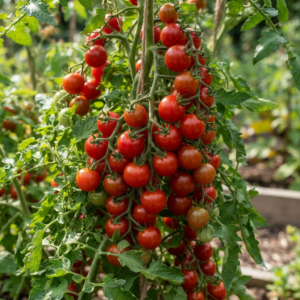

Yellow Cherry Tomatoes — Sweet, Golden & Low-Acid
Yellow Cherry is a sweet, golden cherry tomato that produces small, bite-size fruit in long cascading clusters — bright yellow, intensely sweet, and low enough in acid that even tomato-skeptics eat them by the handful. The round fruits run about 10–20g each and ripen to a clear, sunny yellow, carrying a clean sweetness with almost none of the sharp edge of a red tomato.
Beyond the flavour, this variety is one of the most forgiving tomatoes you can grow. The plants are vigorous, disease-tolerant, and prolific almost to a fault — a single well-established plant can drip with hundreds of fruit by midsummer. The airy, loosely branching habit keeps the plant flowering over a long window, which draws pollinators and keeps new fruit setting right through the season.
🇺🇸 US: An annual that adapts to nearly any climate, from the Upper Midwest and Northeast through the Southeast, Plains, and West. In warm regions the plants can self-seed and return as volunteers the following spring.
Best for: fresh snacking, kids’ and school gardens, salads, preserves, dehydrating, and pollinator-friendly planting.
🌱 How to Grow Yellow Cherry Tomato Seeds
Start Yellow Cherry seeds indoors 6–8 weeks before your last frost, 6mm (¼ in) deep in a warm mix at 21–27°C (70–80°F); germination is quick, usually 5–8 days. Grow the seedlings under 14–16 hours of bright light to keep the stems compact, and pot up once the first true leaves appear. Transplant after all frost risk has passed, spacing plants about 60cm (24 in) apart in full sun.
This variety grows loose and sprawling, so many gardeners let it ramble over a wire cage rather than staking it tightly — the airy habit suits it. Bury the stem deeply at transplant so roots form along it, and mix bone meal or crushed eggshells into the planting hole for calcium, since even small cherry fruit gets blossom end rot when moisture is uneven. It tolerates short dry spells better than most tomatoes, but steady watering during fruiting improves both yield and sweetness.
🍅 Harvesting & Preserving Yellow Cherry Tomatoes
Yellow Cherry tomatoes ripen to a clear, bright yellow with a slight translucence, and they’re ready when they release from the cluster with the lightest touch — a fully ripe fruit nearly falls into your hand. Harvest whole clusters by snipping the stem rather than picking one at a time; it’s faster and keeps the trusses intact for a beautiful presentation. Pick frequently once ripening starts, since the thin skins can split if the fruit is left too long or after heavy rain.
Yellow Cherry is a fresh-eating tomato, but its sweetness makes it excellent preserved. The small fruit goes whole into pickling brine, cooks down into a bright tomato jam, and dehydrates into intensely sweet, candy-like snacks or pizza toppings. Blister a handful in a hot pan with olive oil and garlic and they collapse into a quick, golden five-minute sauce.
🍽️ Cooking with Yellow Cherry Tomatoes
Yellow Cherry tomatoes are best straight from the vine, eaten as a snack or scattered whole over salads and charcuterie boards where the sunny colour pops against greens and reds. Threaded onto skewers they make easy appetizers, and halved into a grain bowl or pasta salad they add sweetness without any acidic bite.
Cooked, this variety brings sweetness and colour. Blistered in a hot pan with olive oil and garlic, Yellow Cherry tomatoes make a fast golden pasta topping; roasted, they concentrate into a mild, sweet sauce that’s lovely against a red-tomato base. Their low acidity means they need little balancing, and the yellow flesh keeps dishes bright rather than muddy.
🫙 Saving Yellow Cherry Tomato Seeds
Saving Yellow Cherry seeds is straightforward because the variety is open-pollinated and grows true to type. Because the fruit is small, plan to ferment seeds from 8–10 fruits per session for a decent quantity. Squeeze the seed pulp from your ripest, best-formed fruit into a jar with a little water and ferment at room temperature for 2–3 days, until a film of mould breaks down the coating around each seed. Rinse thoroughly, dry completely on a plate or fine screen, and store in a labelled envelope somewhere cool and dark.
As an open-pollinated variety, Yellow Cherry is not a hybrid, so its seed comes true — but tomatoes can occasionally cross when several varieties grow close together. In a typical garden the fruit generally comes true anyway; for guaranteed purity, separate different tomato varieties by about 3m (10 ft). Stored cool, dark, and dry, tomato seeds stay viable for 4–5 years, and a quick paper-towel germination test each spring confirms the batch before you sow.