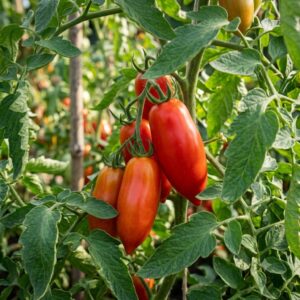

Beefsteak Tomato — The Original 2-lb Slicing Heirloom
Beefsteak (Solanum lycopersicum ‘Beefsteak’) is the tomato most people picture when they imagine a homegrown slicer: a broad, deeply ribbed, meaty fruit that routinely runs 450–900 g (1–2 lb), with dense flesh and few seed cavities. The flavour is the old-fashioned balance of sweet and tart — not as layered as Brandywine or Cherokee Purple, but bigger, more dependable, and impressive enough that a single fruit covers a whole sandwich.
This is an indeterminate heirloom that North American gardeners have grown for well over a century. At 85 days from transplant it sits in the mid-to-long season, ripening reliably wherever summers are warm and achievable in shorter-season gardens with an early indoor start and a sheltered site. The size is the whole appeal — and the reason the plant needs genuine support, steady moisture, and a little patience. Get those right and you’ll pull thick, garden-warm slices off the vine right through late summer.
🇺🇸 US: Annual in all zones. A long, warm summer is ideal — size, colour, and flavour all peak in sustained heat, so the South and lower Midwest ripen Beefsteak with ease.
Best for: fresh slicing, stacked sandwiches and burgers, and any gardener chasing maximum fruit size.
🌱 How to Grow Beefsteak Tomato Seeds
Start Beefsteak tomato seeds indoors 6–8 weeks before your last frost date, sown 6 mm (¼ in) deep and held at 21–27°C (70–80°F) — at that warmth they germinate in 5–10 days. Once seedlings show their first true leaves, pot them up and give them bright light; leggy, stretched transplants never catch up. Harden off over 7–10 days, then transplant after the last frost has passed and night temperatures stay above 10°C (50°F).
Bury transplants deep — right up to the top few leaves. Tomatoes root along any buried stem, and that extra root mass is exactly what a heavy-fruiting plant like Beefsteak needs. Space plants 75–90 cm (30–36 in) apart in full sun, because this variety builds a large, sprawling frame. Set your support at planting time, not later: a heavy-gauge cage, a stout single stake, or a Florida-weave line. The fruit alone can add several kilos to a single truss, and unsupported branches snap.
Pruning pays off with Beefsteak. Keeping the plant to one or two main stems and removing the side shoots (suckers) channels energy into fewer, larger fruit and opens the canopy for airflow — which matters in humid regions where leaf disease spreads fast. Water deeply and consistently, and mulch heavily; the single biggest cause of split fruit and blossom end rot on big tomatoes is swinging soil moisture. Work in a calcium source at planting — bone meal or a handful of crushed eggshells in the hole — and go easy on high-nitrogen feed, which drives leaves at the expense of fruit. In practice you’ll notice the first fruit sets around eight weeks after transplanting; about four to six weeks before your expected first frost, pinch out the growing tips so the plant ripens what it has instead of starting fruit it can’t finish.
🍅 Harvesting & Preserving Beefsteak Tomatoes
Pick Beefsteak when the fruit has coloured fully and gives slightly to gentle pressure at the blossom end. Because the fruit is so large, the ripening window is short — check plants every 2–3 days at peak season, and in a heat wave (above 32°C / 90°F, when tomatoes stall on colouring) harvest at the first full blush and finish ripening indoors at room temperature. Never refrigerate a ripe tomato: below about 12°C (55°F) the texture goes mealy and the flavour flattens permanently.
Beefsteak is a fresh-eating tomato first, but a glut is easy to put up. The meaty walls roast beautifully — halve the fruit, drizzle with oil, and slow-roast at 120°C (250°F) until concentrated, then freeze in bags. Whole fruit freezes fine for later cooking (the skins slip off under warm water once thawed), and the flesh cans well as crushed tomatoes, though it runs juicier than a dedicated paste type, so expect to cook sauce down longer. For the least work, core and freeze them whole on a tray, then bag once solid.
🍽️ Cooking with Beefsteak Tomatoes
Beefsteak earns its name at the cutting board. One broad slice covers a burger or sandwich edge to edge, and the dense, low-seed flesh holds its shape instead of sliding out — the reason this is the classic BLT and hamburger tomato. Thick slices with flaky salt, a little olive oil, and torn basil are the whole point of growing it, and the same slabs grill well or take a breadcrumb-and-cheese topping for a baked side.
For cooking, lean into fresh preparations: chunky salsa, gazpacho, bruschetta, and quick pan sauces where a little extra juice is welcome. For a thick, smooth marinara you’ll get there, but plan to simmer longer to drive off the higher water content — or blend Beefsteak with a paste variety for body. Its generous size also makes it the natural pick for stuffed baked tomatoes.
🫙 Saving Beefsteak Tomato Seeds
Beefsteak tomato seeds are worth saving because the variety is open-pollinated and grows true to type, and the huge fruit yields a lot of seed from a single tomato. Use the fermentation method: scoop the seeds and surrounding gel into a jar, add a splash of water, and leave it at room temperature for 2–3 days until a film forms on top. That fermentation breaks down the germination-inhibiting gel coat and knocks back seed-borne disease. Pour off the floaters and pulp, rinse the heavy seeds that sank, and dry them on a plate or screen for 1–2 weeks until they snap rather than bend. Stored somewhere cool and dark, they stay viable for 4–5 years.
Two things protect a true-to-type seed line. First, save only from open-pollinated Beefsteak, not from a hybrid “beefsteak-type” tomato — hybrid seed scatters into a mix of parents in the next generation and won’t reproduce the fruit you grew. Second, while tomatoes are self-pollinating and cross rarely, the risk isn’t zero when several varieties flower side by side; if you grow more than one, either space them 3–4.5 m (10–15 ft) apart or cover a few flower trusses with fine cloth to guarantee purity. Before you commit a batch to storage, test viability by sprouting ten seeds on a damp paper towel — if seven or more germinate, the lot is good to keep.