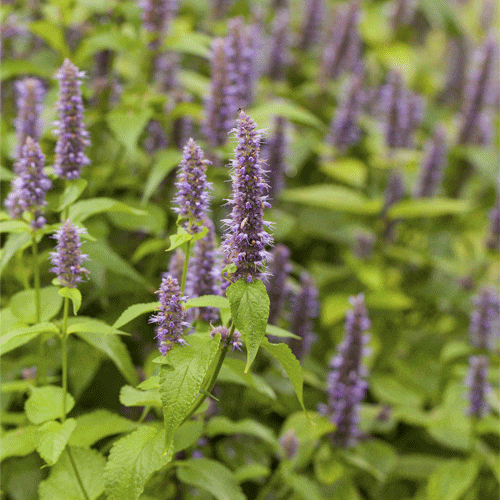
Type: Herb — Native Perennial Botanical Name:Agastache foeniculum Also Known As: Anise Hyssop, Blue Giant Hyssop, Licorice Mint Plant Type: Perennial — Open-Pollinated, Zones 4–9 Bloom Time: Midsummer through fall — 8–10 weeks Height: 60–120cm (2–4 feet) Sow: Surface sow indoors 8–10 weeks before last frost Light: Full Sun to Partial Shade Uses: Pollinator plant, herbal tea, culinary garnish, medicinal
As an Amazon Associate, I earn from qualifying purchases — at no extra cost to you.
Anise Hyssop (Agastache foeniculum) is a native prairie perennial of North America — not a true hyssop and not related to anise, but named for its pleasantly anise-scented leaves and flowers. Growing 60–120cm (2–4 feet) tall with upright spikes of violet-blue flowers that bloom from midsummer through fall, it’s one of the most reliably bee-attracting plants you can put in a garden. Bumblebees, honeybees, and native solitary bees work the flowers constantly when they’re open, and the blooms are also attractive to hummingbirds and several species of butterflies. Unlike many perennials that peak briefly, Anise Hyssop holds its flowers for an exceptionally long season — 8–10 weeks of continuous bloom is typical.
The foliage is the other standout feature. Rub a leaf between your fingers and the scent is immediate — a clean, sweet anise fragrance with a hint of mint. The leaves and flowers are edible, making a light, naturally sweet herbal tea that needs no honey. In Indigenous North American traditions, Anise Hyssop was used as a tea herb, a cold remedy, and a flavouring. For a closely related culinary herb with a stronger mint note, see Korean Mint Seeds.
🌍 Growing Zones & Climate Performance
🇨🇦 Canada: Perennial in Zones 4–9. As a native prairie plant, it’s exceptionally cold-hardy and well-suited to Canadian conditions. Excellent across Ontario, the Prairies, Quebec, and BC. Self-seeds readily, so established plants naturalize into expanding colonies over time. 🇺🇸 US: Zones 4–9. Native to the Upper Midwest and Great Plains. Drought-tolerant once established. Best for: Pollinator gardens, prairie-style plantings, cottage gardens, tea herb gardens, naturalized borders.
🌱 How to Grow Anise Hyssop from Seed
Anise Hyssop germinates readily from seed but requires light — surface sow on moist seed-starting mix and press gently without covering. Start indoors 8–10 weeks before last frost at 18–21°C (65–70°F); germination takes 7–14 days. Cold stratification (2 weeks in a damp paper towel in the fridge) improves germination rates if seeds are slow to sprout. Alternatively, direct sow outdoors in early spring — the natural freeze-thaw cycle provides stratification naturally.
Transplant outdoors after last frost, 30–45cm (12–18 inches) apart, in full sun to partial shade. Anise Hyssop is tolerant of a wide range of soils but performs best in well-drained, moderately fertile ground — it actually blooms more prolifically in leaner soils. Allow some flower heads to mature and drop seed for naturalization, or collect the tiny black seeds for controlled resowing.
🌿 Planting Quick Reference
Sow depth
Surface sow — press gently, do not cover
Germination
7–14 days at 18–21°C (65–70°F)
Start indoors
8–10 weeks before last frost
Transplant
After last frost, 30–45cm (12–18 in) apart
Bloom time
Midsummer through fall (8–10 weeks)
Mature height
60–120cm (2–4 ft)
🍵 Tea, Kitchen, and Pollinator Garden
Fresh Anise Hyssop tea is made by steeping a small handful of leaves and flowers in just-boiled water for 5 minutes. The flavour is delicate — mildly sweet, lightly anise, with a clean herbal finish that’s pleasant without honey or sweetener. The flowers are among the most beautiful edible garnishes in the herb garden — lavender-blue, delicate, and strongly bee-scented.
❓ Anise Hyssop FAQ
Is Anise Hyssop the same as hyssop or anise?
No — it’s a separate plant entirely. True hyssop is Hyssopus officinalis, a Mediterranean herb with a bitter, medicinal flavour. Anise is Pimpinella anisum, an annual grown for its seeds. Anise Hyssop (Agastache foeniculum) is a North American native perennial that smells like anise but is botanically unrelated to either.
Will it survive winter in Canada?
Yes, reliably to Zone 4 — covering most of southern Ontario, Quebec, BC, and the Prairies. As a native prairie plant it’s adapted to cold, windy winters. Leave the dried stems standing through winter for insulation and bird seed. Cut back in early spring as new growth emerges. In Zone 3, a light mulch of straw over the crown improves survival odds significantly.
Does Anise Hyssop spread aggressively?
It self-seeds freely but doesn’t spread by runners the way mints do — each plant stays in a clump that expands slowly. To limit spread, deadhead spent flower spikes before seeds mature. Unlike aggressive spreaders, Anise Hyssop is easy to manage with minimal intervention.
What’s the difference between Anise Hyssop and Korean Mint?
Both are Agastache species with anise-mint scented foliage and bee-attracting flowers, but Korean Mint (Agastache rugosa) is an Asian species with a stronger, mintier note and is more widely used in East Asian cooking and traditional medicine. Anise Hyssop is the North American native with a softer, sweeter anise character. See Korean Mint Seeds for comparison.
🐝 North America’s Best Native Pollinator Herb
Anise Hyssop Seeds on Amazon — native perennial, lavender-blue blooms, edible tea herb, Zones 4–9. Ships to Canada and the US.
As an Amazon Associate, I earn from qualifying purchases — at no extra cost to you.