Alpine Strawberry (Fragaria vesca ‘Alexandria’): Runnerless, Everbearing Flavour
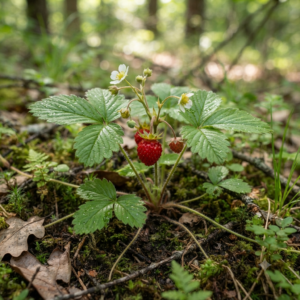
Alpine strawberry is the wild-type strawberry that European gardeners have grown for centuries for one reason: flavour. The berries are barely grape-sized, but the taste is astonishing — a concentrated, almost perfumed sweetness with a complexity that keeps building as you eat. Where a commercial strawberry is watery and generically sweet, ‘Alexandria’ tastes like the idea of a strawberry sharpened to a point, which is why so many first-time growers describe it as finding out what the fruit is supposed to taste like.
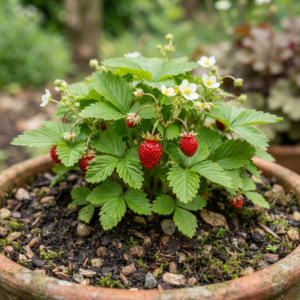
What sets ‘Alexandria’ apart from most cultivated strawberries is that it makes no runners. Plants stay in neat clumps that slowly bulk up over the years without ever wandering into a neighbour’s space, which makes them ideal for containers, edible borders, and tidy kitchen gardens. They are everbearing perennials in Zones 3–9, returning without replanting and producing small flushes of fruit from late spring right through to frost rather than one concentrated burst. A settled planting is among the most carefree productive plants you can keep.
🇺🇸 US: Perennial in Zones 3–9 and productive across every region. In the Upper Midwest and Northeast they crop through the whole season; in the Deep South (Zone 9) grow them as a cool-season plant, sowing in fall for winter-to-spring fruiting and resting through peak heat.
Best for: Containers and window boxes, edible borders, cottage gardens, shaded spots, and continuous-harvest kitchen gardens.
🌱 How to Grow Alpine Strawberry Seeds
Alpine strawberry seeds germinate best when cold-stratified for 2–4 weeks, then surface-sown in light at 18–21°C (65–70°F). The seed is tiny and needs light to sprout, so scatter it on moist seed-starting mix, press gently, and never cover it with soil. Chill the seed first in a damp paper towel inside a sealed bag for 2–4 weeks — without that cold spell germination is erratic; with it, expect 60–80% germination in 2–4 weeks. Keep the surface consistently moist the whole time, as drying out mid-germination is the most common cause of failure.
Start indoors 8–10 weeks before last frost. Once seedlings show their first true leaves, pot them on individually and grow them in bright light — a full-spectrum grow light noticeably improves early vigour. Transplant outdoors after frost at 25–30cm (10–12 in) spacing. Alpine strawberries handle partial shade better than most fruiting plants, and a north-facing border with 4–5 hours of light daily crops well. Keep plants evenly moist through their first season; once established they become quite drought-tolerant, and first berries usually appear 4–6 months after sowing.
🍓 Harvesting & Using Alpine Strawberries
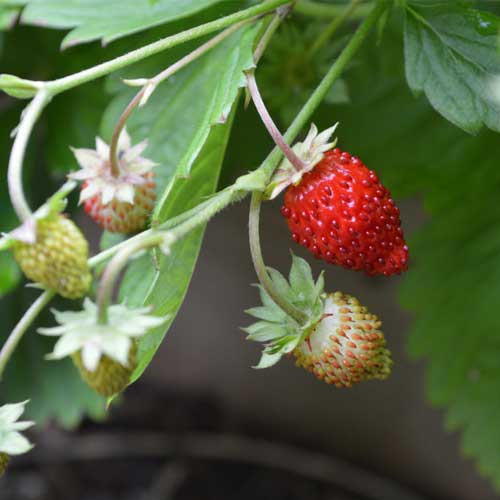
Alpine strawberries ripen a handful of berries at a time from late spring through frost, so you pick little and often rather than in one glut. Harvest each berry only when it is fully, deeply red and detaches with a gentle tug — the aromatic sweetness the variety is famous for only arrives at complete ripeness, and a day early tastes flat. Individual plants yield modestly, so the trick to a real harvest is growing many plants and picking every day or two through the season.
Eaten fresh off the plant is where ‘Alexandria’ shines, and a small bowl elevates cream, ice cream, a slice of cheesecake, or a summer tart far beyond what the quantity suggests. The berries are too soft and precious to ship or store, but they cook into a fragrant, deeply flavoured jam and infuse beautifully into syrups and vinegars. Because production is spread across months, freezing a daily handful builds up enough for preserving once the season winds down.
🪴 Growing Alpine Strawberries in Containers & Borders
Alpine strawberry seeds are purpose-made for containers and edging because the runnerless habit keeps every plant exactly where you put it. Use a pot at least 20cm (8 in) deep with good drainage and a quality potting mix; window boxes, hanging baskets, and trough planters all suit the compact clumps. Container plants dry out faster than ground beds, so water consistently and feed a balanced liquid fertilizer every 2–3 weeks through the growing season to keep the flushes coming.
The same tidiness makes ‘Alexandria’ one of the best strawberries for a formal edible border — plants form a low, even ribbon of fruit and foliage that never invades the bed behind them. In colder zones, move containers into an unheated but frost-free garage or shed over winter to spare the pot the freeze-thaw cycling that can heave shallow roots, then return them outdoors as growth resumes in spring.
🫙 Saving Alpine Strawberry Seeds
Alpine strawberry seeds save easily because ‘Alexandria’ is an open-pollinated heirloom that comes true to type. Let a few berries ripen fully until soft and deep red, then mash each one into a small dish of water, rinse away the pulp, and lift out the tiny seeds that sink. Dry them flat on a paper towel for 1–2 weeks and store them in a sealed envelope somewhere cool and dark.
As an open-pollinated variety rather than an F1 hybrid, saved seed reproduces the parent’s flavour and runnerless habit reliably, with only minor natural variation. Different Fragaria vesca selections can cross if they flower side by side, so keep a little distance between types you intend to save from. Cold-stratify saved seed before sowing, exactly as you would a purchased packet, and expect it to stay viable for roughly 2–3 years when properly dried.