Rainbow Carrot Seeds | 5-Colour Non-GMO Mix

Type: Rainbow Carrot Mix
Botanical Name: Daucus carota
Plant Type: Annual — Open-Pollinated
Days to Maturity: 70–80 days
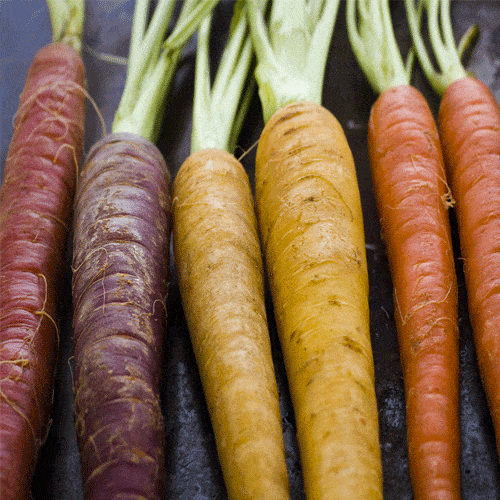
Colours: Orange, yellow, white, red & purple
Root Shape: Cylindrical, blunt tip
Sun: Full sun

As an Amazon Associate, I earn from qualifying purchases — at no extra cost to you.

Rainbow Carrots — Five Colours in One Garden Bed

🌍 Where Rainbow Carrots Grow Best
🇨🇦 Canada: Zones 3–9. Sow as soon as the soil is workable in spring. Roots left in the ground through fall frost develop deeper sweetness and sharper colour contrast across the mix.
🇺🇸 US: A spring and fall crop through Zones 3–9, and a winter crop in Zones 9–11. Cool finishing weather in the North and Pacific Northwest brings out the most vivid pigment.
Best for: Roasting, charcuterie boards, fresh eating, farmers-market displays, children’s gardens, and any dish where presentation matters.

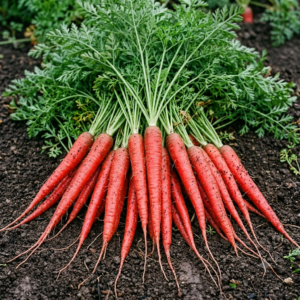
Rainbow carrots bring together orange, yellow, white, red, and deep purple roots in a single planting — each colour driven by a different pigment with its own nutrition and a subtly different flavour. A row shows nothing but green tops until harvest, so pulling the first purple or white root is a genuine surprise, especially for kids who have only ever seen orange. Most mixes are built on Nantes- or Chantenay-type roots across every colour, so growing and care stay identical no matter which shade comes up.

The colour range is real nutritional range, not just a garnish. Orange roots carry beta-carotene, yellow ones lutein, red and pink hold the lycopene found in tomatoes, and purple roots are loaded with anthocyanins — the same antioxidant class as blueberries and red cabbage. Growing all five together delivers a wider antioxidant spread from one vegetable than any single-colour carrot can.

🌈 The Five Colours — Pigment, Nutrition & Flavour
Orange
Pigment: Beta-carotene
Nutrition: Vitamin A precursor
Flavour: Classic sweet carrot
Yellow
Pigment: Xanthophylls
Nutrition: Lutein for eye health
Flavour: Mild, slightly sweet
White
Pigment: None (ancient type)
Nutrition: High fibre & potassium
Flavour: Mildest, most neutral
Red / Pink
Pigment: Lycopene
Nutrition: Same antioxidant as tomatoes
Flavour: Earthy, slightly sweet
Purple
Pigment: Anthocyanins
Nutrition: Highest antioxidant content
Flavour: Rich, slightly peppery

How to Grow Rainbow Carrot Seeds

Rainbow carrot seeds are direct-sown only — carrots do not transplant. Sow 5 mm (¼ inch) deep as soon as the soil is workable, 2–4 weeks before your last frost, into a bed worked 30 cm (12 inches) deep and cleared of stones and clods. Deep, loose, stone-free soil produces the straightest, most uniform roots across every colour in the mix; work in compost but skip fresh manure, which forks the roots. Keep the seedbed consistently moist through the 10–21 day germination window — cover the row with burlap or a board until sprouts appear, since a dried-out surface is the top cause of carrot failure.

Thin to 5–8 cm (2–3 inches) apart once seedlings reach 5 cm tall — spacing is the single biggest factor in root quality. Water deeply and evenly rather than little-and-often, especially in the final weeks: the purple roots in the mix split most readily when moisture swings. Hold back on nitrogen once roots begin to size, or you will grow lush tops over small carrots. For the sharpest colour contrast and the sweetest roots, sow a second succession in late June to early July for a fall harvest — cold finishing weather deepens the pigment in every colour.

Harvesting & Storing Rainbow Carrots

Rainbow carrots mature at 70–80 days, ready when the shoulders reach about 2–3 cm (1 inch) across at the soil line. Pull the whole row at once for the full colour display, or harvest selectively as you need them. Loosen the roots with a garden fork rather than tugging the tops, which snap off in firm ground. Colours across a good mix finish within about 5–7 days of each other, so check a root from each section around day 70 and lift when most are sized up.

For storage, twist off the tops right after harvest so they cannot draw moisture from the root, then refrigerate in perforated bags for 3–4 weeks or pack the roots in barely damp sand in a root cellar near 0–2°C (32–36°F) for several months. Keep the purple roots slightly separated in storage and in the pan — their anthocyanins can bleed onto lighter carrots once cut or cooked.

Cooking & Serving Rainbow Carrots

Rainbow carrots earn their keep on presentation, and high-heat roasting is the payoff. Roast at 200–220°C (400–425°F) with olive oil, salt, and fresh herbs — caramelization deepens each colour and concentrates the sweetness. Keep the colours in separate sections of the pan so the purple pigment doesn’t bleed onto the lighter roots, and slice on the bias to show the contrast between a purple skin and its orange core.

Raw, the mix makes a striking crudité platter or a composed salad, sliced thin so every colour reads on the plate. One thing to know for the kitchen: in soups and braises, anthocyanins from purple roots can leach into the liquid and turn it a blue-grey shade, so save the purple carrots for roasting and fresh use where their colour stays put.

Saving Rainbow Carrot Seeds

Saving rainbow carrot seeds takes planning because the mix is several distinct open-pollinated varieties growing side by side. Carrots are biennials, so any plant you save from must overwinter and flower in its second summer after cold (vernalization). Save seed from a rainbow bed without isolating colours and the next generation crosses unpredictably — orange and purple parents often give plain orange-fleshed roots. To hold a single colour true, grow out that colour alone, isolate it from all other carrots and wild Queen Anne’s Lace by roughly 800 m (½ mile), and collect its seed separately once the umbels dry and brown.

Because these are open-pollinated rather than hybrid, an isolated single colour comes back true to type — the unpredictability is only from mixing colours, and it affects only the seed you save, never the roots you eat this season. Carrot seed stays viable about 3 years stored cool and dry; test an older packet with a damp paper-towel check — 10 seeds folded in, kept warm, counted after 14 days — before sowing at normal density. For a reliable five-colour show every year, starting from fresh mixed seed is the simplest route.

Prefer a single colour or type?
Browse Nantes, Chantenay, and more in the full carrot seeds collection.
New to growing carrots?
The complete how to grow carrots guide covers soil prep, germination, thinning, and zone-by-zone timing.
❓ Rainbow Carrot FAQ
Do the different coloured carrots taste different?
Rainbow carrot colours do taste subtly different. Orange has the classic sweet carrot flavour, yellow is milder and a touch sweeter, and white is the mildest and most neutral. Red carrots run earthy with a hint of sweetness, while purple is the most complex — slightly richer and peppery. The gaps are small enough to notice mainly when tasting side by side, and all colours behave the same once cooked.
Are purple carrots healthier than orange carrots?
Purple carrots lead on anthocyanins — antioxidants tied to anti-inflammatory effects — while orange carrots lead on beta-carotene, the vitamin A precursor. Neither is simply “healthier”; each colour brings a different antioxidant profile, which is exactly why a five-colour mix is more nutritionally diverse than any single-colour carrot. Eating a range of colours regularly is the real benefit.
Do purple carrots stay purple when cooked?
Purple carrot skins hold their colour well when roasted, but the interior of most purple varieties is orange, so slicing reveals a purple-to-orange contrast rather than solid colour. In soups and braises, the anthocyanins bleed into the liquid and can turn it a blue-grey shade. For visual impact, roast purple carrots at high heat — caramelization concentrates the exterior colour and keeps the pigment where you want it.
When should I plant rainbow carrots?
Sow rainbow carrots as soon as the soil is workable, 2–4 weeks before your last frost. Across the northern US and Canada that lands late April to early May; coastal BC and the Pacific Northwest can start March to April; the US South and Southwest grow them as a fall-through-winter crop. Add a second sowing in late June to early July everywhere — cold fall soil intensifies the pigment, making autumn rainbow carrots the most vivid of the year.
Why won’t my rainbow carrot seeds germinate?
Rainbow carrot seeds need consistently moist soil for the full 10–21 day germination window — any drying of the surface kills sprouting seedlings before they emerge, and that is the most common cause of failure. Cover the row with a board, burlap, or row cover to lock in moisture and pull it the moment sprouts show. Cold soil below 7°C (45°F) also slows things sharply, so be patient and keep the surface damp.
Do rainbow carrots need different care than orange carrots?
Rainbow carrots grow exactly like orange ones — same sowing depth, spacing, watering, and soil needs, since the mix is built on standard carrot types. The one practical difference is that purple roots split more readily under uneven moisture, so steady watering in the final weeks before harvest matters most for keeping the purple carrots sound.
Are rainbow carrots good for kids?
Rainbow carrots are one of the best crops to grow with children. Pulling a purple, yellow, or white root from ground that looked ordinary is a real moment of surprise that builds enthusiasm for both gardening and vegetables. Plenty of kids who refuse orange carrots will happily try a purple or yellow one — the novelty of the colour is a genuine gateway to eating them.
What is the best way to cook rainbow carrots?
Roasting at high heat (200–220°C / 400–425°F) with olive oil, salt, and herbs is the best way to show off rainbow carrots — caramelization deepens each colour and concentrates the flavour. Keep the colours in separate sections of the pan so purple doesn’t bleed onto lighter roots. They also make a striking raw crudité platter with dips, or a composed salad when sliced on the bias.
What pests affect rainbow carrots?
Carrot rust fly is the main pest across North America — its larvae tunnel into roots and leave brown trails. A row cover applied at sowing and kept on through the season blocks it effectively, and rotating carrots to a fresh bed each year reduces soil-borne populations. Wireworms can damage roots in beds recently converted from lawn, so wait 2–3 years before planting root crops in newly broken sod.
Do all the colours mature at the same time?
In a well-built rainbow mix the colours finish within about 5–7 days of each other, so the whole row can come out together for maximum impact. Some purple varieties run slightly faster or slower depending on the blend. Check a representative root from each colour section around day 70 and harvest when most are sized up, leaving any laggards a few extra days.
Pull Up Something Extraordinary This Season
Non-GMO rainbow carrot seeds — orange, yellow, white, red, and purple roots from a single planting, for colour on the plate and in the garden.
As an Amazon Associate, I earn from qualifying purchases — at no extra cost to you.
Buy Rainbow Carrot Seeds on Amazon →
Seed Quantity

250 seeds, 1,000 seeds