
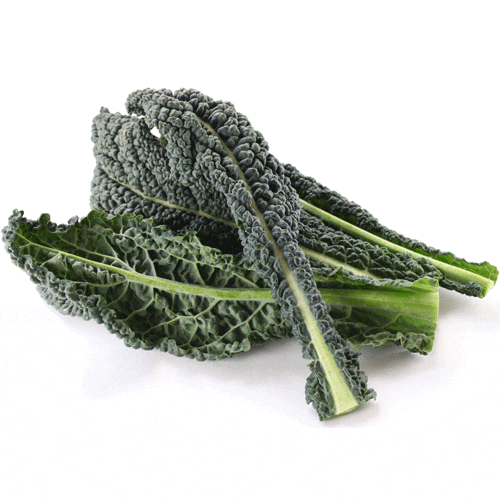
Lacinato Kale: Italian Dinosaur Kale with Flatter, Sweeter Leaves
Lacinato kale — also called dinosaur kale, cavolo nero, Tuscan black kale, or nero di Toscana — is the kale professional cooks reach for first. Its long, strappy, dark blue-green leaves have a distinctive pebbled, reptilian texture that earned the “dinosaur” nickname, and the flavour is noticeably sweeter and less bitter than curly kale. As a Brassica oleracea heirloom dating to 19th-century Tuscany, it’s the backbone of Italian dishes from ribollita to a simple garlic sauté.
It’s also one of the highest-return crops in the vegetable garden. A single planting produces continuously for eight to ten months in mild climates, shrugs off conditions that flatten tender greens, and actually improves in flavour as the season turns cold — a hard frost converts leaf starches to sugar, making the late-fall and winter harvest the best of the year. A few plants set out in spring will keep a household in greens well into the following winter.
🌍 Where Lacinato Kale Grows Best
🇨🇦 Canada: Zones 3–9. Exceptionally cold-hardy — established plants survive hard frost and snow, often producing into December across the Prairies, Ontario, Quebec & the Maritimes, and overwintering in coastal BC. Start indoors 4–6 weeks before last frost, or direct-sow 2–3 weeks before it.
🇺🇸 US: Zones 3–10. Grows across every region and is most productive in fall and winter. Through the North, Upper Midwest & Mountain West it’s a spring and fall crop; across the South, Gulf Coast & Southwest, grow it fall through spring, since summer heat turns the leaves bitter. In the Pacific Northwest it crops nearly year-round. Established plants take temperatures down to about −10°C (14°F).
Lacinato Kale at a Glance
How to Grow Lacinato Kale Seeds
Lacinato kale seeds germinate readily in warm or cool soil. Sow them ¼ in (6 mm) deep once the soil reaches at least 7°C (45°F), with seedlings up in 5–10 days. Start indoors 4–6 weeks before your last frost, or direct-sow 2–3 weeks before it — seedlings handle light frost without damage, and established plants take hard freezes in stride. For the best-flavoured crop, sow again in mid-summer so plants mature into cool fall weather.
Lacinato grows tall and full, so thin or transplant to 45–60 cm (18–24″) apart for good air circulation and full-sized leaves; in small gardens it does well in a large (40 L+) container. Work compost into the bed, keep the soil evenly moist — drought stress makes the leaves tougher and more bitter — and feed with a nitrogen-forward fertilizer at transplant and again mid-season to fuel the big, productive leaves. Watch for cabbage worms, aphids, and flea beetles; a row cover from transplant onward keeps all three off.
Harvesting & Storing Lacinato Kale
Lacinato kale is ready as baby leaves in about 30 days and full size in 60–80. The technique that matters for a long harvest is direction: always pick the oldest outer leaves from the bottom up, and never the central growing tip. Take no more than a third of the plant at once, removing lower leaves every week or two, and a single plant keeps pushing new growth at the crown for months, gradually becoming a tall stem topped with a rosette of young leaves.
Flavour peaks after frost, when cold converts leaf starches to sugars — post-frost Lacinato is markedly sweeter and more tender than summer leaves. Stored unwashed in the crisper, cut leaves keep about a week; blanch for two minutes and freeze for longer storage. In mild-winter regions the plant simply stands in the garden, ready to pick whenever you need it.
Cooking with Lacinato Kale
Lacinato kale’s flat, tender leaves are the most versatile of any kale in the kitchen. Sliced thin and massaged with olive oil and a pinch of salt for two to three minutes, they soften into a silky salad base that holds dressing beautifully. Sautéed with garlic and oil they wilt without turning to mush, and torn and roasted hot with oil and salt they make the crispest, most even kale chips of any variety.
Slow-braised with broth and aromatics, Lacinato turns deep and savoury — the cornerstone green of Tuscan ribollita and countless soups and stews. It stands in for spinach or cabbage in almost any cooked dish, holds its shape in a pasta or on a pizza, and only gets better as it sits in a brothy dish. Its sweeter, less fibrous leaves are why so many cooks rate it the best kale for the table.
Saving Lacinato Kale Seeds
Lacinato kale is a biennial, so seed saving takes two seasons: leaves the first year, then flowering and long seed pods the following spring after the plant has overwintered. Let the pods dry to brown on the plant before threshing out the small round seeds. As an open-pollinated heirloom, Lacinato grows true to type from saved seed.
Crossing is the thing to plan for. As a Brassica oleracea kale, Lacinato crosses with the other oleracea brassicas — Scarlet and Blue Curled Scotch kale, plus cabbage, broccoli, kohlrabi, and Brussels sprouts — so keep it about 1 km (½ mile) from any of those in flower, or cage and hand-pollinate for pure seed. It will not cross with the Brassica napus Russian and Siberian kales, which can flower nearby without affecting it. Stored cool and dry, kale seed stays viable about four years; test an older batch on a damp paper towel before sowing a full bed.
Set Lacinato beside Red Russian, Scarlet, and Blue Curled Scotch to build a patch with a full range of colour, flavour, and texture.
Sowing, spacing, pest control and harvest timing for every climate, from Zone 3 to the Deep South.


