Red Leaf Lettuce Seeds
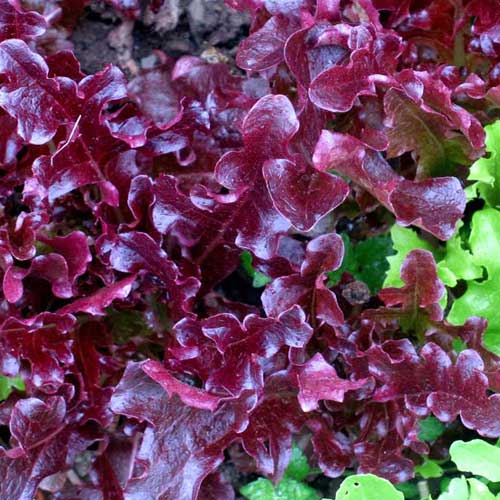
Red Leaf lettuce is one of the most versatile and visually striking greens you can grow — deep burgundy-to-bronze colouring on ruffled, loosely fringed leaves makes it as decorative as it is edible. This is a cut-and-come-again loose-leaf type, so you pick outer leaves as needed while the plant keeps producing from the centre, giving weeks of fresh salad from a single sowing. The flavour is mild and slightly sweet with a faint earthiness, and the leaves are tender enough to wilt gently in a warm vinaigrette — a quality many cooks prize for composed salads.
The red pigment isn’t just for looks. Anthocyanins are powerful antioxidants, and red-leafed lettuces consistently measure higher in antioxidant content than their green counterparts. Interplant a red type with a green one and you get both a striking garden display and a more nutritionally diverse harvest from the same bed.
🌍 Where Red Leaf Lettuce Grows Best
🇺🇸 United States
A spring and fall crop through zones 3–8, and a near year-round grower in zones 9–11. Sow early spring and again in late summer across most of the country; in the Deep South and Southwest it’s a cool-season winter green. Colour runs deepest on the fall crop as nights cool.
🇨🇦 Canada
Excellent in zones 3–9 and one of the earliest crops you can sow each spring, tolerating light frost and germinating in cool soil. Direct sow as soon as the ground is workable from the Maritimes to BC, then again in mid-August; the cool fall deepens both colour and flavour.
🌱 Red Leaf Lettuce at a Glance
Sow seeds
Surface to 3 mm (⅛ in); light aids germination
Germination
5–7 days at 10–18°C (50–65°F)
Spacing
20–25 cm (8–10 in) apart
First cut
~30 days; full size 45–55
Light
Full sun; part shade in heat
Harvest style
Cut-and-come-again
How to Grow Red Leaf Lettuce Seeds
Red Leaf lettuce seeds germinate reliably in cool soil, so sow directly outdoors 4–6 weeks before your last frost date or as soon as the ground is workable. Surface-sow or press seed no deeper than 3 mm (⅛ in) — light aids germination — and expect sprouts in 5–7 days at 10–18°C (50–65°F). Thin to 20–25 cm (8–10 in) apart once seedlings reach 5–8 cm, eating the thinnings as micro-greens.
Sow a fresh short row every two to three weeks from early spring into early summer, then again from mid-August for a fall crop. The fall planting usually gives the most intensely coloured, flavourful leaves, because cooler temperatures drive anthocyanin production. In warm regions, afternoon shade or placement beside taller crops extends the harvest window by two to three weeks before bolting sets in; a row cover or cold frame carries fall plantings several weeks past the first frost.
🍂 How Temperature Shapes Red Leaf Colour & Flavour
Cool · 5–15°C (41–59°F)
Deep burgundy-red, sweetest and most complex flavour, very low bolting risk.
Mild · 15–22°C (59–72°F)
Medium red-bronze, mild and pleasant, low bolting risk.
Warm · 22–28°C (72–82°F)
Light red-green, flavour turns flat, moderate bolting risk.
Hot · 28°C+ (82°F+)
Mostly green and faded, bitter, high bolting risk — sow for spring or fall instead.
Harvesting & Storing Red Leaf Lettuce
Begin picking outer leaves once plants reach 10–15 cm (4–6 in) across, typically 30–35 days from germination. Always work from the outside in, leave the central growing point intact, and take no more than a third of the plant at once — regular harvesting actually speeds regrowth. When the central stem starts to elongate, the first sign of bolting, cut the whole plant right away before the leaves turn bitter, and sow the next succession in its place.
To store, rinse leaves in cold water, spin dry, and keep them loosely wrapped in a towel inside a sealed bag in the crisper, where they stay crisp for 5–7 days. Harvest in the morning when leaves are fully hydrated, and keep lettuce away from ethylene-producing fruit like apples and avocados, which triggers rapid browning.
Using Red Leaf Lettuce in the Kitchen
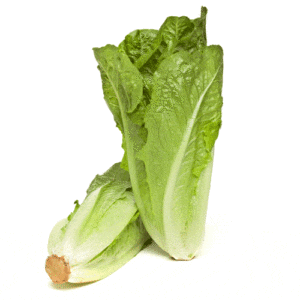
Red Leaf lettuce brings colour and a soft, tender bite to any salad, and its ruffled leaves cradle dressing beautifully. The tender texture wilts readily in a warm vinaigrette, which makes it a natural choice for composed and wilted salads where a crisp romaine would stay stiff.
Beyond the salad bowl, the large leaves make a colourful bed for grilled fish or roasted vegetables, and they layer well into sandwiches and wraps for a pop of burgundy. Because the flavour is mild, Red Leaf pairs happily with bolder greens like arugula or mustard, softening their bite while adding visual contrast.
Saving Red Leaf Lettuce Seeds
Red Leaf lettuce seeds are simple to save because this is an open-pollinated, self-pollinating variety that comes true to type. Let a few healthy plants finish their full bolt-and-flower cycle; the small, yellow, daisy-like flowers set seed within one to two weeks, dispersing as fluffy white seed heads. Cut the heads into a paper bag before they fully shatter, dry indoors for another week, then shake to separate seed from chaff.
Cross-pollination between lettuce varieties is uncommon because the flowers self-fertilize before fully opening, but a 1–2 m (3–6 ft) buffer between flowering varieties is a sensible precaution if seed purity matters. One nuance worth knowing: colour intensity in saved progeny varies with growing conditions, so if you want the deepest red, save seed only from the most richly coloured plants grown in cool weather — a simple selection pressure that improves the line season over season. Stored cool, dry, and airtight, the seed stays viable 2–3 years; test an old batch by sprouting ten seeds on a damp paper towel.
What makes Red Leaf lettuce red?
Red Leaf lettuce gets its burgundy colour from anthocyanins — the same natural pigments found in blueberries, red cabbage, and purple kale. Anthocyanin production is triggered by cool temperatures and UV light, which is why fall-grown Red Leaf is the most deeply coloured and why the red fades in summer heat.
Is Red Leaf lettuce more nutritious than green lettuce?
Red Leaf lettuce consistently scores higher in antioxidant content than green varieties, thanks to its anthocyanin pigments. Both types supply vitamin K, vitamin A, folate, and vitamin C, but the red pigment adds an extra layer of antioxidant protection — so growing and eating both together gives the most rounded nutrition.
How long does Red Leaf lettuce take to grow?
Red Leaf lettuce gives its first outer-leaf harvest about 30–35 days after germination and reaches full rosette size at 45–55 days. Seed germinates in 5–7 days in cool soil, and sowing every two to three weeks keeps a continuous supply coming through spring and fall.
Why is my Red Leaf lettuce turning green?
Fading red colour is almost always a heat response. Above 22–25°C (72–77°F), anthocyanin production slows and green chlorophyll takes over, and flavour turns muted then bitter as plants head toward bolting. The fix is to sow in cool conditions — spring or fall — or give afternoon shade in warmer months.
When should I plant Red Leaf lettuce?
Sow Red Leaf lettuce 4–6 weeks before your last frost, as soon as the ground is workable — late February to March in the mild US South and coastal BC, and late March to mid-April across the northern US and southern Canada. For the best-coloured crop of the year, sow again in mid-to-late August for a fall harvest.
Can I grow Red Leaf lettuce in containers?
Red Leaf lettuce is excellent in containers — its shallow roots suit window boxes, balcony planters, and pots as shallow as 15 cm (6 in). The burgundy foliage is genuinely ornamental in a mixed edible arrangement. Water consistently and give it morning sun with some afternoon shade for the longest productive season.
Can I grow Red Leaf lettuce indoors in winter?
Red Leaf lettuce grows well indoors under a full-spectrum LED light running 14–16 hours a day in a shallow, well-draining container. Expect slightly less vivid colour indoors, since UV exposure drives anthocyanin development, but it’s still a rewarding cold-weather crop and a practical between-seasons option in northern climates.
What does Red Leaf lettuce taste like?
Red Leaf lettuce tastes mild and slightly sweet, with a gentle earthy note from its anthocyanin pigments. The texture is tender and soft, wilting readily in warm dressings, which many cooks consider a plus for composed salads. Cool-season leaves carry noticeably more flavour than heat-stressed summer growth.
What pests affect Red Leaf lettuce?
Slugs and aphids are the main threats to Red Leaf lettuce. Slugs feed at night and leave ragged holes — ring plants with diatomaceous earth or use organic slug bait. Aphids cluster under leaves; knock them off with a firm spray of water or apply insecticidal soap. A floating row cover is the most effective preventive of all.
How do I keep harvested Red Leaf lettuce crisp?
Rinse Red Leaf lettuce in cold water, spin it dry thoroughly, and store it loosely wrapped in a clean towel inside a sealed bag in the crisper, where it holds 5–7 days. Harvest in the morning when leaves are fully hydrated, and never store lettuce beside apples or avocados, whose ethylene gas causes fast browning.
Colour, Nutrition & Flavour in Every Leaf
Heirloom Red Leaf seeds — ruffled burgundy leaves that cut and come again through spring and fall.
As an Amazon Associate, I earn from qualifying purchases — at no extra cost to you.
Buy Red Leaf Lettuce Seeds on Amazon →