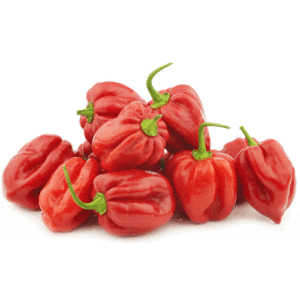
What Are Big Jim Chili Peppers?
Big Jim is the variety that put New Mexican green chile on the map — bred at New Mexico State University in 1975, it holds the Guinness World Record for the largest chili pepper and became the backbone of the state’s green chile industry. At 75–80 days and a mild-to-medium 500–2,500 Scoville heat units, it’s one of the most versatile large chilies a home gardener can grow, with fruits 25–35 cm (10–14 in) long and thick walls that roast and stuff beautifully.
Big Jim’s heat is deliberately variable: peppers grown hot and dry come out noticeably hotter than those grown cool and well-watered, which is a useful kitchen feature — vary your watering and you get mild and medium fruit from the same planting. At their mildest they’re almost sweet and complex; at their hottest they land at a satisfying, never-overwhelming medium. This is an open-pollinated heirloom, so seed saved from ripe fruit grows true to type.
🌍 Where Big Jim Chili Peppers Grow Best
🇨🇦 Canada: Zones 5–9 — start indoors 8–10 weeks before last frost. At 75–80 days Big Jim is within reach of most Canadian seasons with a good indoor start; Southern Ontario, the BC coast, and sheltered prairie microclimates work best.
🇺🇸 US: Zones 5–11 — bred in New Mexico for Southwest conditions, so it thrives in hot, dry climates and performs well across warm-summer regions countrywide.
Best for: Green chile fans, roasting and stuffing, and gardeners who want a large, mild-to-medium pepper with serious culinary range.
Growing Big Jim Chili Peppers from Seed
Start Big Jim indoors 8–10 weeks before your last expected frost. Sow 6 mm (¼ in) deep in a warm seed-starting mix and hold the soil at 27–32°C (80–90°F); pepper seed germinates slowly below 24°C (75°F), so a heat mat improves both speed and rate. Expect sprouts in 10–14 days, and give seedlings 14–16 hours of bright light a day for compact, vigorous transplants.
Transplant after all frost risk passes and nights hold above 10°C (50°F), spacing plants 45–60 cm (18–24 in) apart in full sun. Big Jim grows 75–90 cm (30–36 in) tall and may need light staking once it’s carrying its heavy fruit. Plants are moderately drought-tolerant once established, though steady moisture through fruiting improves yield. Feed a balanced fertilizer at transplant and switch to a lower-nitrogen formula once flowering begins, with calcium at planting (bone meal or crushed eggshells) to guard against blossom end rot.
Harvesting & Roasting Big Jim Chili Peppers
Big Jim is picked green at full size (75–80 days) for the classic New Mexico green chile, or left to ripen red for a sweeter, more concentrated flavour — green fruit is bright and grassy with mild complex heat, red is sweeter. The traditional treatment is roasting: char the peppers over a gas flame, under a broiler, or in a screaming-hot dry cast-iron pan until blackened all over, then steam in a covered bowl for 10–15 minutes so the skin slips off, revealing silky, smoky flesh.
Roasted Big Jim freezes beautifully — peel, portion into zip bags, and freeze, and you’ll have green chile for soups, enchiladas, and green chile cheeseburgers all winter, straight from the freezer with no thawing. The large cavity also makes it exceptional stuffed with cheese, or battered and fried as a chile relleno.
Cooking with Big Jim Chili Peppers
Big Jim is the green chile pepper — roasted and peeled, it becomes green chile sauce, the heart of enchiladas, smothered burritos, posole, and the green chile cheeseburger New Mexico is famous for. Its size and thick walls give more roasted flesh per pepper than almost any other chili, so a handful of plants supplies a season’s cooking.
Beyond green chile, Big Jim’s mild heat makes it friendly for cooks easing into chilies: stuff it with cheese or rice and meat, dice it fresh into salsas and cornbread, or roast and blend it into a mild hot sauce. Red-ripe fruit dries and grinds into a sweet, mild chile powder.
Saving Big Jim Chili Pepper Seeds
Big Jim is open-pollinated, so seed from ripe red fruit grows true to type — unlike hybrid (F1) peppers, whose saved seed gives unpredictable offspring. Let at least one fruit ripen fully red, since green fruit holds immature seed; slice it open with gloves, scrape the seeds onto a plate, and dry them completely at room temperature for 1–2 weeks before storing in a paper envelope somewhere cool, dark, and dry. Pepper seed stays viable 3–5 years, and a ten-seed germination test confirms an older batch.
Cross-pollination is common in a mixed pepper garden — isolate Big Jim from other Capsicum annuum varieties like jalapeño, cayenne, and bell pepper by at least 50–100 m for reliably pure seed. In a home garden, a few metres of separation gives reasonable but imperfect results.
🌶️
Browse All Pepper Seeds
Compare Big Jim with jalapeño, cayenne, habanero, and sweet bell varieties side by side.
Shop Pepper Seeds →📘
How to Grow Peppers (Full Guide)
Step-by-step seed starting, transplanting, care, and harvest timing for every pepper type.
Read the Pepper Guide →Big Jim Chili Pepper FAQ
❓ Big Jim Chili Pepper FAQ
How hot is Big Jim compared to jalapeño?
Big Jim runs 500–2,500 Scoville units — generally milder than
jalapeño (2,500–8,000 SHU). At its mildest it’s almost sweet; at its hottest it approaches a mild jalapeño. Heat varies with growing conditions — plants under heat and drought stress produce hotter fruit — which makes Big Jim unusually kitchen-friendly for cooks who want flavour with adjustable heat.
What is Big Jim best used for?
Roasting is the primary use — Big Jim’s thick walls char and peel into silky, smoky flesh for green chile sauce, enchiladas, soups, and green chile cheeseburgers. The large cavity makes it exceptional for stuffing with cheese, rice, or meat, it’s excellent battered and fried as a chile relleno, and roasted peppers freeze well in portions for year-round use.
Should I harvest Big Jim green or red?
Both work. Green Big Jim (picked at full size, 75–80 days) is the classic New Mexico green chile — bright, grassy, mild. Left another few weeks it ripens red, turning sweeter and more concentrated, and red fruit is the stage to save seed from and to dry into mild chile powder. Most growers pick mostly green and let a few go red.
Can I grow Big Jim in a short northern season?
Yes — at 75–80 days Big Jim fits most cool-climate seasons with a strong indoor start (8–10 weeks before last frost). In Southern Ontario, the BC coast, and sheltered prairie and northern-US locations it crops reliably most years. Grow it in the warmest spot you have and use row covers on cool early-summer nights to support fruit set.
Big Jim vs. poblano — what’s the difference?
Both are large, thick-walled, mild-to-medium chilies great for stuffing and roasting. Big Jim is much longer (25–35 cm vs. poblano’s 10–15 cm) with thicker walls and a New Mexico green chile character; poblano (dried, it becomes ancho) is earthier and more complex. For roasting volume, Big Jim wins — one pepper yields as much flesh as two or three poblanos.
How do I roast Big Jim peppers?
Three reliable methods: over a gas flame with tongs, turning until blackened all over; under a very hot broiler on a foil-lined pan, turning until charred; or in a dry cast-iron pan on highest heat, turning as each side chars. Then seal the peppers in a covered bowl or bag for 10–15 minutes to steam, and the skin slips off easily. Wear gloves if the batch runs hot.
Can I freeze roasted Big Jim peppers?
Yes — it’s the recommended way to preserve a big harvest. Roast, peel, and remove seeds if you like (they can stay in), lay flat in portion-sized bags, and freeze. Roasted Big Jim keeps up to 12 months frozen and goes straight into soups, sauces, and enchiladas without thawing — many New Mexico households freeze 50+ pounds of green chile each fall.
Why are some Big Jim peppers hotter than others on the same plant?
Big Jim has naturally variable heat — capsaicin production responds to plant stress (heat, drought, nutrient swings) during fruit development, so a pepper that forms during a dry week is hotter than one from a rainy week on the same plant. It’s a characteristic, not a defect; commercial New Mexico processing simply sorts mild and hot runs separately.
How large does a Big Jim pepper actually get?
Big Jim regularly produces fruit 25–35 cm (10–14 in) long in good conditions, and the cultivar holds a Guinness World Record at 33.02 cm. In the garden, expect most fruit in the 20–30 cm range, with the largest coming from well-amended soil, full sun, and consistent moisture.
Big Jim vs. Anaheim — which should I grow?
Big Jim and Anaheim are related New Mexico–style chilies with similar mild-to-medium heat. Big Jim is larger and thicker-walled, giving more flesh per pepper, and is the better stuffing and roasting choice; Anaheim is a little more common in supermarkets and excellent in its own right. For sheer volume and culinary impact at home, Big Jim is the pick.
The Record-Holder. The Green Chile Standard.
Open-pollinated Big Jim — record-sized, mild-to-medium, the definitive roasting and stuffing chile.
As an Amazon Associate, I earn from qualifying purchases — at no extra cost to you.
🇨🇦🇺🇸 Buy Big Jim Pepper Seeds on Amazon →