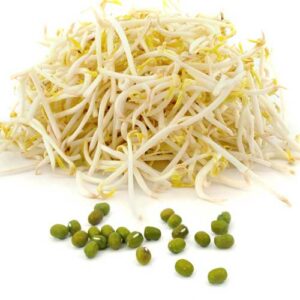
Kale Sprouts — All the Nutrition, None of the Bitterness
Kale has become the defining vegetable of the modern health food movement, and for genuinely good reason — it is one of the most nutrient-dense plants on earth. But kale sprouts and microgreens take that story further: gram for gram, young kale sprouts contain higher concentrations of vitamins K, C, and beta-carotene than mature kale leaves, along with sulforaphane and other glucosinolates from the brassica family that support detoxification and anti-inflammatory pathways. Mumm’s Organic Green Kale Seeds are certified organic, non-GMO, and selected specifically for sprouting and microgreen growing — producing beautiful, mild-flavoured sprouts that are ready in 5–7 days and far more versatile in the kitchen than mature kale’s sometimes-challenging toughness.
If you’ve struggled with mature kale — the bitterness, the fibrous texture, the need to massage it before it’s palatable — kale sprouts solve all of that. The young leaves are tender, mild, and faintly sweet, with a gentle brassica character rather than the assertive bitterness of mature leaves. They’re equally excellent raw and cooked, and they blend seamlessly into smoothies, salads, and bowls without the texture issues that put many people off mature kale.
📋 Sprouting vs. Microgreens — Two Ways to Grow
🫙 Jar Sprouting
Soak 6–8 hours. Rinse twice daily. Ready in 5–7 days. Harvest at 2–4 cm. No soil, no light needed until greening step.
🌱 Microgreens (Tray)
Sow on moist potting mix or coco coir. Keep dark 3–4 days, then move to bright light. Harvest at 5–8 cm (10–14 days). Much larger yield per batch.
🫙 How to Sprout Kale Seeds
For jar sprouting, measure 1–2 tablespoons of kale seeds into a clean sprouting jar. Rinse briefly, add cool water, and soak for 6–8 hours. Drain thoroughly and prop the jar inverted at a 45° angle. Rinse with cool water twice daily, draining completely each time. Kale seeds are small and sticky when wet, so a fine-mesh sprouting jar lid prevents seeds from escaping and makes draining easier — see our Sprouting Jar Kit for a complete setup. After 5–6 days, move to indirect light for the greening step — kale sprouts green up quickly and beautifully. Harvest at 2–4 cm when the first true leaves are just beginning to show.
For microgreens, spread seeds densely on a tray of moist potting mix or coco coir. Cover with a second tray to keep dark and humid for the first 3–4 days. Uncover when sprouts begin pushing against the cover, then move to bright indirect light or under grow lights. Water from the bottom to avoid dampening the leaves. Harvest by cutting at soil level when the first true leaves appear, typically at 10–14 days. Microgreens yield significantly more volume per batch and develop more flavour complexity than jar sprouts.
🥗 Nutrition and Uses
Kale sprouts are rich in vitamins K, C, and beta-carotene, along with sulforaphane, calcium, and folate. The sulforaphane content — from the same glucosinolate chemistry found in broccoli sprouts — is highest in young sprouts and microgreens, making kale microgreens one of the most nutritionally powerful things you can grow at home.
In the kitchen, kale sprouts work raw in smoothies, salads, and grain bowls where their mild flavour integrates easily. As microgreens, they’re a stunning garnish for soups, eggs, avocado toast, and composed salads. Pair with broccoli sprouts for a brassica sulforaphane powerhouse combination. Read more about growing kale in our complete kale growing guide.
❓ Kale Sprouting FAQ
Are kale sprouts more nutritious than mature kale?
In concentration terms, yes — young kale sprouts and microgreens contain higher levels of certain nutrients (particularly sulforaphane, vitamin C, and beta-carotene) per gram than mature kale leaves. In absolute terms you’d eat more mature kale per serving, so the two are complementary rather than directly comparable. Kale sprouts and microgreens are the most nutritionally efficient form of the plant.
Do kale sprouts taste bitter like mature kale?
No — kale sprouts are notably milder than mature kale leaves. The bitterness in mature kale develops as the plant matures and the glucosinolates break down into bitter compounds. Young sprouts haven’t gone through that process yet, so the flavour is mild, slightly sweet, and faintly brassica without the challenging bitterness of mature leaves. This makes kale sprouts accessible to people who don’t enjoy mature kale.
What’s the difference between kale sprouts and kale microgreens?
Kale sprouts (jar-grown) are harvested at 2–4 cm before the first true leaves develop — they’re very young, mild, and tender. Kale microgreens (tray-grown in soil or coco coir) grow for 10–14 days until the first true leaves appear and are larger, more flavourful, and produce much more volume per batch. Microgreens are better for garnishing and volume cooking; jar sprouts are better for convenience and daily smoothie additions.
Are kale sprouts good in smoothies?
Yes — kale sprouts are one of the best smoothie additions available. Unlike mature kale, which can create a fibrous, grassy smoothie if over-used, young sprouts blend smoothly and contribute nutrition without significantly affecting texture or flavour. A large handful in a fruit smoothie with banana and berries is virtually undetectable — just pure nutrition.
Can I grow kale microgreens in winter in Canada?
Yes — kale microgreens grow well under grow lights indoors year-round. A basic LED grow light set up over a tray is sufficient. Kale germinates readily at typical indoor temperatures (18–22°C) even in winter, and the 10–14 day microgreen cycle makes it one of the most productive indoor winter crops available.
Are kale sprouts safe during pregnancy?
The general food safety guidance for pregnant women is to avoid raw sprouts (jar-grown) due to bacterial contamination risk in moist sprouting environments. Kale microgreens grown in soil and harvested cleanly carry lower risk than jar sprouts. Cook sprouts before eating during pregnancy to eliminate risk entirely. Consult a healthcare provider if uncertain.
How do kale sprouts compare to broccoli sprouts for nutrition?
Broccoli sprouts are the clear leader for sulforaphane concentration — 20–50× more than mature broccoli, and higher than kale sprouts. Kale sprouts lead on vitamin K, beta-carotene, and calcium. For a daily nutritional habit, growing both gives you the best of both brassica families — maximum sulforaphane from broccoli, maximum vitamin K and carotenoids from kale.
🥬 Mild, Tender Kale — Sprout or Grow as Microgreens
Mumm’s Organic Green Kale Seeds — certified organic, vitamin K-rich, ready in 5–7 days. Ships to Canada and the US.
As a Mumm’s Sprouting Seeds affiliate, I earn a commission — at no extra cost to you.