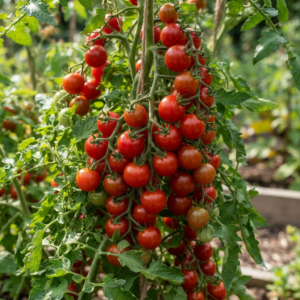

Opalka Tomato — The Polish Paste That Also Tastes Great Fresh
Opalka (Solanum lycopersicum ‘Opalka’) is a Polish heirloom paste tomato with a party trick: it makes a superb thick sauce and yet tastes rich and sweet enough to eat straight off the vine, which almost no other paste variety manages. The fruit is long and pointed — shaped like an oversized banana pepper — running 140–280 g (5–10 oz) with dense, almost dry flesh, thin skin, and very few seeds. Brought to upstate New York by a Polish family generations ago, it has become a favourite of sauce-makers who don’t want to give up flavour to get low water content.
This is an indeterminate vine that fruits all season until frost, and it carries one quirk worth knowing: the foliage is naturally sparse and wispy, so the plant looks thin even when healthy. At roughly 80–85 days from transplant it ripens in the mid-to-late season, dependable wherever summers are warm and workable in cooler gardens with an early indoor start. Give it steady moisture, firm support, and — in the hottest regions — a little afternoon shade to protect the exposed fruit, and a few vines will keep the sauce pot and the salad bowl going at once.
🇺🇸 US: Annual in all zones. Thrives across the Midwest, Northeast, and South. In the Southwest and other high-sun regions, the sparse foliage means light afternoon shade helps prevent sunscald on the exposed fruit.
Best for: thick sauce and paste, roasting, fresh slicing, and drying.
🌱 How to Grow Opalka Tomato Seeds
Start Opalka tomato seeds indoors 6–8 weeks before your last frost date, sown 6 mm (¼ in) deep and held at 21–27°C (70–80°F), where they germinate in 5–10 days. Get bright light on the seedlings immediately — a grow light beats a windowsill and keeps transplants stocky rather than leggy. Pot up at the first true leaves, harden off over 7–10 days, and transplant only after the last frost has passed and nights stay above 10°C (50°F).
Plant deep, right up to the top leaves, so the buried stem roots out and feeds a heavy fruit set. Space plants 45–60 cm (18–24 in) apart in full sun and cage or stake at planting time — Opalka’s long fruit gets weighty and its thin, sparse canopy offers the branches little natural support. That same open foliage is worth a note: it is normal for the variety, but it leaves fruit exposed, so in high-sun regions give the plants light afternoon shade to prevent sunscald, and resist heavy leaf-pruning. Water deeply and evenly, mulch to hold moisture, and work a calcium source — bone meal or crushed eggshells — into the hole to head off blossom end rot on the long fruit. Go easy on high-nitrogen feed, which pushes leaf over fruit, and pinch the growing tips about four weeks before your first frost.
🍅 Harvesting & Preserving Opalka Tomatoes
Pick Opalka when the fruit has coloured to a full deep red and yields slightly to gentle pressure — because the flesh is so dense, ripe fruit holds on the vine well without going soft, giving you a forgiving harvest window. Check plants every 2–3 days at peak season and clear ripe clusters to keep the vine setting. In a heat wave above 32°C (90°F) that stalls colouring, pick at first blush and finish ripening indoors at room temperature; never refrigerate a ripe tomato, as cold below 12°C (55°F) turns the texture mealy.
The near-dry, low-seed flesh makes Opalka one of the best paste tomatoes to preserve. It cooks down to sauce with very little reduction, cans cleanly whole or crushed, and freezes well cored and whole on a tray for later batches. It also dries superbly — thick, meaty halves in a dehydrator or low oven concentrate into intensely flavoured keepers for the winter pantry.
🍝 Cooking with Opalka Tomatoes
Opalka is a sauce tomato that doesn’t punish you for eating it raw. The rich, sweet, low-acid flesh cooks into a thick, smooth marinara or passata with minimal simmering, and it makes an excellent tomato paste because there is so little water to drive off. Halve and roast the fruit with olive oil and garlic and it caramelizes into a deep, concentrated base for soups and pasta.
Where Opalka pulls ahead of a strict processing tomato is the fresh plate. The dense, sweet flesh slices firm for a sandwich or a bruschetta and chops into a chunky salsa without turning watery — uses most pastes are too bland and mealy to handle. Treat it as the paste tomato you can also serve in a summer salad.
🫙 Saving Opalka Tomato Seeds
Opalka tomato seeds are easy and rewarding to save because the variety is open-pollinated and grows true to type. Use the fermentation method: scoop the seeds and gel into a jar, add a splash of water, and leave at room temperature for 2–3 days until a film forms on top. That fermentation dissolves the germination-inhibiting gel coat and reduces seed-borne disease. Pour off the floaters and pulp, rinse the heavy seeds that sank, and dry them on a plate or screen for 1–2 weeks until they snap rather than bend. Stored cool and dark, they stay viable for 4–5 years.
Keep the line true with two habits. Save only from open-pollinated Opalka, never from a hybrid, since hybrid seed splits into a mix of parents the next season. And because tomatoes occasionally cross when varieties flower side by side, space different types 3–4.5 m (10–15 ft) apart or bag a few trusses with fine cloth if purity matters. Before storing a batch, sprout ten seeds on a damp paper towel — if seven or more germinate, the lot is good to keep.