Giant Zinnia Seeds | Non-GMO Blooms for Bold Borders
Type: Annual Flower Seeds — Heirloom Open-PollinatedBotanical Name: Zinnia elegans (Dahlia-Flowered)Days to Bloom: 70–80 days from direct sowHeight: 75–90 cm (30–36 in)Head Size: 10–15 cm (4–6 in) acrossColour Range: Red, orange, yellow, pink, purple, white, salmonSun: Full sun (6+ hours)Best For: Premium cut flowers, bold borders, farmers’ market bouquets As an Amazon Associate, I earn from qualifying purchases — at no extra cost to you.
Giant Zinnia Seeds — Oversized Dahlia-Flowered Blooms for Bold Borders and Premium Cut Flowers
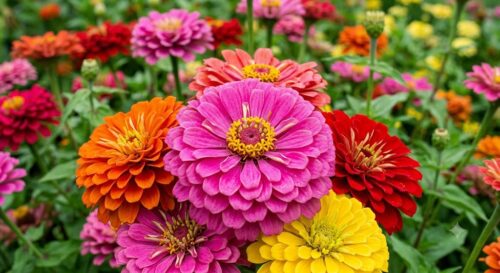
Giant dahlia-flowered zinnias (Zinnia elegans) are the showpiece of the zinnia world — the same heat-loving, cut-and-come-again annual as standard types, but with flower heads reaching 10–15 cm (4–6 in) across on stems 75–90 cm (30–36 in) tall. The blooms are fully double, with multiple layers of broad petals in the concentric rings of a dahlia, giving them a density and visual weight that single or semi-double zinnias can’t match. A single stem in a vase commands attention the way a dahlia or peony does — on a plant that direct-sows after last frost, germinates in a week, and blooms in 70–80 days without staking, special soil, or wintering.
Giant zinnias come in the same rich palette as standard types — red, orange, yellow, pink, purple, white, salmon, and coral — and a mixed packet delivers that full range across plants of slightly different bloom times, giving a long cutting season from a single sowing. They are the premier choice for a cutting garden that produces flowers worthy of a farmers’ market bouquet: large enough to anchor an arrangement, long-lasting in the vase, and produced in enough quantity that cutting improves the plant rather than depleting it.
🌍 Where Giant Zinnias Grow Best
🥶 Short-Season Climates
Canada Zones 3–5, Northern US, Prairie provinces. Giant types need 70–80 days — slightly more than standard zinnias. Direct sow as soon as soil reaches 21°C (70°F). In Zones 3–4 with fewer than 90 frost-free days, sow at the earliest warm-soil date to guarantee bloom before frost.
💧 Humid Climates
Southeast US, Mid-Atlantic, Southern Ontario. The large, dense heads trap moisture and develop disease more readily than single-flowered zinnias. Space 45 cm (18 in) apart — generous, but essential for air circulation around the oversized blooms. Drip irrigate only.
☀️ Hot & Arid Climates
Southwest US, Texas, BC Interior. Giant zinnias perform brilliantly in heat — full sun and warm temperatures drive their best bloom. Mulch the base and deep water once a week. The large blooms are striking in high-contrast desert light against adobe, gravel, or pale stone.
🌱 How to Grow Giant Zinnia Seeds
Sow giant zinnia seeds 6 mm (¼ in) deep directly in the garden after the last frost, once soil has warmed to 21°C (70°F). Direct sowing is strongly preferred — zinnias develop a taproot early that resents transplanting. Germination takes 5–7 days in warm soil. Space 40–45 cm (16–18 in) apart; the larger plants and heads need more room than standard zinnias for air circulation and stem development. Full sun of 8+ hours produces the tallest stems and the most fully doubled blooms — in partial shade, giant zinnias grow but give shorter stems and smaller flowers.
Giant zinnias are heavier feeders than standard types and benefit from a single balanced feed when flower buds first appear. Avoid high-nitrogen fertilizer before that point — it pushes leafy growth at the expense of bloom. Deadhead spent flowers consistently, since a giant zinnia left to set seed stops producing new buds within days. Because the heads are so large the stems can be top-heavy in exposed gardens, so a sheltered spot or temporary support during establishment prevents lodging after heavy summer rain.
✂️ Harvesting Giant Zinnias for the Vase
Cut giant zinnias when the outer petals are fully open but the central disk is still flat — at this stage they last 10–14 days in the vase. The large heads are heavy, so use a sharp knife or scissors rather than snapping stems, which damages the vascular tissue. Take the longest stem possible and strip all leaves below the waterline. A single giant zinnia head is substantial enough to stand alone as a focal flower in a simple vase; for arrangements, one or two giant stems anchored with smaller zinnias, cosmos, or greenery make a premium bouquet straight from the garden.
🌸 Deadheading Giant Zinnias & Extending Bloom
Because each bloom is so large, a giant zinnia will slow dramatically if it is allowed to pour energy into ripening seed. Remove every spent head before it sets seed, cutting back to the first healthy leaf node. That redirects the plant into producing fresh buds, and cutting long stems for the vase does the same job. A weekly pass through the bed keeps a giant-zinnia planting flowering from its first bloom straight through to frost.
🌾 Saving Giant Zinnia Seeds
Giant dahlia-flowered zinnia seeds are open-pollinated and save reliably. Leave a few late-season blooms on the plant until the petals drop and the head feels dry and papery, then pull it apart to extract the pointed, teardrop-shaped seeds at the base of each petal. Dry the seed thoroughly for about two weeks, then store in a labelled paper envelope in a cool, dark place; viability runs 3–5 years.
Zinnias are annuals grown fresh from seed each year, so there is no hybrid vigour to lose — but they are heavily insect-pollinated, so giants growing near other zinnias will cross freely and saved seed may show more single blooms and mixed colours in the next generation. To keep the fully double form and a single colour true, isolate the planting by at least 100 m (300 ft) or bag individual blooms as they open.
Giant dahlia-flowered zinnia heads reach 10–15 cm (4–6 in) across in good conditions — roughly the size of a large dahlia. The blooms are fully double, with multiple concentric petal layers. Maximum head size comes from full sun, steady water, and a balanced fertilizer application at bud formation.
How are giant zinnias different from standard zinnias?
Giant (dahlia-flowered) zinnias have fully double blooms with multiple petal layers and a rounded, dahlia-like form rather than the single or semi-double open face of standard zinnias. They grow taller (75–90 cm vs 60–75 cm), bloom 5–10 days later, and produce larger individual flowers. The trade-off is that the dense blooms are more susceptible to moisture in humid conditions. For pure cutting-garden impact, giant types give a more impressive stem.
Can I grow giant zinnias in containers?
Possible but not ideal — giant zinnias are tall and need significant soil volume, so use a minimum 30–40 cm (12–16 in) deep container. They will bloom, but plants stay smaller than in-ground specimens and may need staking. For pots, standard Mixed or dwarf zinnias are a better fit; giant types are at their best in open beds with good soil volume.
When should I plant giant zinnia seeds in Canada?
Direct sow as soon as soil reaches 21°C (70°F): late May in Southern Ontario, Alberta, and coastal BC; early June in Saskatchewan and Manitoba. At 70–80 days to first bloom, giant zinnias flower from early August through first fall frost in most Canadian zones — a shorter window than standard types, so sow as early as warm soil allows.
When should I plant giant zinnias in the US?
After the last frost: March–April in the South and Southwest; April–May in the Midwest and Mid-Atlantic; May–early June in the Northern Plains and Mountain West. In warm climates, succession sow every 3 weeks through midsummer, and try a late-July sowing in the Deep South for exceptional fall blooms as temperatures moderate.
Do giant zinnias attract pollinators?
Yes, though slightly less than single-flowered types. The fully double blooms still have an accessible central disk that pollinators visit, but the extra petal layers make nectar a little harder to reach than an open single bloom. For maximum pollinator value, plant giant types alongside single or semi-double zinnias. Butterflies visit strongly regardless of flower form.
How do I keep giant zinnias blooming all season?
Deadhead or cut consistently — a giant zinnia left to set seed stops producing new buds within days. Cut long stems for the vase, give the plants full sun of 8 hours, and feed once at bud formation. Succession sowing every 3 weeks in longer-season climates keeps fresh plants coming into bloom as earlier ones fade.
Do giant zinnias need staking?
Often, in exposed sites. At 75–90 cm tall with heavy heads, giant zinnias can lodge after summer storms. Close spacing lets plants support each other, and pinching the growing tip early produces a sturdier, better-branched plant. In windy gardens, a low corral of stakes and twine or a grow-through grid at 30–40 cm keeps stems upright and straight for cutting.
Are zinnias toxic to dogs or cats?
No — zinnias are listed as non-toxic to dogs, cats, and horses by the ASPCA, so giant zinnias are safe for a pet-friendly garden. All parts of the plant are non-toxic. A pet that eats a lot of fibrous foliage may get mild, temporary stomach upset, but zinnias carry no poisoning risk.
Can I save seeds from giant zinnias?
Yes — giant dahlia-flowered zinnias are open-pollinated and save reliably. Let a few late-season flowers go to seed on the plant; once the petals drop and the head is dry and papery, pull it apart and collect the teardrop-shaped seeds at the base of each petal. Dry thoroughly for two weeks, then store in a paper envelope somewhere cool and dry. Viability is 3–5 years, though cross-pollination with nearby zinnias can reduce doubling in saved seed.
🌸 Dahlia-Sized Blooms from a Direct-Sown Annual
Giant dahlia-flowered zinnia seeds — heirloom open-pollinated, non-GMO. Ships to Canada and the US.
As an Amazon Associate, I earn from qualifying purchases — at no extra cost to you.