https://www.seed-bank.ca/wp-content/cache/breeze-minification/js/breeze_product-fenugreek-seeds-1-23195-js-timeme-timeme.min-a7163459d6ba.js?ver=1790482533
https://www.seed-bank.ca/wp-content/cache/breeze-minification/js/breeze_product-fenugreek-seeds-1-23195-inline_script_1-3813f179e579.js?ver=1790482533
https://www.seed-bank.ca/wp-content/cache/breeze-minification/js/breeze_product-fenugreek-seeds-1-23195-js-js-front-end-breeze-prefetch-links.min-3c10be81bf6e.js?ver=1790482533
https://www.seed-bank.ca/wp-content/cache/breeze-minification/js/breeze_product-fenugreek-seeds-1-23195-js-jquery-jquery.min-6836d82c2675.js?ver=1790482533
https://www.seed-bank.ca/wp-content/cache/breeze-minification/js/breeze_product-fenugreek-seeds-1-23195-js-jquery-jquery-migrate.min-2346c86992b8.js?ver=1790482533
https://www.seed-bank.ca/wp-content/cache/breeze-minification/js/breeze_product-fenugreek-seeds-1-23195-js-jquery-blockui-jquery.blockUI.min-82bf3d88565c.js?ver=1790482533
https://www.seed-bank.ca/wp-content/cache/breeze-minification/js/breeze_product-fenugreek-seeds-1-23195-inline_script_2-338d0631066e.js?ver=1790482533
https://www.seed-bank.ca/wp-content/cache/breeze-minification/js/breeze_product-fenugreek-seeds-1-23195-js-frontend-add-to-cart.min-3c8c49e0cf5f.js?ver=1790482533
https://www.seed-bank.ca/wp-content/cache/breeze-minification/js/breeze_product-fenugreek-seeds-1-23195-js-zoom-jquery.zoom.min-325ca6b76ca3.js?ver=1790482533
https://www.seed-bank.ca/wp-content/cache/breeze-minification/js/breeze_product-fenugreek-seeds-1-23195-inline_script_3-7edd5bded352.js?ver=1790482533
https://www.seed-bank.ca/wp-content/cache/breeze-minification/js/breeze_product-fenugreek-seeds-1-23195-js-frontend-single-product.min-3ef9c4812ee3.js?ver=1790482533
https://www.seed-bank.ca/wp-content/cache/breeze-minification/js/breeze_product-fenugreek-seeds-1-23195-js-js-cookie-js.cookie.min-bc837170e994.js?ver=1790482533
https://www.seed-bank.ca/wp-content/cache/breeze-minification/js/breeze_product-fenugreek-seeds-1-23195-inline_script_4-2c9d0bffc29f.js?ver=1790482533
https://www.seed-bank.ca/wp-content/cache/breeze-minification/js/breeze_product-fenugreek-seeds-1-23195-js-frontend-woocommerce.min-3c3046243f8d.js?ver=1790482533
Skip to contentOrganic Fenugreek Seeds for Sprouting
Type: Sprouting Seeds — Organic
Botanical Name: Trigonella foenum-graecum
Certified: Organic, Non-GMO — Mumm’s
Days to Sprout: 3–5 days
Pre-Soak: 8–12 hours
Rinse: Twice daily
Harvest Size: 2–4 cm (¾–1½ in)
As a Mumm’s Sprouting Seeds affiliate, I earn a commission — at no extra cost to you.
Organic Fenugreek Sprouting Seeds
Fenugreek is the sprout that surprises people every time — that warm, maple-like aroma that rises from a freshly opened jar is genuinely unexpected. Trigonella foenum-graecum has been used in cooking and traditional medicine across South Asia, the Middle East, and North Africa for thousands of years, valued both for its distinctive flavour and its long history as a functional herb. The sprouts carry that same warm, slightly bitter, maple-adjacent character in concentrated form — bolder than the dry seed, more aromatic than the mature plant, and unique enough that there’s nothing quite like them in the sprouting world. Mumm’s Organic Fenugreek Seeds are certified organic, non-GMO, and produce vigorous, aromatic sprouts ready in 3–5 days.
The flavour profile is worth understanding before you start: fenugreek sprouts are distinctly bitter in addition to their warm sweetness, especially when young. That bitterness mellows as the sprouts age slightly past the 3-day mark, and it integrates beautifully when the sprouts are used as an ingredient rather than eaten plain. This is a sprout for people who cook — it rewards being used in dishes where its complex flavour can play against other ingredients rather than being isolated as a standalone snack.
📋 Sprouting Quick Reference
Rinse frequency
Twice daily — morning and evening
Harvest size
2–4 cm (¾–1½ inches)
Bitterness tip
Mellows at day 4–5; use in cooked dishes
Difficulty
Easy — vigorous germinator
🫙 How to Sprout Fenugreek Seeds
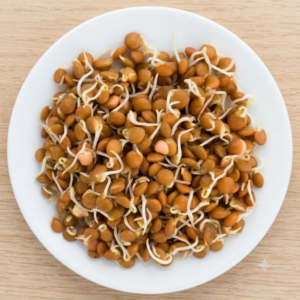
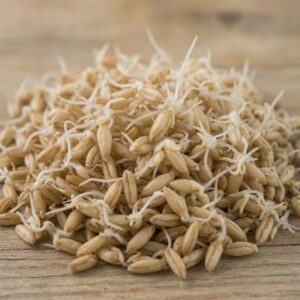
Fenugreek seeds sprout in 3–5 days after an 8–12 hour soak and twice-daily rinsing. They germinate vigorously and need no soil, light, or special equipment beyond a jar.
- Measure 2 tablespoons of fenugreek seeds into a clean wide-mouth sprouting jar and rinse briefly.
- Cover with cool water and soak for 8–12 hours — fenugreek benefits from a longer soak than smaller seeds for even, vigorous germination.
- Drain thoroughly, then rinse hard; like radish, fenugreek produces some mucilage when wet, so rinse until the water runs clear. Prop the jar inverted at a 45° angle.
- Rinse and drain with cool water twice daily, morning and evening, keeping the jar in a warm spot away from direct light.
- Harvest at 2–4 cm (¾–1½ in), usually day 3–5, when the shoots are well developed but before they turn leggy.
- Rinse well, drain thoroughly, and refrigerate; use within 4–5 days.
Fenugreek sprouts fast — most batches show visible root growth within 24 hours of soaking, and the aroma develops strongly by day 2 or 3, a good sign of healthy sprouting. If the bitterness is sharp for your taste, harvest at day 4–5, when it has mellowed, or fold the sprouts into cooked dishes.
🍛 Fenugreek Nutrition, Health & Kitchen Uses
Fenugreek has one of the most researched health profiles of any sprouting seed. The seeds and sprouts contain saponins, flavonoids, and soluble fibre (galactomannan) that have been studied for blood sugar management — fenugreek is one of the few culinary herbs with credible peer-reviewed evidence supporting its role in improving insulin sensitivity. It’s also traditionally used to support milk production in nursing mothers, reduce inflammation, and as a digestive bitter. These are ancient uses that modern research continues to investigate, not just folklore.
In the kitchen, fenugreek sprouts are used across South Asian cooking — add to dal, curries, and rice dishes where their warm bitterness integrates into the spice profile rather than standing out. They’re excellent in Indian-spiced stir-fries, mixed into raita, or blended into smoothies where the maple sweetness comes through and the bitterness mellows. A warm grain bowl with turmeric, ginger, and other sprouted legumes is a classic way to use them for good reason.
❓ Fenugreek Sprouting FAQ
Why do fenugreek sprouts smell like maple syrup?
The maple-like aroma comes from sotolone, a compound also found in maple syrup, caramel, and some aged spirits. It’s most concentrated in fenugreek seeds and sprouts and is responsible for the characteristic warm, sweet smell. Interestingly, eating large amounts of fenugreek can cause a temporary maple syrup-like odour in sweat and urine — harmless, but worth knowing about.
Are fenugreek sprouts bitter? How do I reduce the bitterness?
Yes — fenugreek sprouts have a noticeable bitterness, especially in the first 3 days. To reduce it, harvest slightly later at day 4–5 when the bitterness has mellowed, blanch briefly in boiling water before eating, or use them in cooked dishes where heat and other ingredients balance the flavour. The bitterness is a feature in traditional South Asian cooking, where it adds depth to curries and dal.
Can fenugreek sprouts help with blood sugar?
Fenugreek has solid peer-reviewed evidence for supporting insulin sensitivity and reducing post-meal blood glucose spikes, driven primarily by its soluble fibre content (galactomannan) and the amino acid 4-hydroxyisoleucine. The sprouts carry these same compounds. This is not a substitute for medical treatment of diabetes, but fenugreek is one of the most evidence-backed functional foods for blood sugar support. Consult a healthcare provider if you have diabetes or are on blood sugar medication, as fenugreek can potentiate the effect of some medications.
Are fenugreek sprouts safe during pregnancy?
Fenugreek is traditionally used to stimulate labour contractions and in large amounts may have uterine-stimulating effects — for this reason, fenugreek supplements are generally not recommended during pregnancy, especially in the first and second trimesters. Small culinary amounts are considered safe by most sources, but pregnant women should consult a healthcare provider before consuming fenugreek sprouts regularly or in significant quantities.
Can fenugreek sprouts increase milk supply in nursing mothers?
Fenugreek is one of the most widely used galactagogues (substances that promote milk production) in traditional medicine, and many nursing mothers report increased milk supply when consuming fenugreek regularly. Clinical evidence is mixed — some studies support the effect, others find it minimal. It’s generally considered safe during breastfeeding in food amounts. Consult a lactation specialist or healthcare provider for personalised guidance.
What cuisines use fenugreek sprouts?
Fenugreek sprouts are most common in South Asian cooking — Indian, Pakistani, and Sri Lankan cuisines use them in dal, curries, stir-fries, flatbreads (methi paratha), and chutneys. They’re also used in parts of the Middle East and North Africa in spice blends and stews. In North American home kitchens, they’re increasingly used in health-focused grain bowls, smoothies, and Indian-inspired cooking.
What equipment do I need to sprout fenugreek?
Just a wide-mouth jar with a mesh lid, which makes the twice-daily rinse-and-drain effortless. Our
organic sprouting glass jar kit is a complete starter setup. No soil, grow lights, or drainage trays are needed for jar sprouting.
Can I grow these fenugreek seeds as microgreens or plant them?
Yes — this is the same certified-organic seed you can grow as microgreens on a tray, sow for cut-and-come-again methi greens, or plant out for seed pods. Our
guide to growing fenugreek walks through microgreens, methi, seed harvest, and using it as a cover crop.
Can I grow fenugreek sprouts in winter in Canada?
Yes — fenugreek sprouts entirely at room temperature with no soil, no grow lights, and no outdoor access. It germinates vigorously and quickly even in cooler kitchens, making it a reliable winter sprouting choice. At 3–5 days to harvest, it’s one of the fastest sprouts you can grow.
Are fenugreek sprouts good for weight loss?
Fenugreek’s soluble fibre (galactomannan) can promote feelings of fullness and slow gastric emptying, which may help with appetite control. Combined with its blood sugar management properties — reducing post-meal glucose spikes that trigger hunger — fenugreek is one of the more credibly useful functional foods for people managing weight. It’s not a miracle solution, but it’s a smart addition to a weight-conscious diet.
🍁 The Maple-Scented Sprout With Real Health Credentials
Mumm’s Organic Fenugreek Seeds — certified organic, bold aroma, blood sugar support. Available across Canada and the US.
As a Mumm’s Sprouting Seeds affiliate, I earn a commission — at no extra cost to you.
🇨🇦🇺🇸 Buy Organic Fenugreek Seeds from Mumm’s →https://www.seed-bank.ca/wp-content/cache/breeze-minification/js/breeze_product-fenugreek-seeds-1-23195-inline_script_5-c961c13ec5b0.js?ver=1790482533
https://www.seed-bank.ca/wp-content/cache/breeze-minification/js/breeze_product-fenugreek-seeds-1-23195-js-dist-hooks.min-1e6013aecb3f.js?ver=1790482533
https://www.seed-bank.ca/wp-content/cache/breeze-minification/js/breeze_product-fenugreek-seeds-1-23195-js-dist-i18n.min-8a672a7b3338.js?ver=1790482533
https://www.seed-bank.ca/wp-content/cache/breeze-minification/js/breeze_product-fenugreek-seeds-1-23195-inline_script_6-94c4eed60653.js?ver=1790482533
https://www.seed-bank.ca/wp-content/cache/breeze-minification/js/breeze_product-fenugreek-seeds-1-23195-js-dist-private-apis.min-f440c4f440a3.js?ver=1790482533
https://www.seed-bank.ca/wp-content/cache/breeze-minification/js/breeze_product-fenugreek-seeds-1-23195-js-dist-url.min-c14f8a50a6eb.js?ver=1790482533
https://www.seed-bank.ca/wp-content/cache/breeze-minification/js/breeze_product-fenugreek-seeds-1-23195-js-dist-api-fetch.min-5f60cd5471da.js?ver=1790482533
https://www.seed-bank.ca/wp-content/cache/breeze-minification/js/breeze_product-fenugreek-seeds-1-23195-inline_script_7-7b5faaa93cf0.js?ver=1790482533
https://www.seed-bank.ca/wp-content/cache/breeze-minification/js/breeze_product-fenugreek-seeds-1-23195-burst-js-burst.min-70ee0b6cd512.js?ver=1790482533
https://www.seed-bank.ca/wp-content/cache/breeze-minification/js/breeze_product-fenugreek-seeds-1-23195-inline_script_8-68e0f23b11f3.js?ver=1790482533
https://www.seed-bank.ca/wp-content/cache/breeze-minification/js/breeze_product-fenugreek-seeds-1-23195-static-bundle-main-019aeb69dd73.js?ver=1790482533
https://www.seed-bank.ca/wp-content/cache/breeze-minification/js/breeze_product-fenugreek-seeds-1-23195-js-sourcebuster-sourcebuster.min-2a2a6ed9237e.js?ver=1790482533
https://www.seed-bank.ca/wp-content/cache/breeze-minification/js/breeze_product-fenugreek-seeds-1-23195-inline_script_9-e29010a956ec.js?ver=1790482533
https://www.seed-bank.ca/wp-content/cache/breeze-minification/js/breeze_product-fenugreek-seeds-1-23195-js-frontend-order-attribution.min-957885ec076c.js?ver=1790482533
https://www.seed-bank.ca/wp-content/cache/breeze-minification/js/breeze_product-fenugreek-seeds-1-23195-inline_script_10-c4c36227f219.js?ver=1790482533
https://www.seed-bank.ca/wp-content/cache/breeze-minification/js/breeze_product-fenugreek-seeds-1-23195-javascript-dist-script.min-2fad695a923a.js?ver=1790482533