Big Max Pumpkin — Grow the Biggest Pumpkin on the Block
🌍 Growing Zones & Climate Performance
🇨🇦 Canada: Best in zones 4–9. Requires a long warm season — start indoors 3–4 weeks before last frost. Thrives in Ontario, Quebec, and BC summers with proper indoor starting. Give it the most space and the most sun you have.
🇺🇸 US: Thrives in zones 4–11.
Best for: Halloween displays, giant pumpkin competitions, carving, fall decorating, and anyone who wants to grow something genuinely awe-inspiring in their garden.
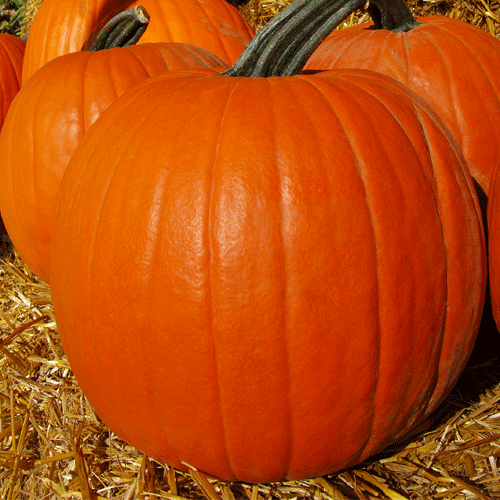
Big Max is the classic giant pumpkin variety for home gardeners — an AAS winner that can reach 50–100 lbs (23–45 kg) under good growing conditions, with some exceptional specimens going significantly larger. The fruits are round, slightly flattened, with bright salmon-orange skin and a dramatic presence in any garden or on any porch. Big Max is the pumpkin that stops cars, that neighbourhood children come to see, and that earns the grower a permanent reputation as a serious gardener. Under typical home garden conditions without special treatment, expect fruits of 20–40 lbs — still enormous by any household standard.
While Big Max is primarily a display and carving pumpkin, the flesh is thick and edible — milder and more watery than pie pumpkins, but usable in soups, baked goods, and pumpkin purée if you have the appetite for processing a very large quantity. The seeds are also excellent roasted. But the honest reason to grow Big Max is the experience: very few garden crops produce the kind of visible, dramatic result that a truly large pumpkin delivers.
Starting Big Max Pumpkins from Seed
Start seeds indoors 3–4 weeks before your last frost date in large peat pots or soil blocks. Sow 1–2 seeds per pot, 1 inch deep, at 24–29°C (75–85°F) — germination is fast at warm temperatures. A heat mat ensures rapid, even germination. Transplant outdoors after all frost risk passes and soil is warm. Big Max is Cucurbita maxima — the same species as Atlantic Giant, the variety used for world-record pumpkins — and it benefits from the same basic principles used by competitive growers: warm soil, generous feeding, consistent water, and space.
For the largest possible fruits, prepare a dedicated planting hole: dig a large area 60–90 cm deep, fill with a mix of compost, well-aged manure, and garden soil. Give each plant at least 3–4 metres of vine space in all directions. Limit to 1–2 fruits per vine for maximum size — removing all but the most promising fruit allows the plant to concentrate all energy into fewer, larger pumpkins. Water deeply and consistently throughout the season.
🎃 Pumpkin Size Guide — What to Expect
| Variety | Typical Weight | Best For |
|---|
| Big Max | 20–45 kg (50–100 lbs) | Display, carving, competitions |
| Small Sugar | 1–2 kg (2–5 lbs) | Pies, soups, baking |
| Jack-o-lantern types | 4–8 kg (8–18 lbs) | Halloween carving |
| Atlantic Giant | 100–500+ kg | Competition growing |
@media (max-width: 640px) {
.bigmax-table thead { display: none; }
.bigmax-table table, .bigmax-table tbody, .bigmax-table tr, .bigmax-table td { display: block; width: 100%; }
.bigmax-table tr { border: 1px solid #b8c7af; border-radius: 8px; margin-bottom: 12px; overflow: hidden; }
.bigmax-table td { padding: 8px 12px; }
.bigmax-table td:first-child { background: #2d5a3d; color: #fff; font-weight: 700; }
.bigmax-table td::before { content: attr(data-label) “: “; font-weight: 600; color: #2d5a3d; display: block; font-size: 11px; }
.bigmax-table td:first-child::before { display: none; }
}
Soil, Care, and Watering
Big Max requires rich, deeply prepared soil with the highest organic matter content you can provide. Amend planting areas with generous compost and well-aged manure, and feed with a balanced fertilizer every 2 weeks — switching to a phosphorus and potassium-forward formula once fruit sets. Water deeply and consistently; large pumpkins contain enormous amounts of water and the vine needs a steady supply to build that mass. Once a fruit reaches basketball size, placing a board or folded burlap under it protects the skin from ground moisture and reduces rot risk. Check under leaves regularly for squash bugs and vine borer entry holes.
Harvesting
Harvest Big Max when the skin is fully orange, the vine near the stem has browned and dried, and the skin feels very hard and can’t be dented with a fingernail — typically 100–120 days from transplant. Cut with a generous length of stem (10+ cm if possible) — a short or missing stem dramatically reduces storage life. Moving a very large pumpkin requires planning: a garden cart, multiple helpers, or leaving it in place on a pallet until ready to display. Cured pumpkins last 2–3 months at room temperature.
Saving Seeds from Big Max Pumpkins
Big Max seeds are worth saving — and the seeds themselves are large and excellent for roasting. Scoop seeds from a fully mature fruit, rinse to remove pulp, and dry on a paper plate for 2–3 weeks. Store in a cool, dry location — viability holds 4–6 years. Big Max is Cucurbita maxima and cross-pollinates with other maxima types (Hubbard, kabocha, Atlantic Giant, Jarrahdale) but not with pepo squash (zucchini, spaghetti, most pumpkins) — a natural cross-pollination advantage for seed saving. Isolate from other maxima varieties by 500+ metres for pure seed.
How big can Big Max pumpkins get?
Under standard home garden conditions, Big Max typically produces fruits of 20–45 kg (50–100 lbs). With intensive growing practices — deeply prepared soil, generous feeding, consistent watering, limiting to 1 fruit per vine, and optimal weather — fruits can reach 90+ kg. Big Max is Cucurbita maxima, the same species as Atlantic Giant (the world-record variety), so its giant-growing potential is genuine, though Atlantic Giant genetics are specifically selected for maximum size.
Can you eat Big Max pumpkin?
Yes — Big Max is edible, though its flesh is milder, more watery, and less sweet than pie pumpkin varieties like Small Sugar. The thick walls produce a large volume of flesh suitable for soups, pumpkin bread, and purée if you’re willing to process a significant quantity. The seeds are also excellent roasted. If eating quality is the priority, grow a pie pumpkin alongside your Big Max; if display and carving are the goal, Big Max is the right choice.
When should I start Big Max in Canada?
Start indoors 3–4 weeks before your last frost date — late April in Ontario and Quebec, early to mid-April in BC. Transplant outdoors after all frost risk passes and soil is warm. With 100–120 days to maturity, a late April start and late May transplant produces harvest-ready pumpkins by late September to mid-October in most Canadian zones — perfect Halloween timing.
How do I get the biggest possible Big Max pumpkin?
The key factors for maximum size: deeply prepared soil with very high organic matter; consistent deep watering; generous feeding with a balanced then fruit-focused fertilizer; limiting to 1 (or at most 2) fruits per vine by removing all others once small pumpkins appear; situating the single fruit on the vine at a 90-degree angle to the main stem for even growth; and placing a board under the growing pumpkin to protect it from ground rot. A long, warm growing season with consistent warmth is the primary limiting factor in Canada.
How much space does Big Max need?
Each Big Max plant needs at least 3–5 metres of vine space in all directions — a single plant can occupy 10–25 square metres of garden space when fully sprawling. This is substantial and needs to be planned for. Many gardeners grow Big Max in a corner of the garden or against a fence where vines can run without impeding other crops. The space investment is absolutely worth it for the result, but it can’t be grown as a casual afterthought.
Why is my Big Max pumpkin not growing very large?
Size potential in any pumpkin is limited by soil fertility, water consistency, and the number of fruits the plant is supporting. If growing multiple fruits on one vine, the plant divides its energy — limiting to 1 fruit at the golf-ball stage dramatically increases final size. Insufficient water during rapid growth phases, poor soil preparation, or a short warm season will all limit final size. In Canadian gardens, a cool or wet summer is the most common reason Big Max underperforms.
Are Big Max seeds edible?
Yes — Big Max seeds are large, plump, and excellent for roasting. Rinse seeds to remove pulp, toss with oil and salt (or sweet spice blends), spread in a single layer on a baking sheet, and roast at 175°C (350°F) for 15–20 minutes until golden. A very large Big Max pumpkin can produce an impressive quantity of seeds — a worthwhile secondary harvest alongside the display value of the pumpkin itself.
What pests affect Big Max pumpkins?
Squash vine borers are the most damaging pest — larvae tunnel into stems and can kill a vine. Because Big Max is Cucurbita maxima, its thicker stems provide somewhat more resistance to vine borers than pepo types, but it’s not immune. Row cover before adult moths emerge (remove at flowering) is the primary prevention. Squash bugs and cucumber beetles also visit; handpick squash bug eggs regularly. With such extensive vine growth, monitoring requires regular walkthroughs of the entire planting.
Is pumpkin healthy for the whole family?
Plain cooked pumpkin is nutritious for humans and safe for dogs (in moderate amounts, without spices or sugar). It’s high in beta-carotene, vitamin C, potassium, and fibre. For humans, it’s an excellent ingredient in soups, purees, baked goods, and smoothies. For dogs, plain pumpkin purée is a well-known natural remedy for digestive upset. The seeds are also nutritious for humans — high in magnesium, zinc, and healthy fats — and a satisfying snack when roasted.
Grow Something Your Whole Neighbourhood Will Talk About
Find Big Max pumpkin seeds and growing supplies on Amazon — ships to Canada and the US.
🇨🇦🇺🇸 Buy Big Max Pumpkin Seeds on AmazonAffiliate link — I may earn a commission at no extra cost to you.