Barley Grass: Wheatgrass’s Milder, Sweeter Sibling
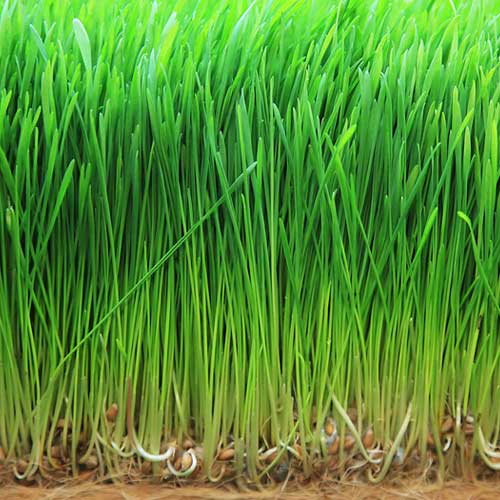
Hulless Barley (Hordeum vulgare var. nudum) is one of the oldest cultivated grains on earth — barley was among the first plants domesticated in the Fertile Crescent over 10,000 years ago. The “hulless” distinction matters for sprouting and growing: standard barley has a hull that adheres firmly to the grain and won’t come off without mechanical processing, making it unsuitable for home sprouting. Hulless varieties separate cleanly during harvest, leaving the bran intact — exactly what you need for quick, even germination and healthy grass growth.
As a growing grass, barley reaches harvest height (12–15 cm / 5–6 inches) in 9–12 days — about the same window as wheatgrass. The flavour is notably milder and slightly sweeter than wheatgrass, without the sharp, intense green bitterness that can make straight wheatgrass shots challenging. This makes barley grass particularly appealing for people who find wheatgrass too assertive, and it blends seamlessly into green smoothies without dominating other flavours. For growing instructions and technique, our How to Grow Wheatgrass guide covers the exact same process — the growing method is identical.
🌍 Where It Grows Best
🇨🇦 Canada: Barley grass is grown entirely indoors in trays — zone and season are irrelevant. The limiting factor in Canadian winters is light: low winter light produces pale, nutrient-poor grass. A full-spectrum grow light positioned 15–20 cm above the trays solves this completely and produces deep-green grass year-round. Temperature is not an issue — barley grass grows well at typical indoor room temperature (18–22°C / 65–72°F).
🇺🇸 US: Same as Canada — 100% indoor crop, works in any region or climate year-round. No outdoor growing required or beneficial.
Best for: Indoor juicing, smoothies, daily shots, and anyone who finds straight wheatgrass too intense.
🌾 Barley Grass vs Wheatgrass — Key Differences
| Feature | Barley Grass | Wheatgrass |
|---|
| Flavour | Mild, slightly sweet | Strong, earthy, intense |
| Days to Harvest | 9–12 days | 7–10 days |
| Juice Yield | Slightly lower | Higher |
| Chlorophyll | Very high | Very high |
| Best For | Smoothies, beginners, milder palate | Shots, experienced juicers |
| Gluten | Grass is gluten-free* | Grass is gluten-free* |
*The young grass stage contains no gluten proteins. Gluten only develops in the grain. Those with celiac disease should still exercise caution due to cross-contamination risk.
🌱 How to Grow Barley Grass at Home
The process is identical to growing wheatgrass. Soak seeds in cool water for 8–10 hours, drain, and spread in a shallow tray with 2–3 cm of quality potting mix or grow without soil in a sprouting tray. Rinse twice daily. Maintain room temperature (18–22°C / 65–72°F) and keep out of direct sunlight until grass is 5–8 cm tall, then move to indirect natural light to green up. Harvest with scissors when grass reaches 12–15 cm (5–6 inches), before the second blade emerges — this is peak nutritional value. A second cut is possible but weaker; most growers start fresh trays on a rolling schedule to maintain continuous supply.
For soil-free growing, rinse the seeds and allow them to germinate in the jar for 1–2 days after soaking until a small tail appears, then transfer to a grow tray and mist twice daily. The soil method produces slightly more robust grass with better juice yield; the soil-free method is cleaner and faster to set up. For year-round growing in Canada’s darker winter months, a full-spectrum grow light placed 15–20 cm above the trays ensures deep green, chlorophyll-rich grass regardless of season. See our complete wheatgrass growing guide for equipment recommendations and troubleshooting.
What’s the difference between hulless barley and regular barley?
Regular barley has a hull (husk) that adheres firmly to the grain and requires mechanical processing to remove — it will not germinate well in a sprouting jar because the hull is often damaged during hulling. Hulless varieties have a naturally loose hull that separates cleanly at harvest, leaving the bran and germ intact and undamaged. This means hulless barley germinates reliably and evenly, making it the correct choice for home sprouting and grass growing.
Is barley grass gluten-free?
The young grass itself — harvested before the grain forms — does not contain gluten proteins. Gluten only develops in the seed (grain) as it matures. Certified barley grass juice powder is tested and found gluten-free. However, for people with celiac disease, cross-contamination during growing and harvesting is a real risk — if you are celiac, consult your healthcare provider before consuming barley grass products, as standards vary. For most people with wheat sensitivity (not celiac), barley grass is generally well-tolerated.
Can I grow barley grass in Canada in winter?
Yes — barley grass is an entirely indoor crop grown in trays, making it season-independent. The limiting factor in Canadian winters is light: low winter light levels produce pale, nutrient-poor grass. A full-spectrum grow light positioned 15–20 cm above the trays solves this completely and produces deep-green grass year-round. Temperature is not an issue — barley grass grows well at typical indoor room temperature (18–22°C / 65–72°F).
What juicer do I need for barley grass?
A masticating (slow/cold-press) juicer or a dedicated wheatgrass juicer is required — centrifugal juicers cannot process grass effectively and will clog or yield minimal juice. A masticating juicer handles barley grass, wheatgrass, leafy greens, and virtually any produce, making it the most versatile choice for serious juicers. Manual wheatgrass juicers are an economical alternative if you’re juicing grass exclusively. Our
wheatgrass guide includes juicer recommendations.
How does barley grass compare to wheatgrass?
Both are highly nutritious cereal grasses with very similar growing methods, harvest windows, and nutritional profiles — both are rich in chlorophyll, vitamins A, C, E and K, and trace minerals. The key difference is flavour:
wheatgrass is intense, earthy, and assertively grassy, while barley grass is milder and slightly sweeter — better tolerated by those new to juicing greens. Both are worth growing; many dedicated juicers rotate between them.
How do I store barley grass after harvesting?
Cut grass keeps in the refrigerator for 5–7 days if stored in an airtight container or sealed bag. For longer storage, juice the grass and freeze the juice in ice cube trays — frozen barley grass juice retains most of its nutritional value for up to 3 months. For the freshest nutrition, grow on a rolling schedule (a new tray every 3–4 days) and harvest as needed rather than storing large quantities.
🌾 Fresh Barley Grass in 9–12 Days, Year-Round
Organic Hulless Barley Seeds from Mumm’s — mild, sweet grass for juicing and smoothies. Ships to Canada and the US.
As a Mumm’s Sprouting Seeds affiliate, I earn a commission — at no extra cost to you.
🇨🇦🇺🇸 Order from Mumm’s Sprouting Seeds →